Baroque Bar Stools Wholesale: opulent counter seating for bar, home and contract use
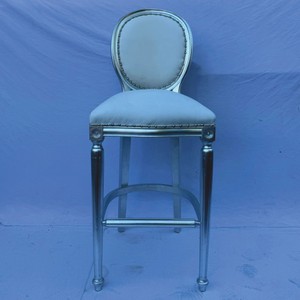
The baroque bar stool brings together two worlds: the raised seating position at a counter or bar with the opulent design language of the baroque era. Curved legs, carved aprons, gilded or coloured decoration and deep upholstery turn a functional stool into a statement piece. At Barockgroßhandel you will find baroque bar stools in their full range: with a high backrest for long-lasting comfort, as slim models without a back for space-saving tucking under the counter, and in swivel versions, all as high-quality reproductions of historical models in Casa Padrino quality.
As a specialised wholesaler we supply resellers, hoteliers, restaurateurs, interior designers and private enthusiasts. Because our baroque bar stools are available in series and built for lasting use, they suit the private home bar as well as bars, bistros and hotel lounges. This page guides you through designs, seat heights, materials, contract use and care, and links directly to the matching shop categories.

What defines a baroque bar stool
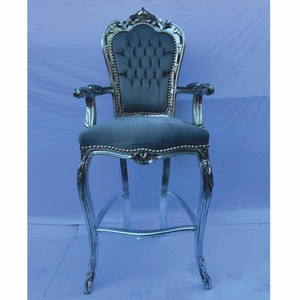
The baroque bar stool transfers the typical features of baroque seating to a tall construction. Characteristic are curved legs, often splayed outwards in the classic cabriole line, carved aprons and crestings, gilded or silvered trim and, on models with a back, a decoratively worked backrest. Acanthus leaves, shells and volutes recur as ornaments and unite legs, seat frame and backrest into a coherent form.
Unlike the low baroque stool, the bar stool is designed for counter and bar height and therefore needs a footrest as well as a particularly stable frame. Our reproductions capture the historical opulence precisely and translate it into robust, everyday seating that withstands daily use at the bar.
With or without a backrest: choosing the right design
The most important decision with a baroque bar stool is the design. Models with a backrest offer noticeably more comfort and invite you to linger, for example at the home bar, the breakfast counter or in the hotel lounge. They also look more imposing, but require more space and cannot be tucked fully under the counter.
Models without a backrest are slimmer, can be slid away to save space and allow several stools to be placed close together along a long counter. They are flexible to use and visually more restrained. Between the two designs sit versions with a low backrest or with armrests, combining comfort and compactness. Which form suits best depends on the available space and the intended dwell time.

Seat height and dimensions: planning to match the counter
With a bar stool, the seat height determines comfort. Typical seat heights are around 65 to 80 cm. As a rule of thumb, allow roughly 25 to 30 cm between the seat and the underside of the counter so the legs have comfortable room. A classic kitchen counter or island of about 90 to 95 cm calls for bar stools of around 65 to 70 cm seat height, while a higher bar counter of 105 to 115 cm needs stools of 75 to 80 cm.
Besides seat height, seat width and footprint matter. Models with a wide seat and backrest need more room, while slim stools without a back can be lined up more closely. Measure the counter height and available width before buying so you can plan the right number of stools at the right height. The exact dimensions of each model are given with the respective item in the shop.
Footrest, swivel function and stability
Because the feet do not reach the floor in the raised seating position, the footrest is a central element of every bar stool. It relieves the legs and makes sitting comfortable over longer periods. On baroque models the footrest is usually integrated into the frame as a surrounding rung or worked cross rail and blends into the curved form.
Some baroque bar stools additionally feature a swivel function, which makes getting on and off at the counter easier and opens up the view into the room. With all versions, stability is decisive: a bar stool sits higher and is therefore less tip-resistant than a normal chair, which is why a wide, solid frame and sound workmanship are especially important. Our models are built to meet this demand.

Materials, upholstery and covers
Behind every baroque bar stool stands genuine craftsmanship. The frame is made of solid hardwood that is sawn, turned and carved by hand. After priming, several coats of lacquer or finish follow before gold leaf, silver leaf or a deeply lacquered colour creates the characteristic surface. On cresting, apron and legs the quality of the carving shows in the cleanly worked ornament.
The seat and, on models with a back, the backrest are traditionally upholstered and covered with high-quality fabrics. Choices include velvet, chenille, faux leather and patterned baroque fabrics, often set off with decorative nails or piping. The colour range runs from classic cream and gold through deep burgundy and emerald to modern grey and black tones. For the bar, easy-care, hard-wearing covers such as faux leather that can be wiped down quickly are recommended.
Baroque bar stools in the kitchen, home bar and living space
In the private setting, baroque bar stools are an effective accent. At the kitchen island or breakfast counter they create an elegant spot for a quick coffee, at the home bar they set a glamorous frame and turn a niche into an imposing seat. At a bar counter in the living room or in an open living-dining area they also fit in as an eye-catcher.
For the living space it is worth matching the design and cover to the surroundings: models with a backrest for cosy, long sitting, slim stools without a back for a tidy look at the counter. Anyone taking up the baroque style throughout the room combines the stools with matching baroque furniture into a coherent ensemble.
For bars, bistros, hotel lounges and contract projects
In the contract sector, baroque bar stools are a powerful means of staging. In hospitality they shape lobby bars, lounges and breakfast areas, in bars, bistros and cafés they set an unmistakable frame, and in shopfitting they upgrade reception counters and showrooms. Because our models are robustly built and available in series, they are ideal for multiple furnishing, where a uniform, high-quality appearance across many seats counts.
For intensive contract use we recommend hard-wearing covers, well-padded seats, a solid footrest and a particularly stable frame. From a single lobby bar to consistent seating across several locations, we tailor models, seat heights, quantities and delivery times to your project.

Care and value retention
Baroque bar stools stay beautiful for a long time with little effort. Clean gilded and lacquered wood surfaces with a soft, dry or slightly damp cloth, without harsh or abrasive cleaners that would attack the finish. Gold leaf is sensitive to friction, so gentle dusting along the carvings is enough.
Depending on the material, vacuum the upholstery covers regularly and treat stains gently to suit the fabric; faux leather simply wipes clean. Because bar stools carry a higher load and are frequently climbed onto, you should occasionally retighten screws and joints so the frame stays stable. Avoid permanent, direct sunlight and high humidity so that colours, wood and glue remain stable. In this way you secure value retention, especially in contract operation.
Range and matching categories
From this topic page you reach the relevant shop areas directly. Browse the full selection of bar stools or take a look at the lower stools. If you are looking for matching seating for table and dining, you will find it among the chairs.
An overview of all furniture types in the baroque style is given by the pillar page Baroque Furniture. You can reach further topic worlds via the topics hub.

Matching pieces from our range
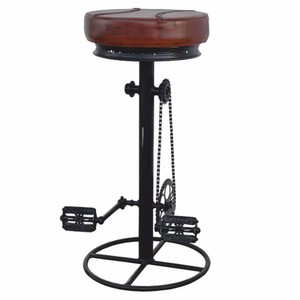
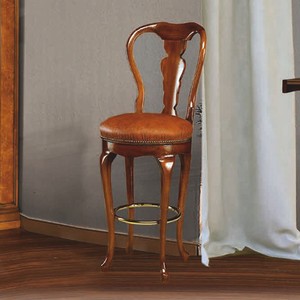
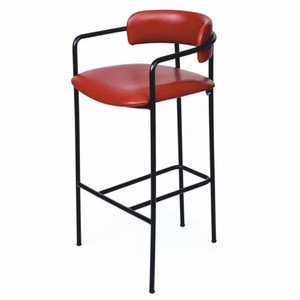
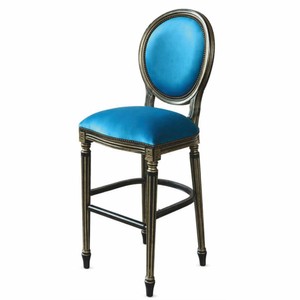
Frequently asked questions about baroque bar stools
What defines a baroque bar stool?
A baroque bar stool combines the raised seating position at a counter or bar with the design language of the baroque: curved legs, carved aprons, gilded or coloured ornaments such as acanthus leaves, shells and volutes, and fine upholstery covers. Unlike low stools it has a footrest and a particularly stable frame. At Barockgroßhandel you receive high-quality, newly made reproductions.
What seat height does a baroque bar stool have?
Typical seat heights are around 65 to 80 cm. A kitchen island of about 90 to 95 cm suits stools of around 65 to 70 cm seat height, while a higher bar counter of 105 to 115 cm suits stools of 75 to 80 cm. As a rule of thumb, allow 25 to 30 cm between the seat and the underside of the counter.
Bar stool with or without a backrest, which is better?
Models with a backrest offer more comfort and invite you to linger, but need more space. Models without a backrest are slimmer, can be tucked under the counter and lined up closely. For long dwell times a backrest is recommended, for flexible, space-saving use a stool without a back.
What is the footrest on a bar stool for?
Because the feet do not reach the floor in the raised position, the footrest relieves the legs and makes sitting comfortable over longer periods. On baroque models it is usually integrated into the frame as a surrounding rung or worked cross rail and blends into the curved form.
Are there swivel baroque bar stools?
Yes, some models feature a swivel function that makes getting on and off at the counter easier and opens up the view into the room. With all versions stability is decisive, which is why we focus on wide, solid frames and sound workmanship.
What material are the bar stools made of?
The frame is made of solid hardwood that is carved by hand and then primed, lacquered and refined with gold or silver leaf. The seat and, on models with a back, the backrest are traditionally upholstered and covered with velvet, chenille, faux leather or patterned baroque fabrics.
Which covers are suitable for the bar?
For the bar, easy-care, hard-wearing covers such as faux leather that can be wiped down quickly are recommended. Velvet, chenille and patterned baroque fabrics, often set off with decorative nails, are also available. The colour range runs from cream and gold through burgundy and emerald to grey and black tones.
Are baroque bar stools suitable for gastronomy and hotels?
To a particular degree. Our reproductions are robustly built and made for intensive contract use. In lobby bars, lounges, bistros and cafés they create a high-quality ambience. For multiple furnishing we supply uniform models in series and tailor seat heights and quantities to your project.
How do I care for a baroque bar stool correctly?
Clean gilded and lacquered wood surfaces with a soft, dry or slightly damp cloth, without harsh cleaners. Vacuum upholstery depending on the material, wipe faux leather, and treat stains gently. Because bar stools carry a higher load, you should occasionally retighten screws and joints and avoid permanent sunlight and high humidity.
Do you sell baroque bar stools to private customers too?
Yes. As a baroque wholesaler we are geared towards resellers, hospitality, gastronomy and contract furnishers, but we also supply private enthusiasts for the home bar and kitchen. For larger quantities and projects we are happy to prepare an individual quote.