Baroque Coffee Tables from the Wholesaler: Ornate Centre Tables for Home, Hospitality and Contract
The coffee table is the heart of every seating group. In the Baroque style, this everyday piece becomes a showpiece: curved legs, carved aprons, gilded ornaments and a fine top of marble, glass or wood turn a Baroque coffee table into the calm focal point between sofa and armchairs. At Barockgroßhandel you will find these centre tables in full breadth, as high-quality reproductions of historical models in Casa Padrino quality.
As a specialised wholesaler we supply resellers, hoteliers, restaurateurs, interior designers and shopfitters, as well as private lovers of splendid interiors. This page walks you through everything that defines a good Baroque coffee table: the shapes, the top materials, the right height in relation to the sofa, storage and shelving, combining it into a suite and the proper care of wood and marble.

What defines a Baroque coffee table
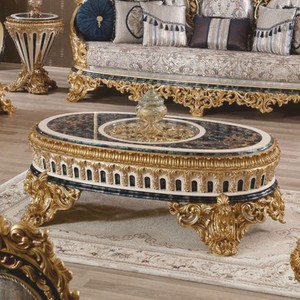
The coffee table as we know it emerged only with the low-seated living of the modern age. The Baroque style brings its whole vocabulary of form to this young piece of furniture: strong S- and C-curves in the legs, sweeping volutes, shell- and leaf-shaped carving on the aprons, and mouldings finished in gold or silver leaf. In this way the table is no supporting player but a focal point in its own right at the centre of the room.
Our reproductions take up these forms precisely and combine them with everyday construction. A solid wooden frame carries a high-quality top that withstands daily use. The result is a piece that shows the opulence of the era yet is built as a robust centre table for home, suite or lobby.
Shapes: rectangular, oval, round and nesting tables
Baroque coffee tables come in several basic shapes that differ in effect and use. Knowing the shapes helps you choose more precisely for room and seating group:
- Rectangular: the classic shape for longer sofas and suites. A rectangular Baroque coffee table offers plenty of surface and follows the line of a two- or three-seater.
- Oval: soft and elegant, the oval top takes the heaviness out of a bulky seating group and is easy to walk around. Ideal for salons and reception areas.
- Round: sociable and space-saving, the round coffee table sits at the centre of an L-shaped arrangement and feels lighter in smaller rooms.
- Nesting tables: two or three tables that slide into one another, flexible in use and able to stand apart when needed. Practical for changing occasions and for the contract lounge.

Top material: marble, glass and wood
The top largely determines the effect and the care of a Baroque coffee table. Three materials shape our range, and each has its own character:
- Marble: the most prestigious choice. A marble top looks heavy and noble, and every vein is unique. It is insensitive to heat but needs protection from acids and stains.
- Glass: the light, transparent solution. A glass top lets the carved frame come fully into its own and opens up the room visually, ideal when the legs are meant to be the eye-catcher.
- Wood: the warm, classic variant. A veneered or solid wooden top, often with inlays or a high-gloss lacquer, blends harmoniously with the carved frame.
The frame itself is made of solid wood, usually beech or mahogany, hand-carved and finished in gold leaf, silver leaf or multi-layer lacquer. Only this finish gives the table its sculptural depth and characteristic sheen.

The right height in relation to the sofa
A coffee table only looks right when its height suits the sofa. As a rule of thumb, the tabletop should sit roughly level with the seat cushion or a few centimetres below. In practice that means a height of about 40 to 45 centimetres, matching most Baroque sofas. This way drinks and books are within easy reach without having to bend far down.
The surface matters too. A coffee table should measure about two thirds of the sofa width so the proportions are right. A gap of roughly 40 to 50 centimetres between the sofa edge and the table gives enough legroom while keeping everything within reach. Before buying, check height, width and footprint so the table looks neither lost nor overpowering.
Storage, shelving and practicality
Beyond its display value, the coffee table is a working piece of the living area. Many Baroque coffee tables offer extra use: a lower shelf for books and magazines, a drawer in the apron for the remote control and small items, or a slightly raised gallery edge that keeps things from sliding off.
In the contract sector in particular, well-considered function pays off. A table with an undershelf keeps brochures and menus to hand, a nesting table provides extra surface when needed. In this way the Baroque coffee table combines a prestigious look with the practical use that living room, suite and lounge need day to day.

Combining with a Baroque sofa and armchairs
A Baroque coffee table shows its full potential within a suite. As the centre of a seating group of Baroque sofa and matching Baroque armchairs, it ties the furniture together and gives the room a calm middle. The finish should be coherent: a gilded table frame calls for gold-finished frames on sofa and armchairs, while a wood-toned table harmonises with warm, natural shades.
The top material should suit the concept too. A pale marble top picks up the tone of a cream velvet sofa, while a glass top keeps a densely arranged seating group visually light. The centre can be complemented by a smaller Baroque side table next to the armchair, so the whole arrangement reads as a single, coherent picture.
Baroque coffee tables in hospitality, gastronomy and contract
In commercial use the coffee table is a quiet but effective tool of staging. In the hotel lobby and lounge it forms the centre of the waiting zone, in the bar and restaurant it carries the menu and the aperitif, and at the reception of practices, offices and boutiques it conveys quality. A marble or glass top is especially hard-wearing and easy to clean, an advantage in a high-traffic setting.
Because our tables are robustly built and available in series, they are ideal for multiple fit-outs and chains where a uniform, high-quality image is required. For contract furnishers we put together complete, colour-matched ensembles of sofa, armchairs and tables and advise on shapes, materials, quantities and delivery times, including for international projects.

Care of wood and marble
With the right care a Baroque coffee table stays beautiful for years. Clean gilded and lacquered frame parts with a soft, dry or slightly damp cloth, without harsh cleaners or abrasives. Wooden tops do not tolerate lasting moisture: wipe up liquid promptly and use coasters for hot or wet vessels.
Marble calls for particular care because it is acid-sensitive. Wine, citrus fruit, coffee and vinegar should never be left to act but removed at once. Clean marble with clear water and a mild, pH-neutral product; occasional sealing protects against stains. Clean glass tops streak-free with glass cleaner. For all materials: avoid lasting direct sunlight, as it bleaches finish and colour.
Range: matching categories for your Baroque coffee table
Whether a single statement piece or a complete seating group, at Barockgroßhandel you will find the right centre table and everything that goes with it. Browse our categories:
- Baroque coffee tables: rectangular, oval and round centre tables with marble, glass and wooden tops
- Side tables: smaller tables to complement sofa and armchair
- Baroque sofas: the matching upholstered pieces for the seating group around the coffee table
For an overview of the entire Baroque style, see our pillar page Baroque furniture. You will find further topic pages in our topics section.
Matching pieces from our range

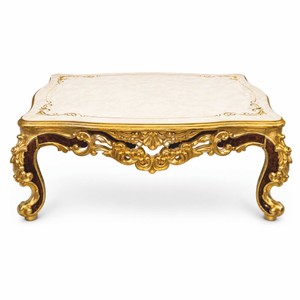
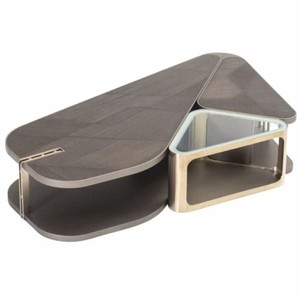
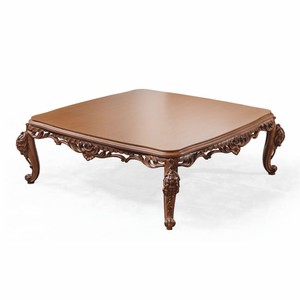
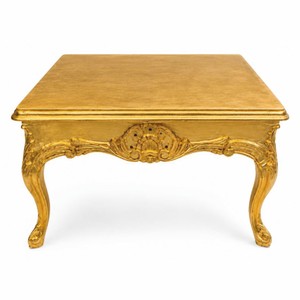
Frequently asked questions about Baroque coffee tables
What is a Baroque coffee table?
A Baroque coffee table is a low centre table in the style of the Baroque era, with curved, carved legs, decorated aprons and a mostly gilded or lacquered frame. Depending on the model the top is made of marble, glass or wood. At Barockgroßhandel you receive high-quality, newly made reproductions of historical models.
What shapes of Baroque coffee tables are there?
Common shapes are rectangular, oval and round coffee tables as well as nesting tables of two or three sliding elements. Rectangular tables suit long sofas, oval and round ones feel lighter in smaller rooms, and nesting tables offer flexible surface.
How high should a coffee table be in relation to the sofa?
The tabletop should sit roughly level with the seat cushion or a few centimetres below. In practice that is about 40 to 45 centimetres, matching most Baroque sofas. This keeps drinks and books within easy reach without having to bend far down.
Which top material is best?
It depends on the use. Marble looks most prestigious and is heat-resistant but acid-sensitive. Glass opens up the room visually and puts the frame in the foreground. Wood is warm and classic. In high-traffic contract settings, marble and glass are especially easy to care for.
How large should a Baroque coffee table be?
As a guide, a coffee table measures about two thirds of the sofa width. A gap of roughly 40 to 50 centimetres between the sofa edge and the table is ideal, leaving enough legroom while keeping everything within reach. Make sure the table looks neither lost nor overpowering.
Do Baroque coffee tables offer storage?
Many models do. There are tables with a lower shelf for books and magazines, with a drawer in the apron or with a raised gallery edge. Nesting tables create extra surface when needed. In this way the table combines looks with practical use.
How do I care for a marble top correctly?
Marble is acid-sensitive, so remove wine, coffee, citrus and vinegar at once. Clean with clear water and a mild, pH-neutral product, no abrasives. Occasional sealing protects against stains. Use coasters for hot or wet vessels.
Does the coffee table match my Baroque sofa?
A suite with a consistent finish looks most coherent. A gilded table frame suits gold-finished sofas and armchairs, a wood-toned table suits warm natural shades. The top material should also suit the sofa upholstery. On request we put together matched ensembles.
Are Baroque coffee tables suitable for hotels and lounges?
Yes, particularly so. Our tables are robustly built and made for intensive contract use. In lobbies, lounges, bars and waiting areas they form a prestigious focal point; marble and glass tops are hard-wearing and easy to clean. For chains we supply uniform models in series.
Do you also deliver Baroque coffee tables abroad?
Yes. We ship across Europe and internationally, carefully packed and, on request, to the point of installation. Especially for international contract projects in hospitality and gastronomy we have experience in handling larger deliveries.