Baroque Columns Wholesale: Decorative Columns, Pedestals and Plinths for Home and Contract
The baroque column lifts art and decoration to a higher level in the most literal sense. As a free-standing decorative column, a stocky pedestal or a low plinth, it raises vases, busts and sculptures to eye level and gives them a dignified stage. At Barockgroßhandel you will find these display pieces in their full range: from the slender fluted column to the sturdy pedestal and the compact plinth, all as high-quality reproductions of classical models in Casa Padrino quality.
As a specialised wholesaler we supply resellers, hoteliers, restaurateurs, shopfitters, interior designers and private enthusiasts. Because our columns are available in series, they suit a single entrance hall just as well as the consistent furnishing of foyers, staircases and exhibition spaces. This page walks you through construction, variants, materials, styles, presentation, contract use, heights and care, and links directly into the matching shop categories.

What defines a baroque column
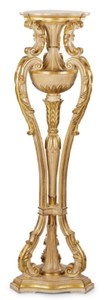
The decorative column goes back to classical architecture and translates its formal language into a movable piece of furniture. Its structure follows the ancient model: a load-bearing base, a rising shaft and a crowning capital with a mostly square top plate, the abacus, which forms the actual standing surface for the display item. The baroque adds lavish ornament: acanthus leaves on the capital, volutes, bead mouldings and a rich, often gilded finish that turns a static structural element into a jewel.
Our reproductions capture these features precisely and translate them into robust, stable display pieces. The sculptural effect of the original is preserved, but the construction is designed for lasting use and a secure stand. This gives you the opulence of the historic column without the weight and price of a solid stone piece.
Column, pedestal and plinth: the variants
Three basic forms cover most applications. The slender, tall decorative column often reaches 100 to 120 cm and carries a single vase, a flower bowl or a smaller sculpture, lifting it clearly into the room. The sturdier, more compact pedestal is lower and broader in proportion and serves as a solid surface for heavier busts, bronzes or clocks.
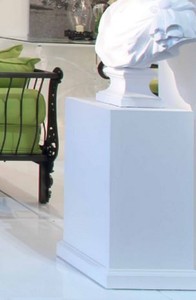
The low plinth finally raises an object only slightly yet still lifts it out of the floor plane, for instance beneath a floor vase or a reclining sculpture. All three forms are available with a round or square cross-section and as a single piece or a matched pair. Whether a single sight line or a symmetrical ensemble, there is a suitable height and form for every display situation.

Materials and surfaces
Genuine craftsmanship stands behind every baroque column. The body is made of wood or a modelled stucco and cast-stone compound (composite or poly-resin) on a stable core, which is carved or cast, primed and finished in several layers. Only then comes the surface: gold leaf, silver leaf, a deeply lacquered colour or a convincing marble and alabaster look, often with a patina that emphasises the fluting and ornament.
The quality of the work shows in the cleanly worked relief, especially at the capital and the base. The cast-stone and composite versions offer a practical advantage over real marble: they achieve the same stony appearance at a significantly lower weight, which makes placement, repositioning and transport considerably easier.
Styles and forms: fluted, twisted and with a capital
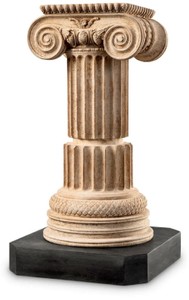
The classical orders shape the baroque column too. The Doric form looks plain and powerful, the Ionic carries scrolled volutes on the capital, the Corinthian and the Composite show lavish acanthus leaves and are especially popular in the baroque. The shaft is either smooth or fluted, that is, grooved with vertical channels that play with light and shadow and make the column appear more slender.
An unmistakably baroque variant is the twisted column (Solomonic column) with a spirally wound shaft, familiar from baroque altars. Added to these are models with a continuous leaf frieze, with relief panels or with gilded bands over a marbled ground. In this way the column can be matched precisely to the style of the room and the displayed object.

Presenting vases, busts and sculptures effectively
The real purpose of the column is presentation. A display piece on the floor is easily overlooked; on a column, however, it moves into the field of view, gains distance from the viewer and appears staged as in a gallery. For a bust or a head, a compact pedestal is ideal, its top plate slightly wider than the base of the sculpture so that a calm, stable impression arises.
For a vase or flower bowl a taller, more slender column suits better, allowing the silhouette of the vase to come into its own. What matters is the relationship between object and support: the top plate should hold the display piece securely without it overhanging, and the height should bring the object into a comfortable viewing angle, usually so that the focal point of the sculpture sits roughly at eye level.
In the living area: sight line, corner and room divider
In a private setting the column sets deliberate accents. In the corner of a room it fills dead space with an effective vertical; at the end of a sight line (for instance opposite a door or at the end of a hallway) it forms the natural vanishing point. Placed in pairs to the left and right of a passage, a sofa or a window, two identical columns frame the scene and create baroque symmetry.
As a loose room divider, a row of columns structures a large room without closing it off, marking for example the transition from living to dining area. Combined with a baroque mirror, a console or a painting, a coordinated ensemble emerges in which the column provides the connecting vertical element.

For reception, gallery look and events: contract use
In the contract sector columns are a powerful staging tool. In hospitality they flank entrances, structure lobbies and emphasise staircases; in shopfitting they lift individual products in windows and boutiques; in reception areas they signal presence and value. For museums, galleries and exhibitions they provide the classic display plinth that isolates an exhibit and gives it space.
Columns are also in demand in the event sector: they carry floral arrangements, candelabra or signs at weddings and receptions and are easy to move for set-up and take-down. Because our models are robustly built and available in series, they are ideal for multiple installations and pairs, where a consistent, high-quality appearance across many areas matters. From a single reception column to a series for several locations, we match models, heights, quantities and delivery times to your project.
Heights, dimensions, stability and selection
For planning, what counts above all is overall height, the size of the top plate and the ratio of base width to height. Pedestals often lie between about 60 and 90 cm, decorative columns reach 100 to 120 cm and higher. The taller and more slender the column, the more important a broad base and a low centre of gravity, so that the object stands securely. Check whether the column is hollow or filled, and pay attention to the permissible weight of the top plate when placing heavy bronzes or stone busts.
The top plate should be slightly larger than the standing surface of the display piece, so that it does not overhang and a calm image arises. You will find the exact dimensions, weights and colour variants of each model on the respective product in the shop, which makes the precise planning of sight lines, pairs and contract series easier.
Range and matching categories
From this topic page you reach the matching shop areas directly. Browse the full selection of columns. Suitable objects to present are found in decorations, and for the wall above or beside the column the paintings are ideal, turning the column into a coherent ensemble.
An overview of all furniture types of the baroque style is given by the pillar page baroque furniture. You reach further topic worlds via the topics hub.

Matching pieces from our range
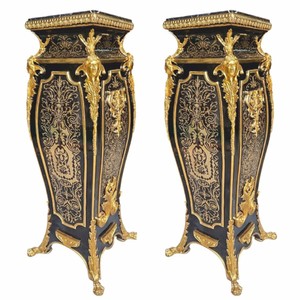
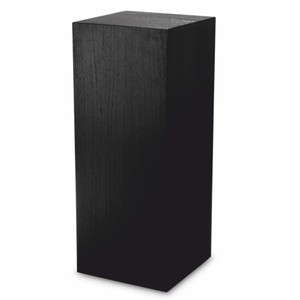
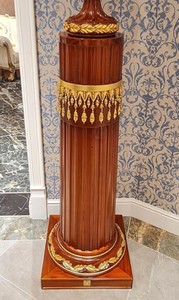
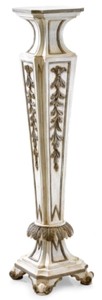
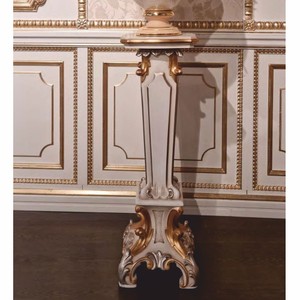
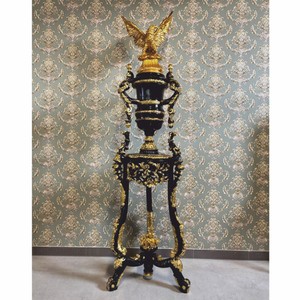
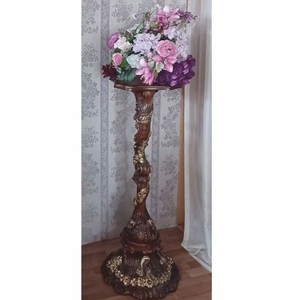
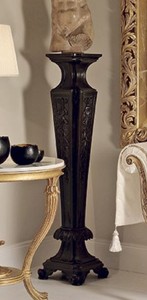
Frequently asked questions about baroque columns
What defines a baroque column?
A baroque column follows the ancient structure of base, shaft and capital and adds baroque ornament: acanthus leaves, volutes and a rich, often gilded or marbled finish. It serves as a decorative column, pedestal or plinth for presenting vases, busts and sculptures. At Barockgroßhandel you receive high-quality, newly made reproductions.
What is the difference between column, pedestal and plinth?
The decorative column is slender and tall (often 100 to 120 cm) and carries a vase or smaller sculpture. The pedestal is lower and broader in proportion and suits heavier busts or bronzes. The plinth raises an object only slightly but still lifts it out of the floor plane, for instance beneath a floor vase.
What are baroque columns used for?
Above all for presentation: they bring vases, busts and sculptures to eye level and give them a gallery-like stage. They also serve as an eye-catcher in the corner of a room, as the vanishing point of a sight line, as a loose room divider and, in pairs, as a frame for passages or entrances.
What material are the columns made of?
Of wood or a modelled stucco and cast-stone compound (composite or poly-resin) on a stable core. The surface is finished with gold leaf, silver leaf, a lacquered colour or a marble and alabaster look. Cast stone achieves the stony appearance at a significantly lower weight than real marble.
What height should a decorative column have?
That depends on the object. For busts, compact pedestals of about 60 to 90 cm are ideal, so that the focal point of the sculpture sits at eye level. For vases and flower bowls, taller, more slender columns up to 100 to 120 cm are suitable. The top plate should be slightly wider than the standing surface of the display piece.
What column forms exist in the baroque?
The classical orders Doric, Ionic, Corinthian and Composite, with a smooth or fluted shaft. A typically baroque variant is the twisted Solomonic column with a spirally wound shaft. Added to these are models with a leaf frieze, relief panels or gilded bands on a marbled ground.
How do I set up a column securely?
The taller and more slender the column, the more important a broad base and a low centre of gravity. Check the permissible weight of the top plate before placing heavy bronzes or stone busts, and ensure a level, firm surface. The display piece should stand centred and not extend beyond the top plate.
Are baroque columns suitable for hotels, reception and events?
To a special degree. They flank entrances, structure lobbies and staircases, carry floral arrangements and candelabra at events and provide the classic display plinth for gallery and museum looks. As our reproductions are robust and available in series, we supply consistent models and pairs for multiple installations.
How do I care for a baroque column?
Dust gilded and finished surfaces only dry or with a slightly damp, soft cloth, without harsh or abrasive cleaners, as gold leaf is sensitive to friction. Marbled and lacquered surfaces tolerate a mild cleaning agent. Avoid permanent direct sun and high humidity so that finish and core material remain stable.
Do you sell baroque columns to private customers too?
Yes. As Barockgroßhandel we are geared towards resellers, hospitality, gastronomy and contract furnishers, but we also supply private enthusiasts. For larger quantities, pairs and projects we are glad to prepare an individual quote for you.