Baroque mouldings and wall panels: ceiling roses, columns and ornaments for ceiling and wall
Baroque mouldings give a room its architectural frame. Ceiling roses, wall columns and profiled panels structure surfaces that would otherwise look bare. Even in baroque palaces, much of the splendour of the great halls came from decorative plasterwork.
Barockgrosshandel offers baroque style mouldings and wall panels for homes, villas and commercial interiors. The Casa Padrino selection ranges from small ceiling roses at around €35 to plinths and column capitals and on to wall columns about 2 metres tall at around €550. We supply retailers, hotels, interior designers, trade contractors and private customers.

What defines baroque plasterwork
Baroque mouldings are sculptural and full of movement. Acanthus leaves, shells, floral scrolls and volutes stand out clearly from the surface. Light and shadow play across the relief and bring the wall to life.
White is the classic choice. It lets the mouldings merge with ceiling and wall so they look like part of the building itself. If you want to add accents, pick out individual elements in gold or in a shade that contrasts with the wall.
The style has a lot in common with Art Nouveau. That is why many ceiling roses are deliberately designed to suit both periods. They fit a 19th-century period property just as well as a newly designed salon.
Baroque plasterwork follows a clear order. Ornaments repeat, axes lead towards windows, doors or fireplaces, and the ceiling often becomes the centrepiece. Respect these rules and even a few elements will create a harmonious effect.
Ceiling roses
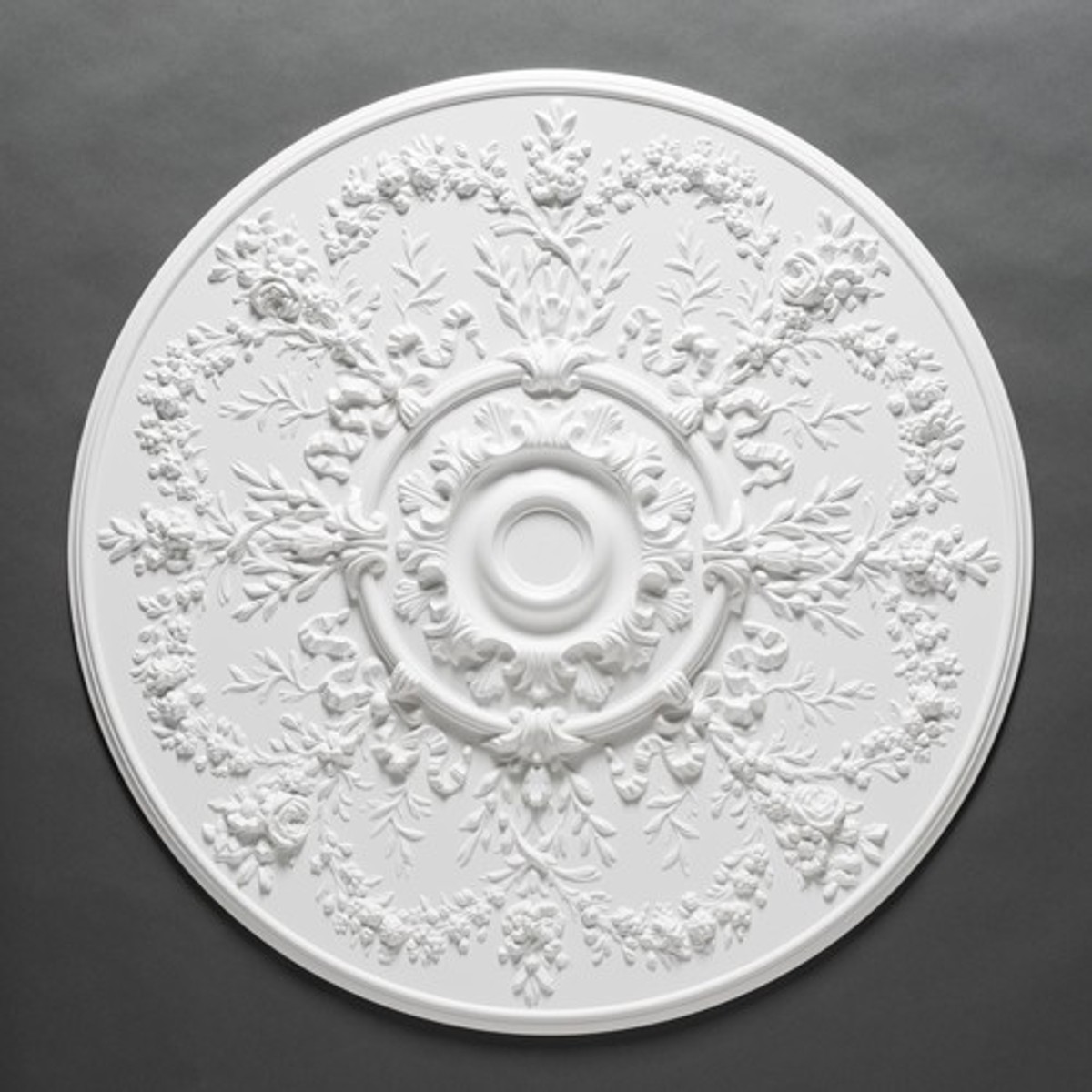
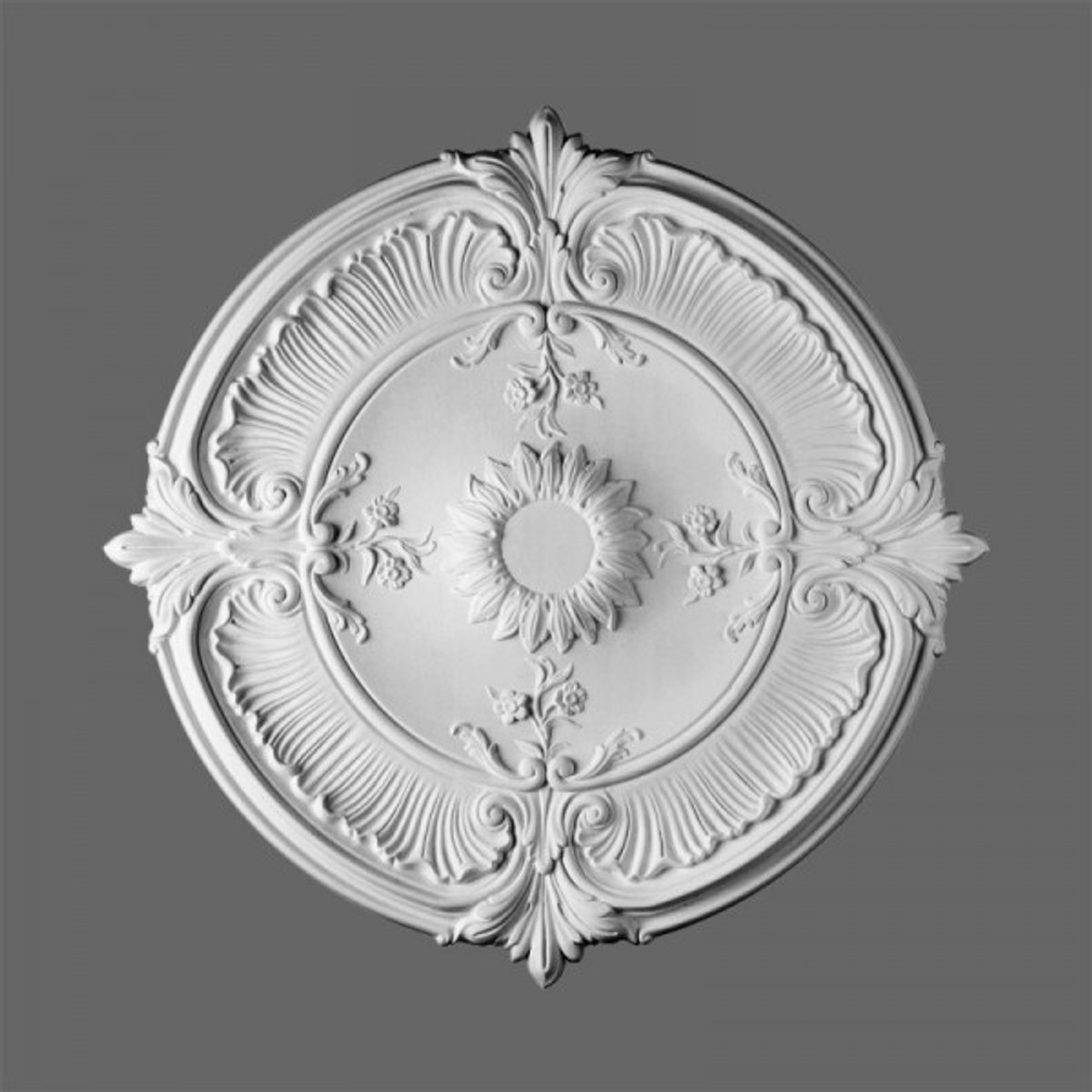
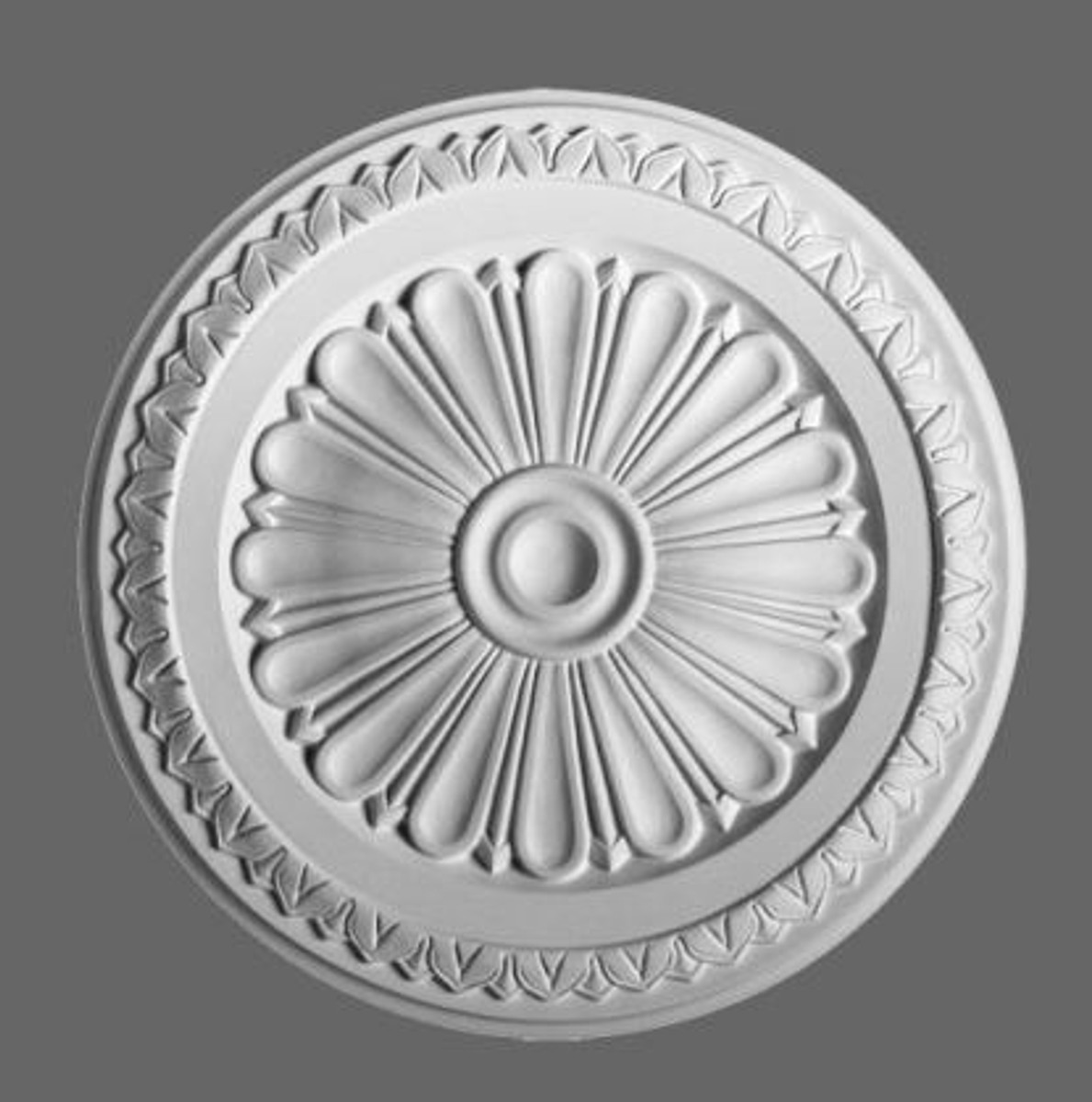
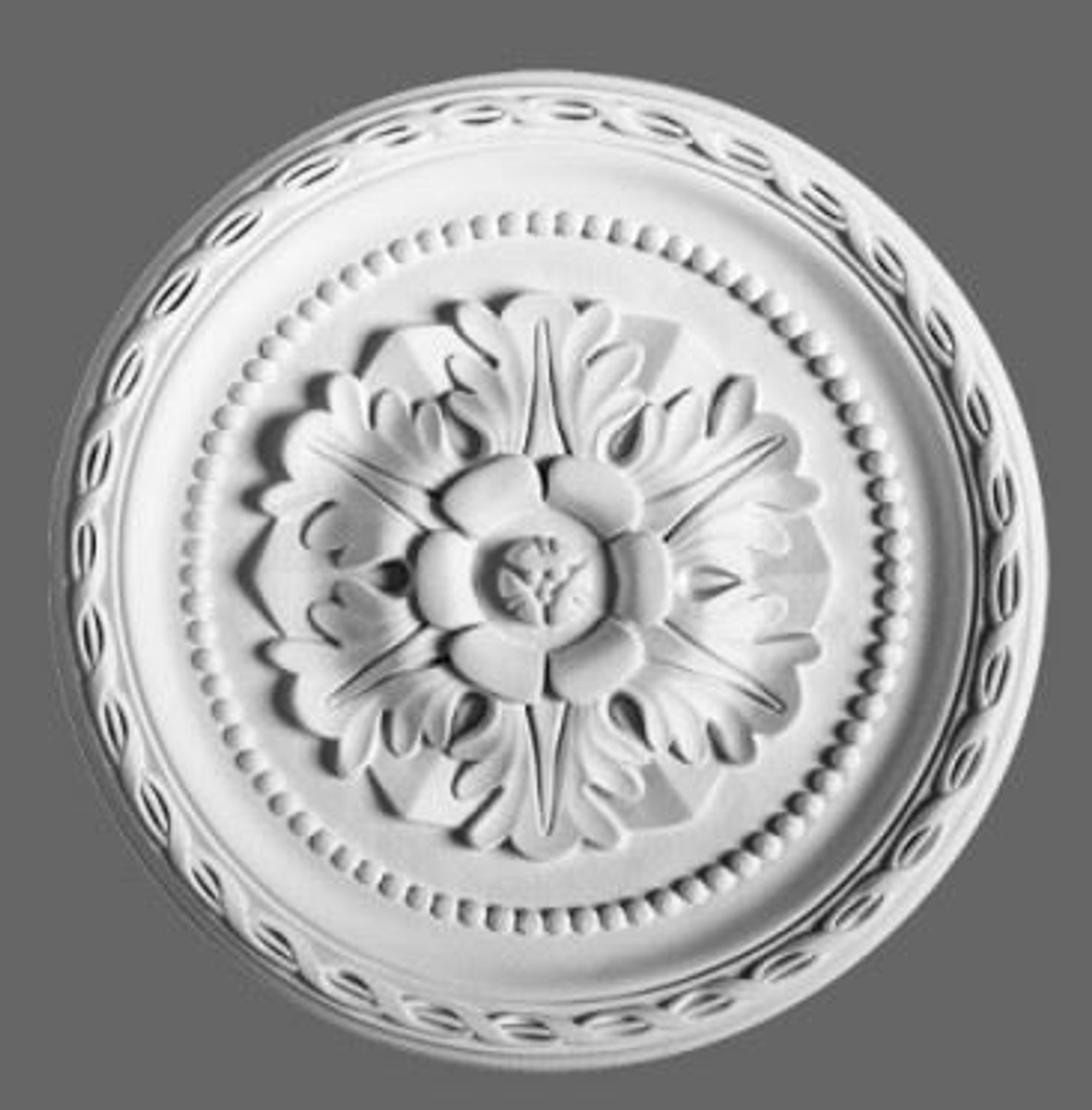
The ceiling rose is the best known moulding. It usually sits in the centre of the room and frames the fitting of a chandelier. In the range, diameters run from around 28 cm to about 95 cm.
The size depends on the room and the light fitting. Small roses of around 30 cm suit hallways, bathrooms and smaller rooms. Living and dining rooms call for roses from about 70 cm, and in lofty halls they can measure almost a metre.
The diameter of the rose should suit the chandelier, neither dwarfing it nor disappearing behind it. A large chandelier calls for a correspondingly large rose. All ceiling roses are in the decorative mouldings category.
A ceiling rose does not always have to hold a light. Even without a chandelier it creates a calm focal point on the ceiling. In large rooms, several roses in a row can emphasise the long axis, for instance above a long dining table.
Baroque style wall panels
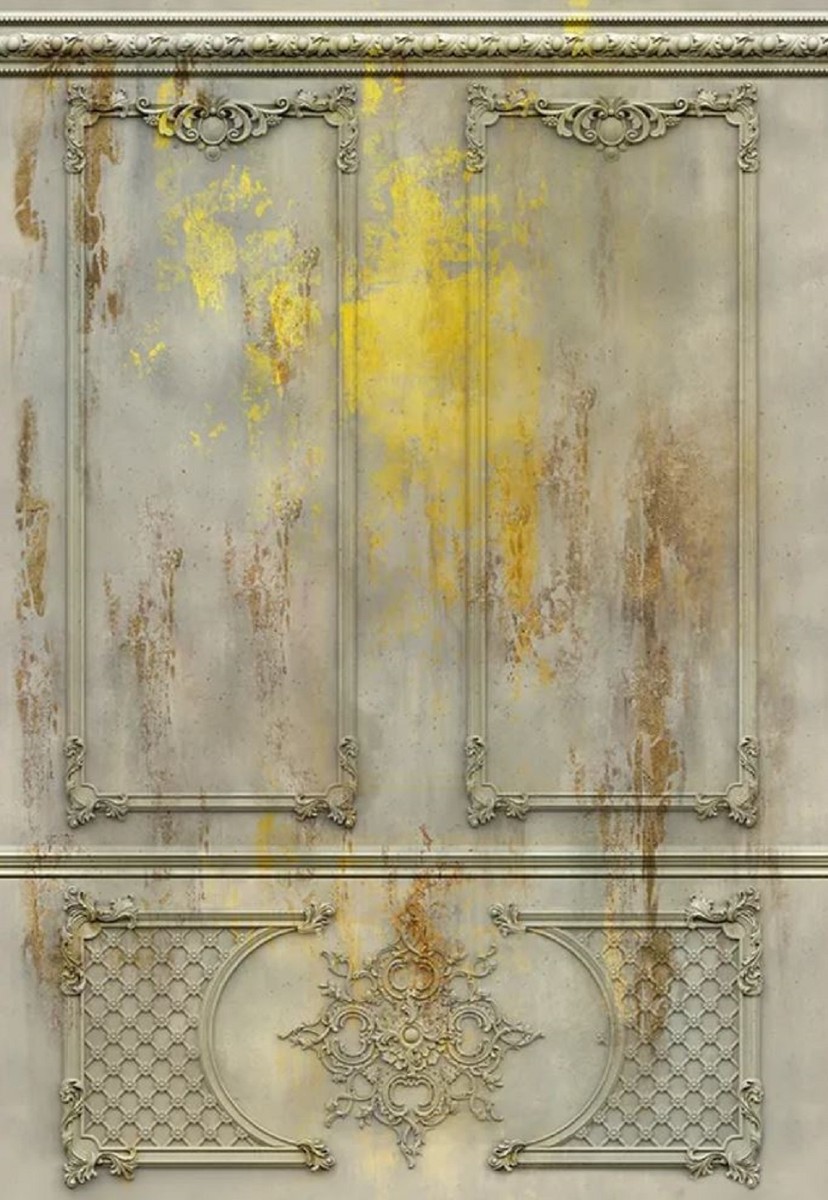
Wall panels divide large expanses of wall into calm fields. Profiled mouldings form frames, leaving the wall in the middle bare or filled with wallpaper. This creates the typical wall design of baroque salons.
Panels look especially good when they are aligned with furniture and windows. One field above a chest of drawers, two matching fields either side of a fireplace or a row along the staircase give the wall a clear order.
The range of ceiling and wall panels includes elements for both wall and ceiling. If you want to fill the fields between the mouldings, combine them with baroque wallpaper, for example a non-woven wallpaper with a plasterwork pattern.

Columns, plinths and wall ornaments
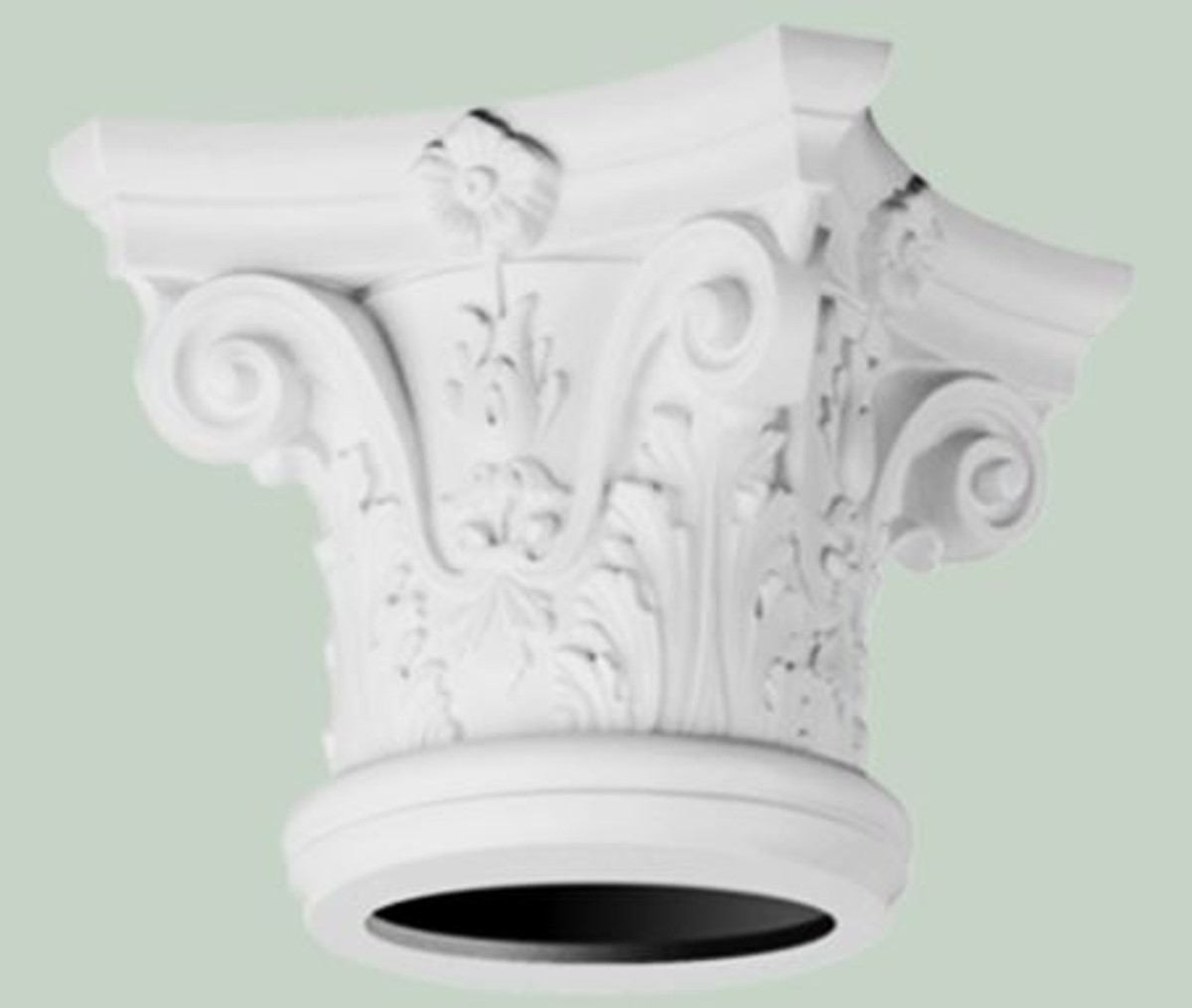
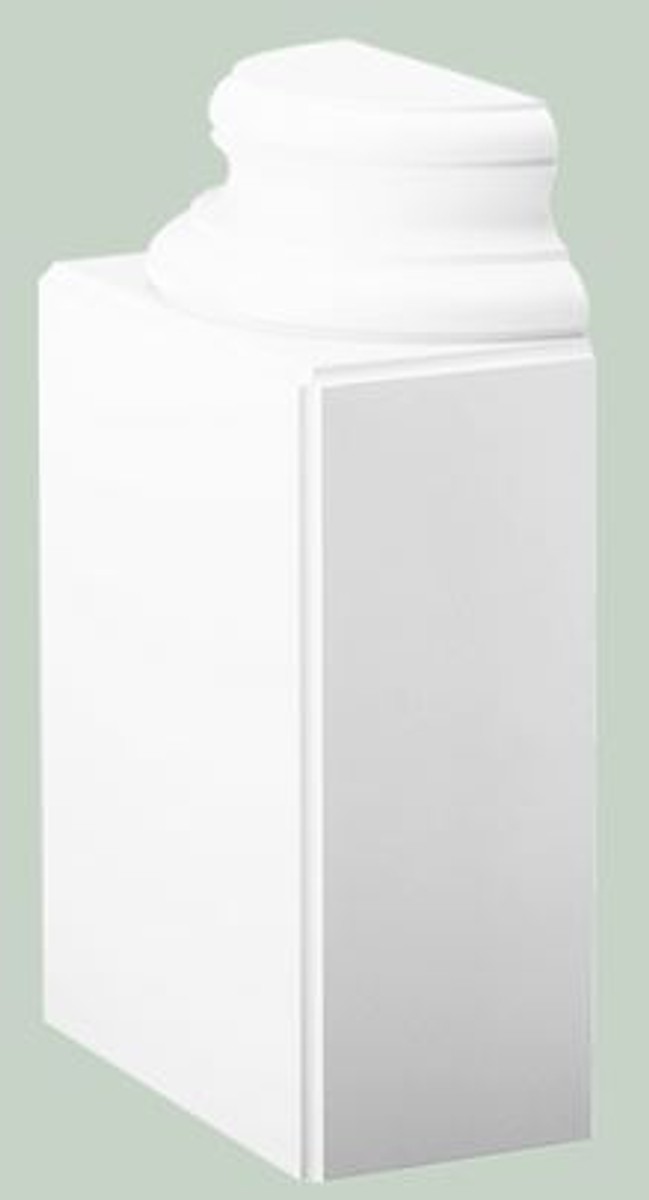
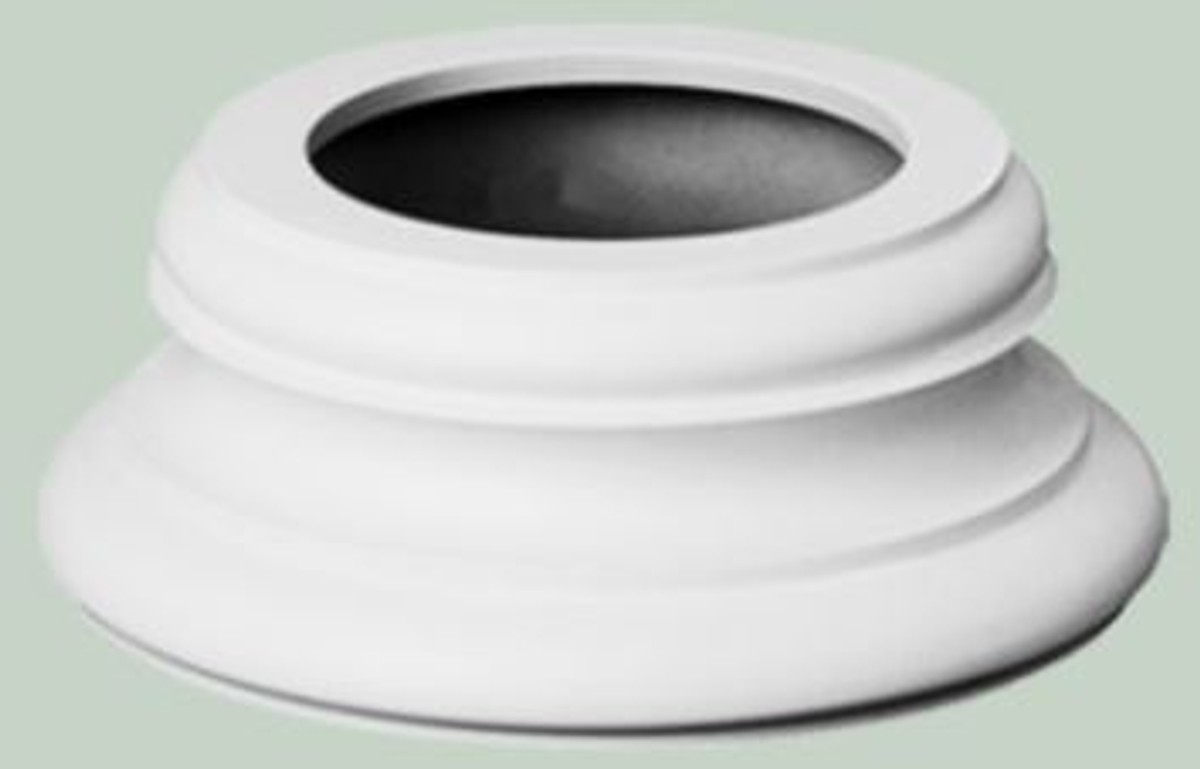
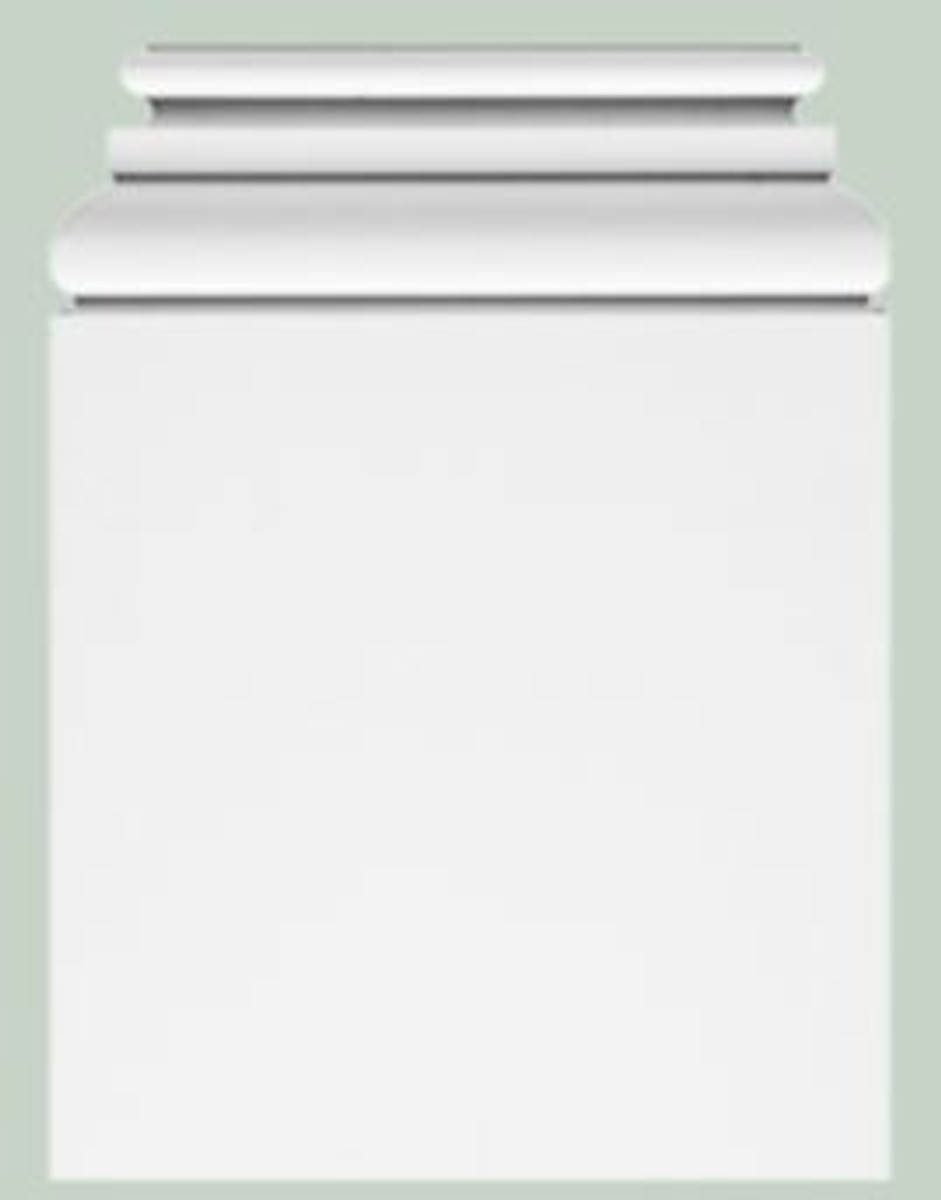
Wall columns bring depth to a room. The range includes square and round columns about 200 cm tall, matching column capitals and column bases as plinths. Together they form a complete column order on the wall.
Columns frame doorways, windows, mirrors or a fireplace. Set in pairs, they emphasise the symmetry so typical of the baroque. Smaller plinths serve as a finishing touch or as a base for wall decoration.
The full overview is under decorative moulding elements. If you are looking for free-standing columns, for example as pedestals for busts or vases, you will find them among our baroque columns.
Baroque wall brackets and wall design
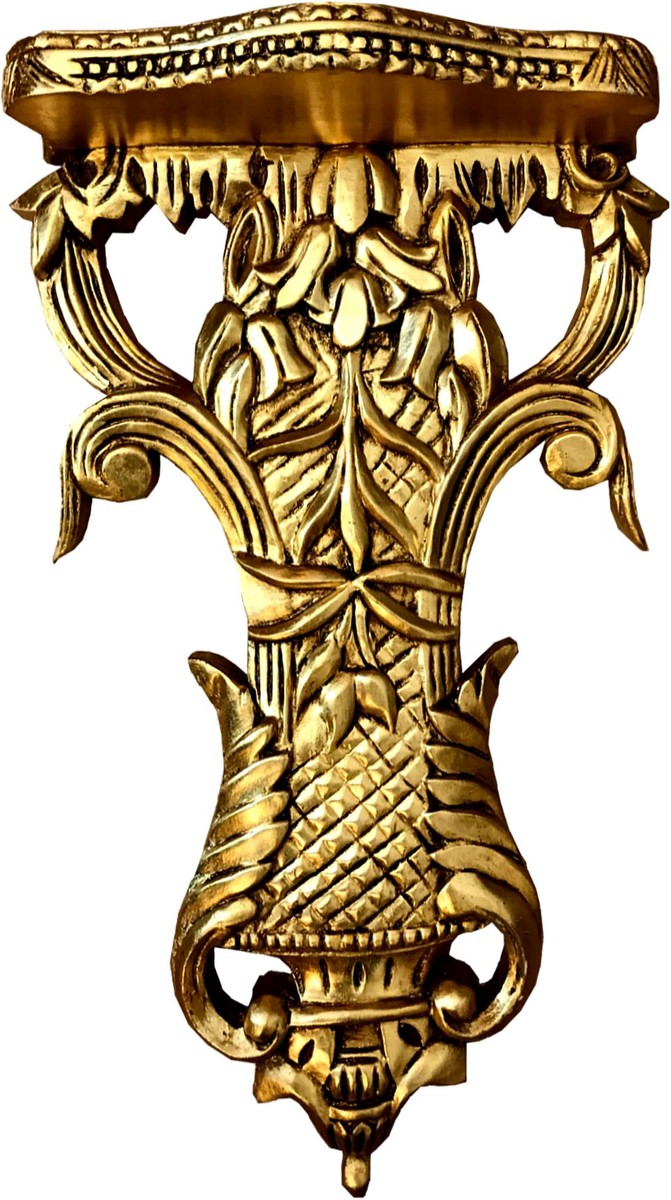
A baroque wall bracket in moulded plaster is a small ornament with a purpose. It holds a vase, a bust or a candle and is fixed firmly to the wall. Gilded models add a warm accent to a pale surface.
Mouldings have the greatest impact in combination with light and mirrors. A baroque style wall light between two panels brings out the relief. A large wall mirror in gold or silver makes the room feel bigger and repeats the ornaments.
Our baroque wall lights include suitable lights, and large mirrors are on the baroque mirrors page. This is how individual elements become a complete baroque wall.
Planning and installation
Before ordering, measure the length of the wall, the ceiling height and the position of windows, doors and sockets. Sketch panels and columns on paper first or pencil them directly onto the wall. That way you can see early on whether spacing and proportions are right.
The material of each element and how it is fixed are stated in the product description. Installation is carried out by a decorator, a plasterer or an experienced DIY enthusiast. The surface must be load-bearing, clean and dry.
After installation, the joints are filled and the elements painted. Painting them in the same colour as the wall makes the mouldings look as if they had always been there. A contrasting shade highlights them as ornament.
Allow a little extra when ordering panels and columns. A spare element comes in handy when cutting mouldings to size or making later adjustments. Order matching parts together where possible so that profiles and dimensions stay consistent.
Mouldings for hotels, restaurants and commercial projects
In hotels, restaurants and event spaces, mouldings create a festive atmosphere with manageable effort. Ceiling roses above every chandelier and columns on the end wall transform a plain hall into a ballroom.
In commercial interiors, a consistent line pays off. Matching ceiling roses and profiles in corridors, rooms and reception tie the spaces together. We are happy to advise interior designers and trade contractors on quantities and combinations.
Shops and boutiques use mouldings too. Columns beside the till or panels behind a product display create an impressive backdrop. Even a small retail space gains a character of its own.
Mouldings only provide the frame, though. The room itself is filled by furniture, lighting and fabrics. You will find the right foundation among our baroque furniture.
Matching pieces from our range
Frequently asked questions
How large should a ceiling rose be?
That depends on the size of the room and the light fitting. Roses of around 30 cm suit hallways and small rooms, and from about 70 cm for living and dining rooms. In lofty halls the rose can measure almost a metre.
Can I install baroque mouldings myself?
Experienced DIY enthusiasts can often fit smaller elements such as ceiling roses and plinths themselves. Large columns and continuous panelling are better left to a decorator or plasterer. Fixing instructions are in the product description.
Can mouldings be painted?
Most elements are white and can be painted in the wall colour or an accent shade after installation. Which paint is suitable depends on the material. You will find the details in the respective product description.
Do mouldings suit a new build?
Yes. In plain new builds in particular, ceiling roses, panels and wall columns give a room structure. With low ceilings, smaller roses and flatter profiles look better balanced.
What is the difference between baroque and Art Nouveau mouldings?
Baroque mouldings are more sculptural and more richly decorated, with acanthus, shells and volutes. Art Nouveau mouldings show flowing lines and floral motifs. Many ceiling roses are designed to suit both styles.
What price range do baroque mouldings cover?
Small ceiling roses start at around €35. Larger roses, plinths and column capitals are mostly between about €120 and €360. Wall columns about 2 metres tall cost around €550.
Do you also supply trade contractors and hotels?
Yes. Barockgrosshandel supplies trade contractors, hotels, restaurants, interior designers and retailers as well as private customers. For larger areas we are happy to agree the selection and quantities with you.