Baroque garden pavilions in cast iron, wrought iron and marble
A baroque style pavilion is architecture for the garden. It structures a lawn, creates a sheltered place to sit and becomes the destination at the end of a path. In baroque parks, such structures stood on sightlines and beside ponds. Today villas, hotels and event venues use them for the same purpose.
Barockgrosshandel offers garden pavilions in cast iron, wrought iron and marble. Many customers are also looking for a baroque greenhouse or garden house. We supply private customers, hotels, landscape architects and retailers. Here you will find guidance on designs, dimensions, foundations and use.
Pavilion, garden house or baroque greenhouse
The terms are often mixed up. A pavilion is an open or semi-open structure with a roof that serves as a place to sit or a focal point. A baroque greenhouse, historically called an orangery, is glazed and protects plants from the cold. A garden house is usually enclosed and is used as a living or storage space.
Our models are pavilions in the strict sense: columns or struts carry a domed or tented roof, and the sides remain open or are framed with ironwork. If you are planning a baroque style greenhouse, a pavilion can serve as the centrepiece of a planted area. Potted plants can then stand under its roof in summer.
In the baroque era, the orangery was a mark of status. Princes had citrus trees overwintered there and used the building for festivities in summer. The pavilion in the park was its open counterpart: a place for music, conversation and views across the grounds.
Cast iron and wrought iron
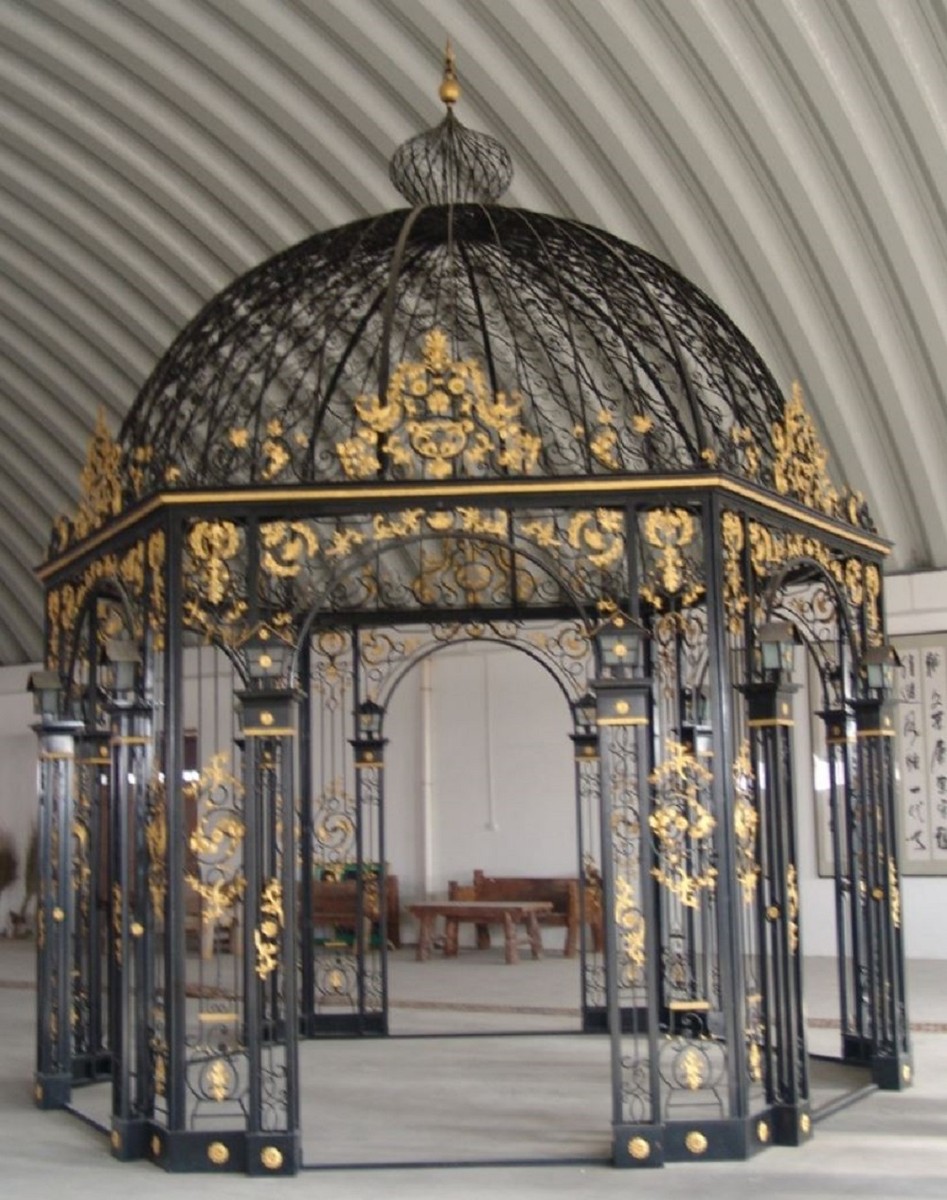
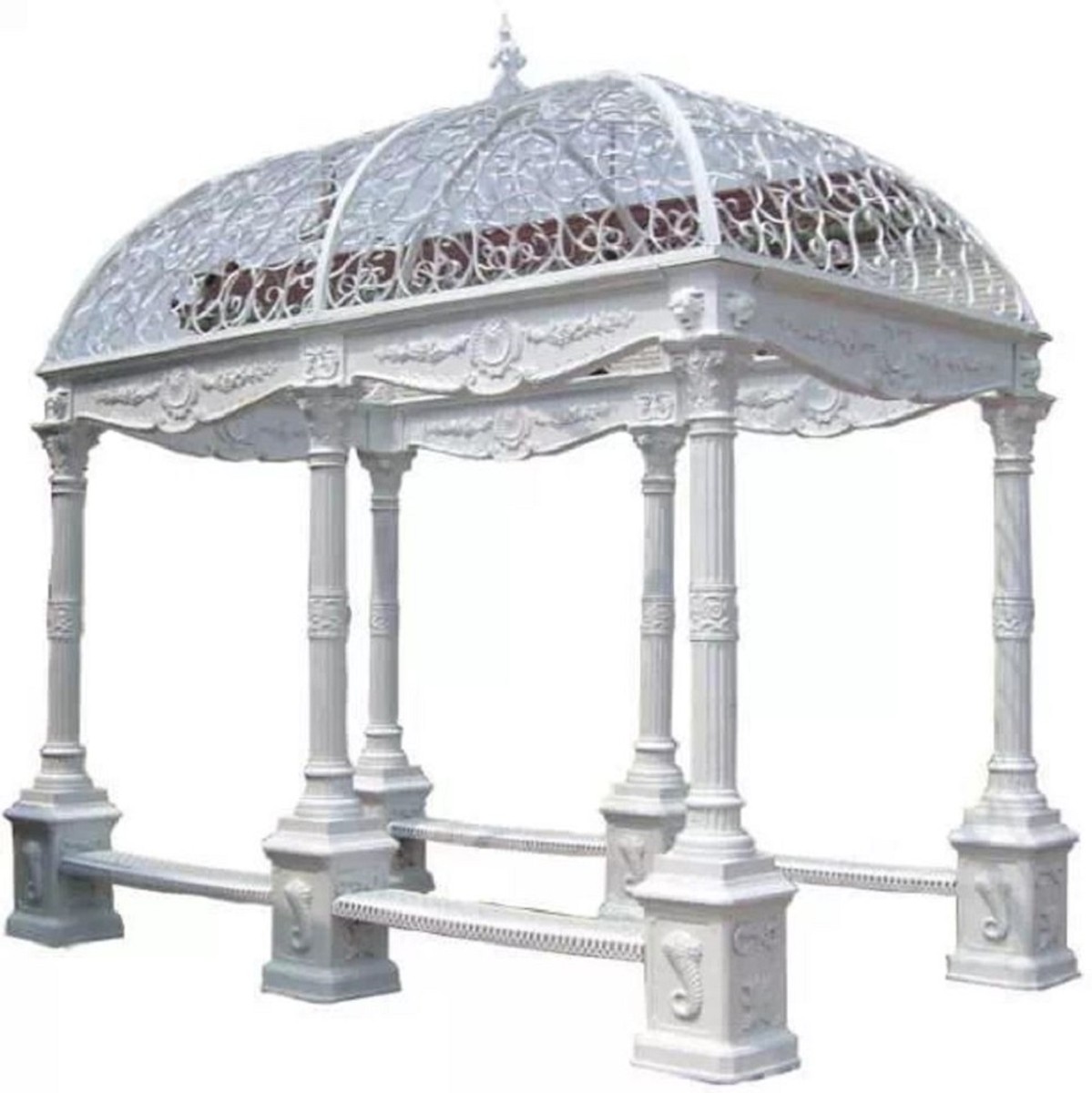
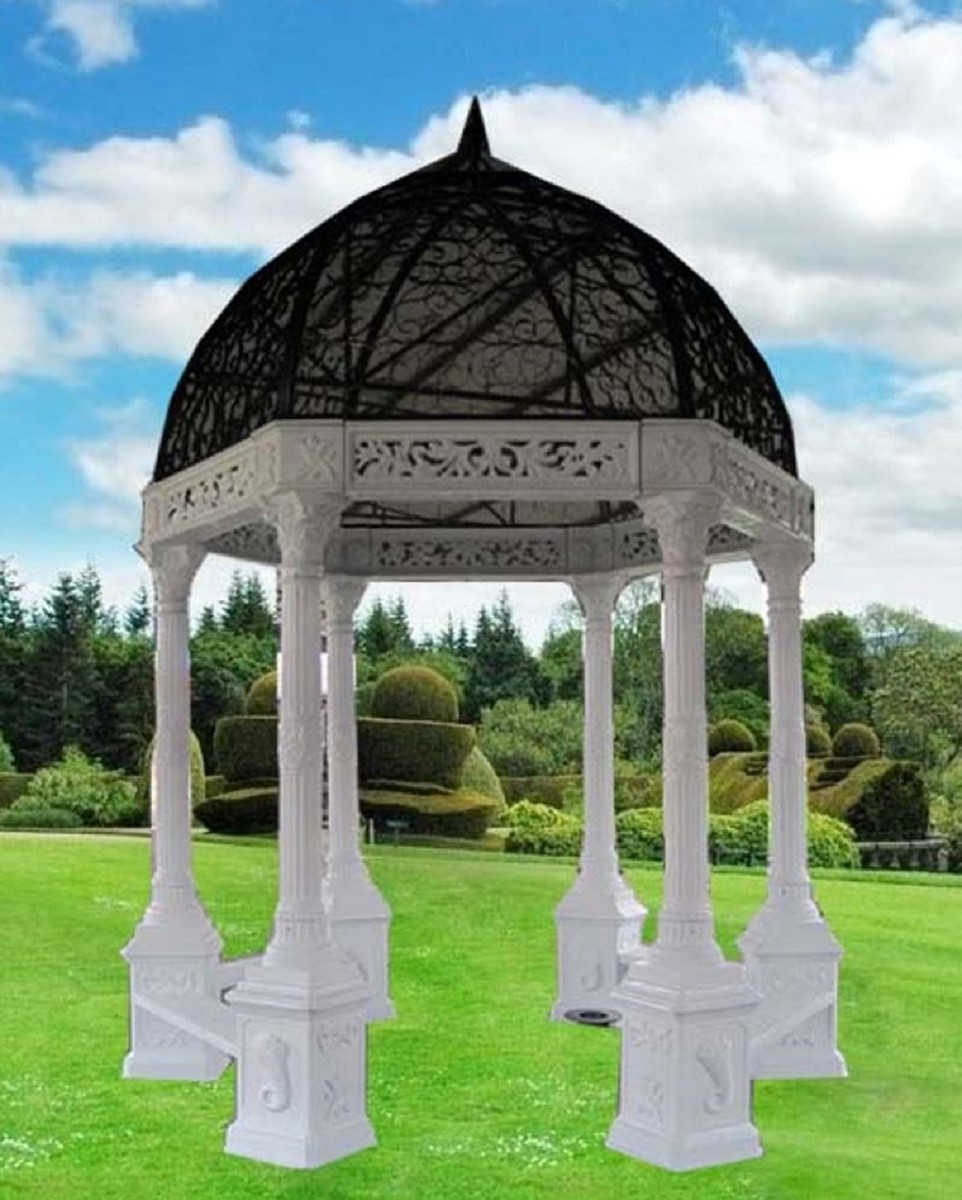
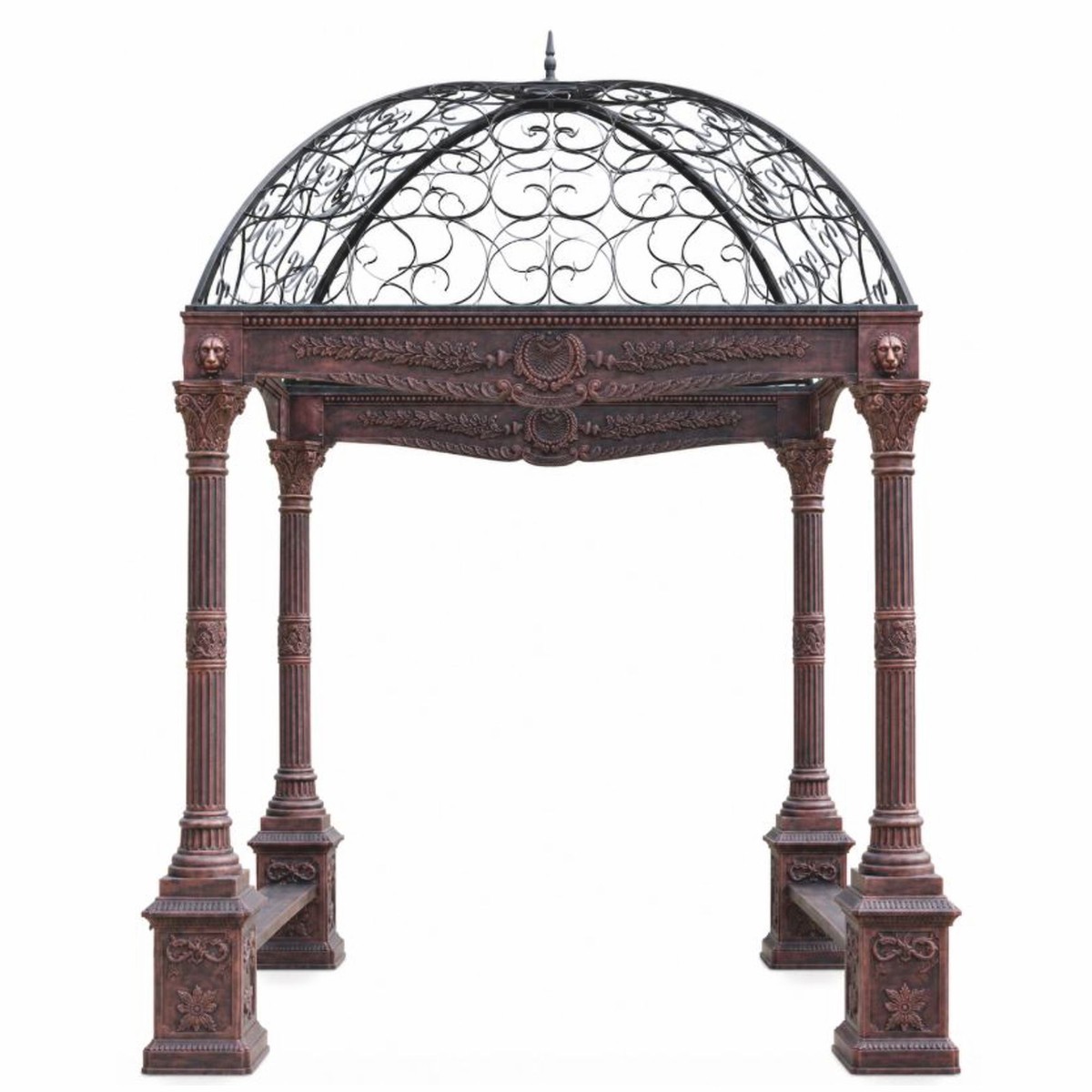
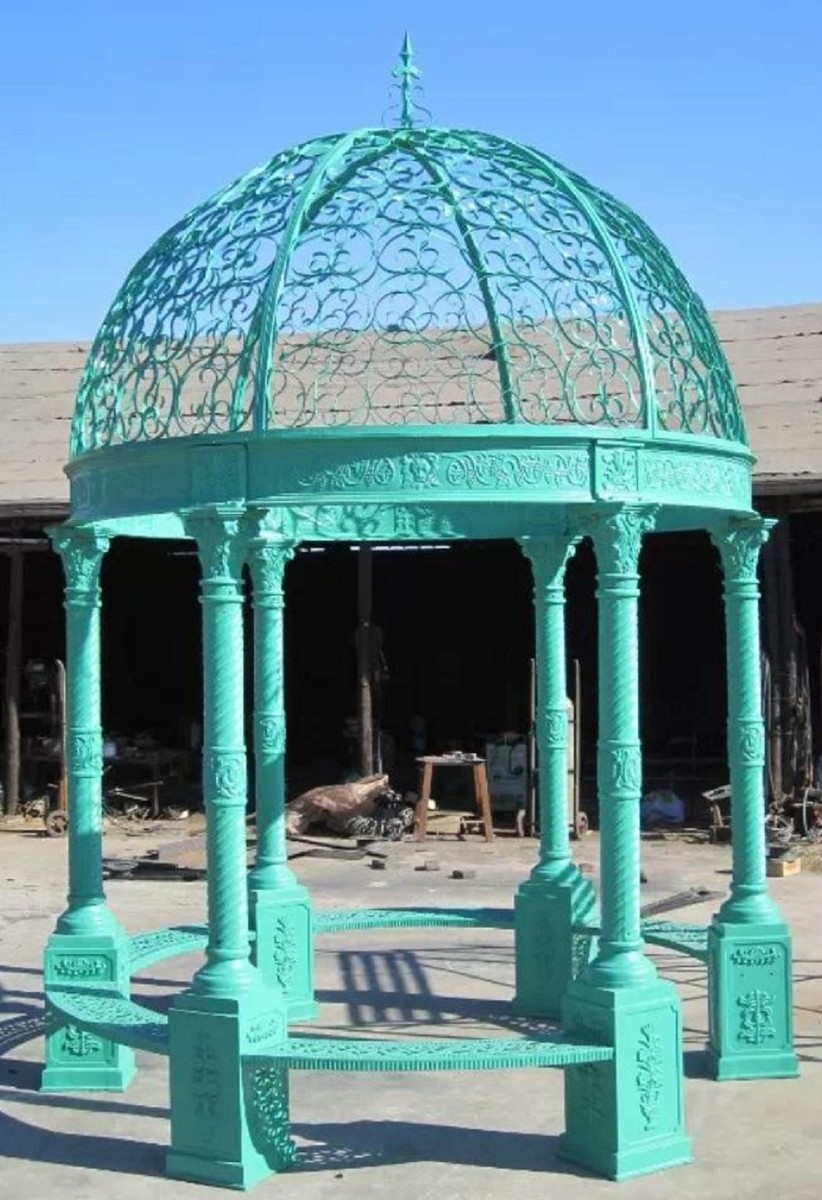
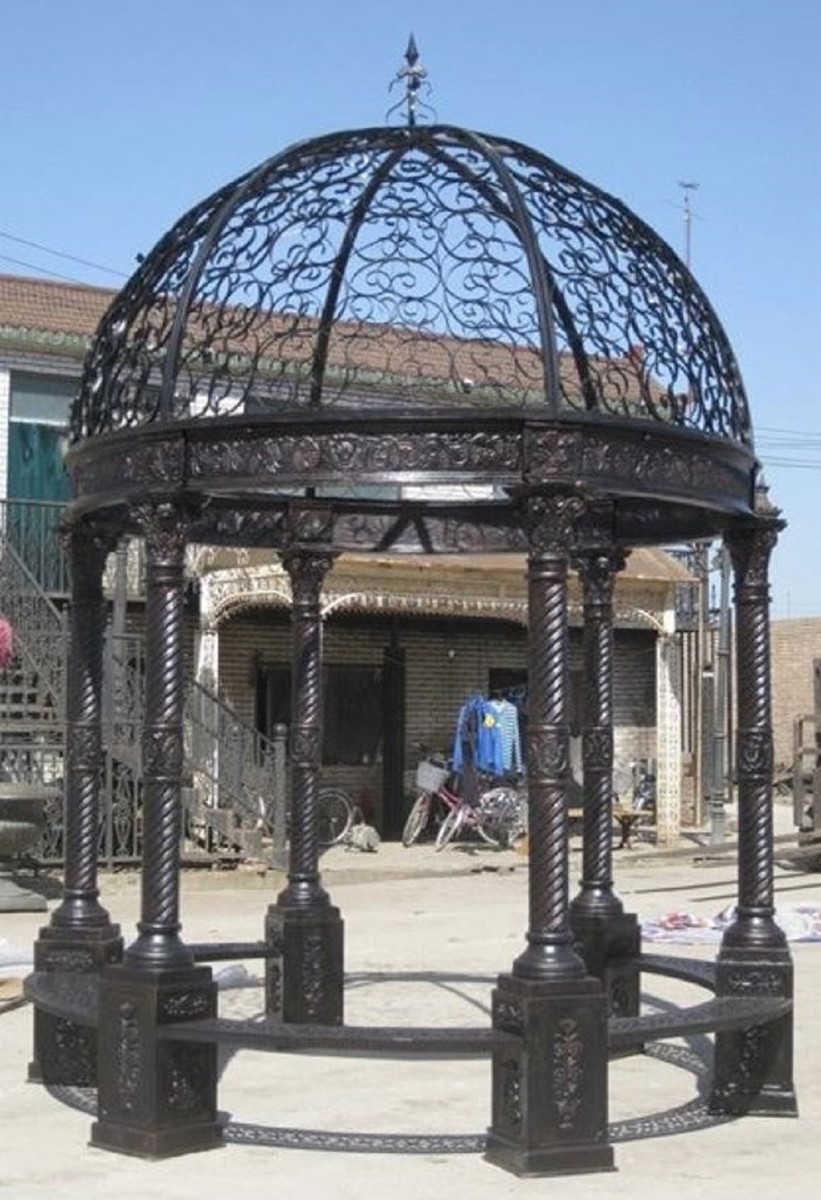
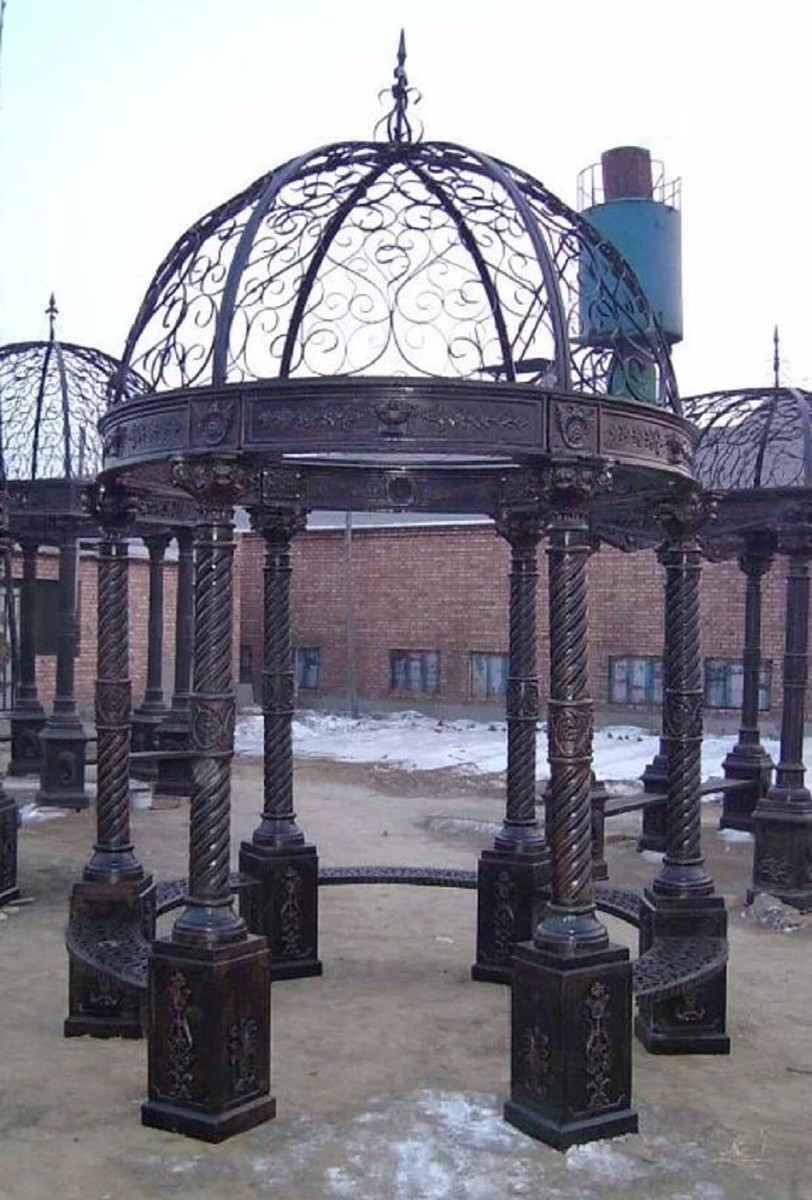
Most baroque pavilions are made of cast iron. The material allows fine ornament such as tendrils, scrolls and foliage running across the columns and the edge of the roof. It is heavy and stable and is given a coloured coating: black, white, brown, mint green or combinations with gold.
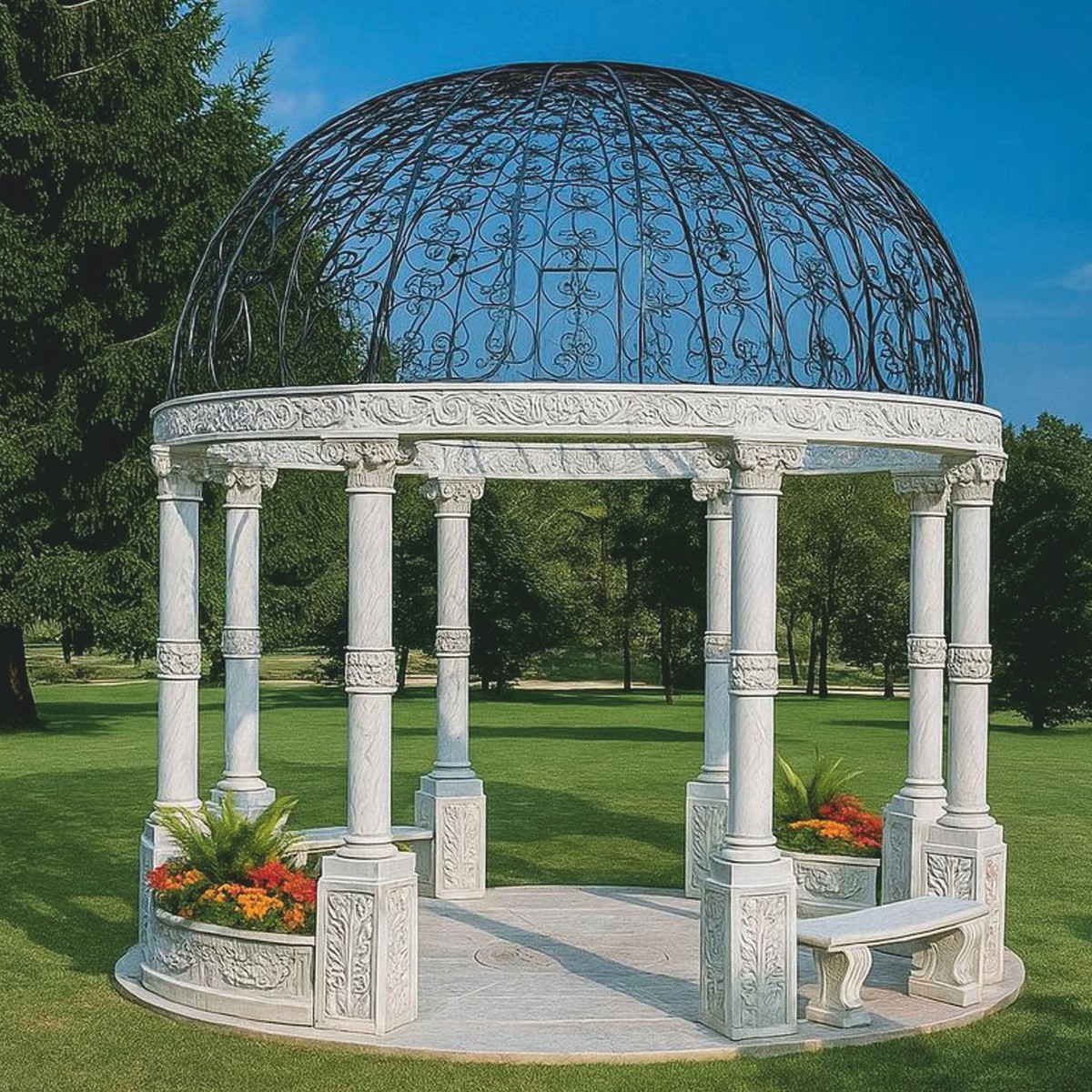
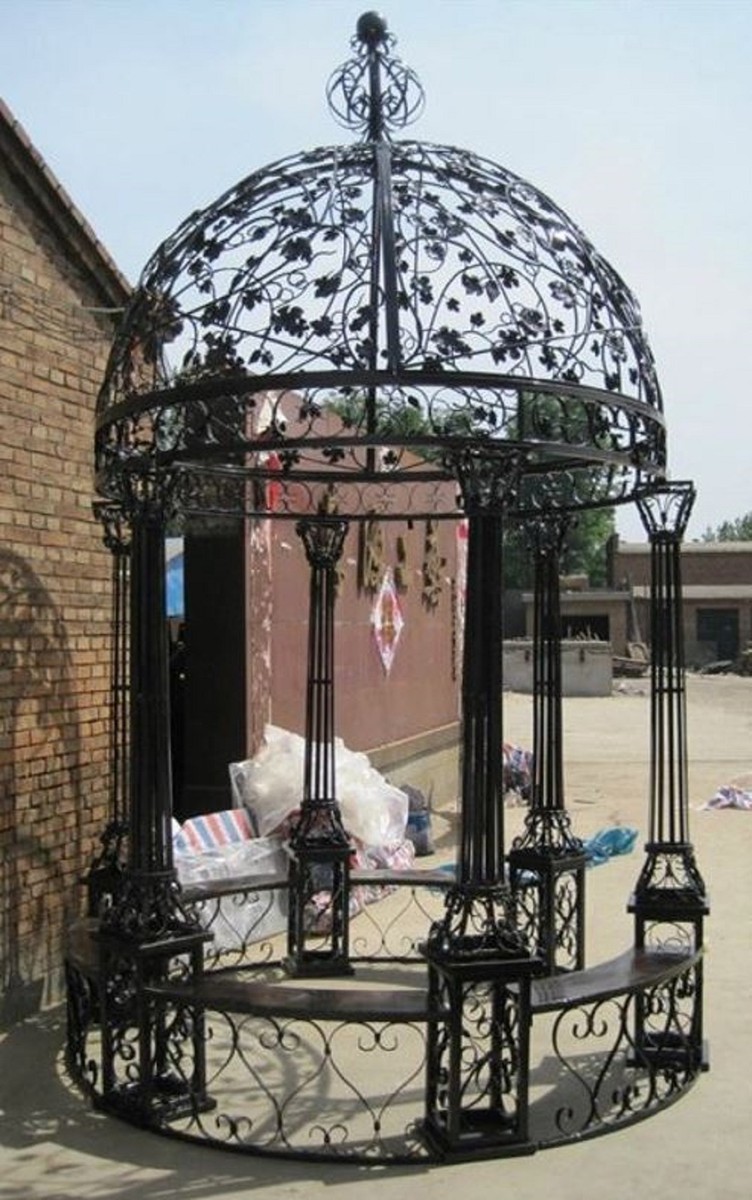
Wrought iron looks a little lighter and more linear. Round wrought iron pavilions with a tall dome are popular as wedding pavilions. Many models have built-in benches between the columns, creating seating for several people without any further furniture.
The colour determines the effect in the garden. Black and dark brown recede and let the ornaments appear as a silhouette against greenery and sky. White and mint green feel cheerful and add a bright accent. Gold on finials and decorative details highlights the dome.
Marble pavilions with statues
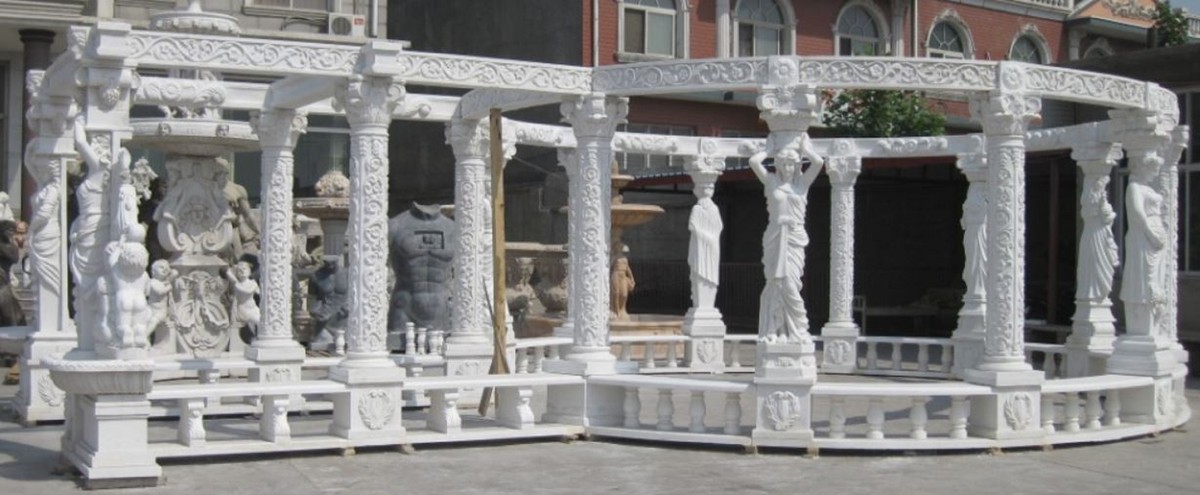
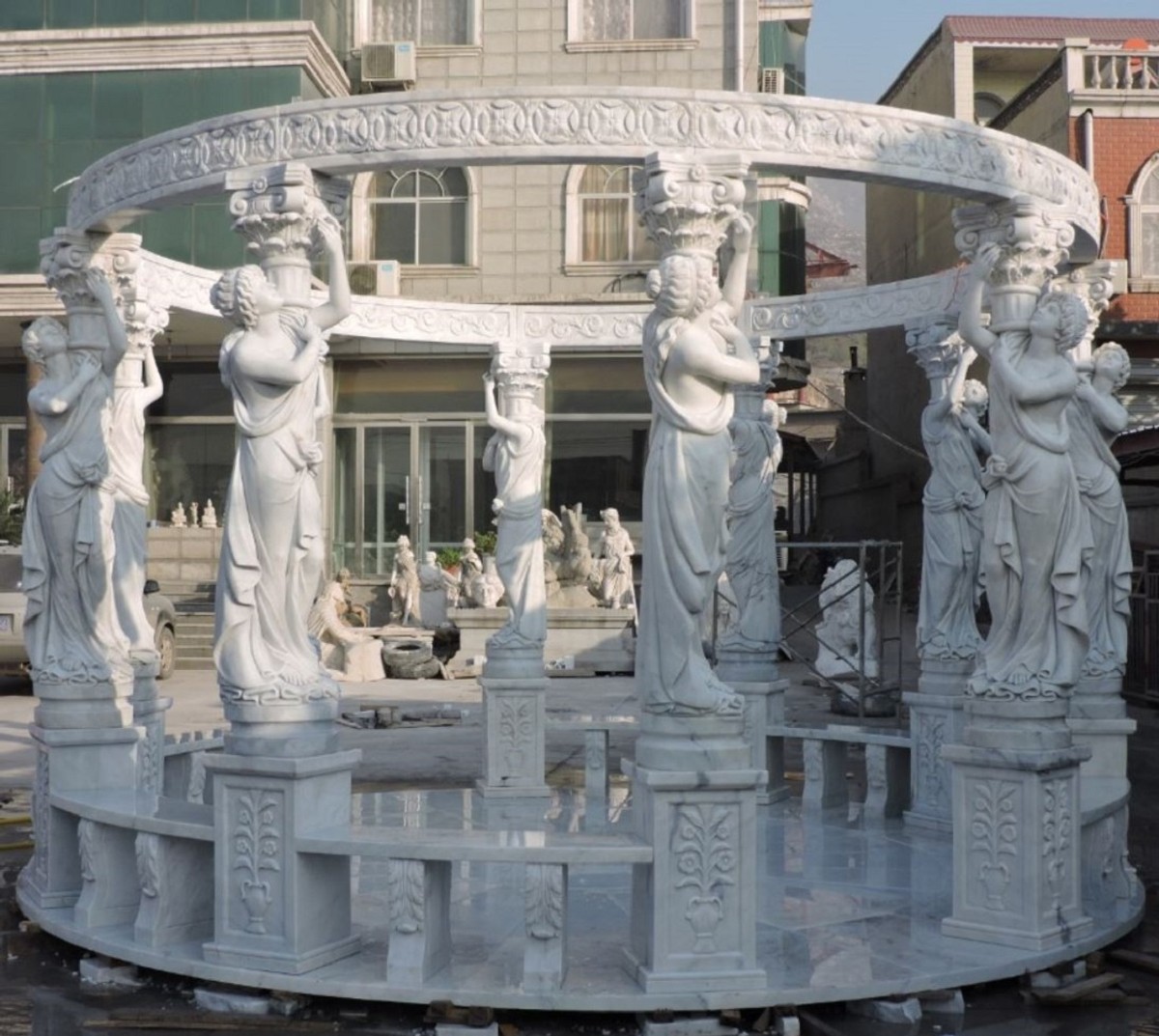
The grandest form is the marble pavilion. Columns, entablature and benches are made of stone, often complemented by statues on the columns. These structures combine baroque forms with elements of Art Nouveau and recall the temples of historic landscape gardens.
Marble pavilions come round with a diameter of about 5 m or rectangular at almost 10 m long. They suit large estates, hotel grounds and wedding venues. Columns and figures as individual pieces are under baroque columns and baroque statues and sculptures.
Dimensions, foundations and installation
Baroque pavilions are substantial structures. Diameters in the range run from about 2.40 m to over 5.50 m, and heights are mostly between 3.60 and 6.80 m. Rectangular models measure, for example, 3.90 x 2.50 m. Allow a clear area all around so the structure can make its full impact.
Cast iron and wrought iron pavilions as well as marble structures need a load-bearing, level base. A foundation or a concrete slab is usual. Check in advance with your local planning authority whether permission is required for the size. The garden must be accessible to heavy equipment for delivery and installation.
Involve your garden designer early on. They will check access, ground conditions and the position relative to trees whose roots could affect a foundation. Lighting and power supply are best planned before the foundation is laid.
Designing the garden around a pavilion
A pavilion has the greatest impact at the end of an axis, for example at the end of a path, a strip of lawn or on the bank of a pond. Low hedges of box or yew frame the spot and emphasise the symmetry. Climbing roses or wisteria on the columns soften the structure.
A fountain within view completes the picture of a baroque garden. Suitable models are on the baroque fountains page. For furnishing the inside or the area in front, benches and tables such as those under baroque benches are ideal.
Lighting extends its use into the evening. Lanterns along the paths and a light under the dome make the pavilion a destination even after dark. Cushions on the benches and a table in the middle create a place for conversation.
Hotels, weddings and event venues
For hotels, stately homes and event venues, a pavilion is a place for wedding ceremonies, receptions and photographs. A round wrought iron pavilion with a dome provides the setting for an outdoor ceremony. A large marble pavilion with benches becomes a regular meeting place in the grounds.
As a wholesaler, we advise commercial customers on their selection and put together pavilions along with further furnishings. You will find furniture for the interiors of such venues under baroque hotel furniture, and the complete style world under baroque furniture.
For changing occasions, the pavilion can be decorated with fabric drapes, floral garlands and candles. The architecture stays the same, only the dressing changes. That way a venue can use the same structure for summer parties, weddings and winter celebrations.
Price range and care
Baroque pavilions are an investment in the design of a property. Smaller cast iron pavilions start at around €24,000, while large wrought iron and cast iron models are between €30,000 and €70,000. Marble pavilions with statues can reach around €150,000. All models are in the garden houses and pavilions category.
Check iron pavilions once a year for damage to the coating and touch it up where needed. Remove leaves and dirt with water and a soft brush. Marble is cleaned with clear water, as acidic products attack the stone.
Matching pieces from our range
View all items in Garden Houses & Pavilions
Frequently asked questions
What is a baroque greenhouse?
Historically it is called an orangery: a glazed building in which plants overwinter. Today the term is also used for baroque style pavilions. Our models are open pavilions that serve as a place to sit and a focal point.
What materials are baroque pavilions made of?
Most models are made of coated cast iron or wrought iron. The grandest pavilions are made of marble and adorned with statues.
How large is a baroque garden pavilion?
Round models have a diameter of about 2.40 to 5.50 m and are up to 6.80 m tall. Marble pavilions can be almost 10 m long. The exact dimensions are listed for each product.
Does a garden pavilion need a foundation?
Yes. Because of the considerable weight, a load-bearing, level base is required, usually a foundation or a slab. Check with your local planning authority whether planning permission is needed.
Are there pavilions with benches?
Yes. Many cast iron and wrought iron pavilions as well as the marble pavilions have built-in benches between the columns. This creates seating without any further furniture.
Are the pavilions suitable for weddings?
Round wrought iron pavilions with a dome are often used as wedding pavilions. Hotels and event venues use them for ceremonies, receptions and photographs.
How do I care for a cast iron pavilion?
Clean it with water and a soft brush. Check the coating every year and touch up any damage so that no rust forms.
Can I combine a pavilion with a fountain?
Yes, that is exactly the picture of a baroque garden. Place fountain and pavilion on a shared axis so they enhance each other. Plan the water and power supply together.
Which colour suits a baroque garden?
Black and dark brown look classic and recede against the greenery. White and mint green add bright accents. Gold decorative details suit both approaches.