Garden Fountains: Outdoor and Wall Fountains for Gardens and Hotels
Few objects change an outdoor space as much as a garden fountain. The sound of moving water softens traffic noise, the surface catches the light, and the fountain gives the garden a clear centre. In a courtyard, on a villa terrace or in front of a hotel, a well chosen piece sets the tone for decades.
Barockgrosshandel supplies outdoor fountains, wall fountains and fountain figures in bronze, marble and cast stone. Many designs follow the Art Nouveau style, with flowing lines, shells and graceful female figures. We work with retailers, hotels, interior designers and private clients alike. The full selection is gathered under fountains and water columns.
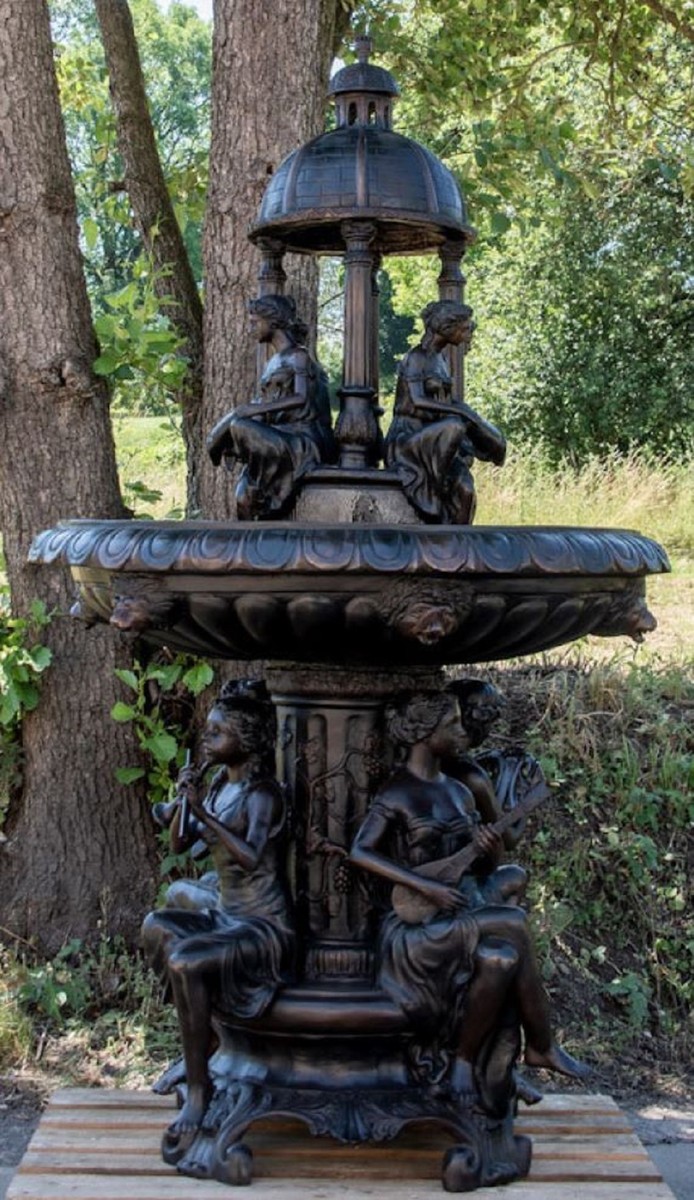
Types of fountain: tiered, wall mounted and spouting figures
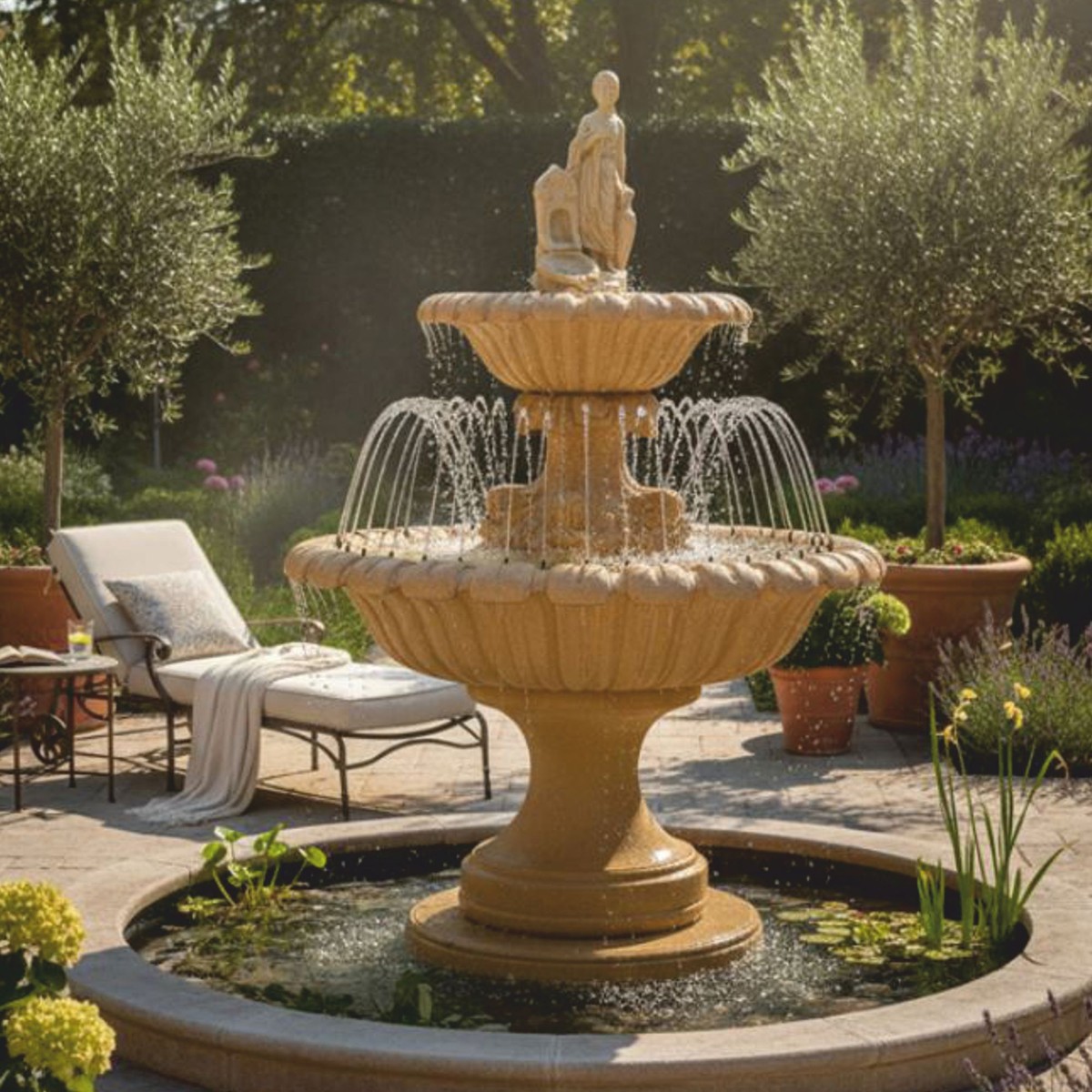
The classic outdoor fountain stands free and is seen from every side. It usually combines a basin, a central column and one or more bowls over which the water spills. Larger pieces, such as an Art Nouveau fountain with a ring of water jets, reach 240 cm and work as the focal point of a circular lawn or gravel court.
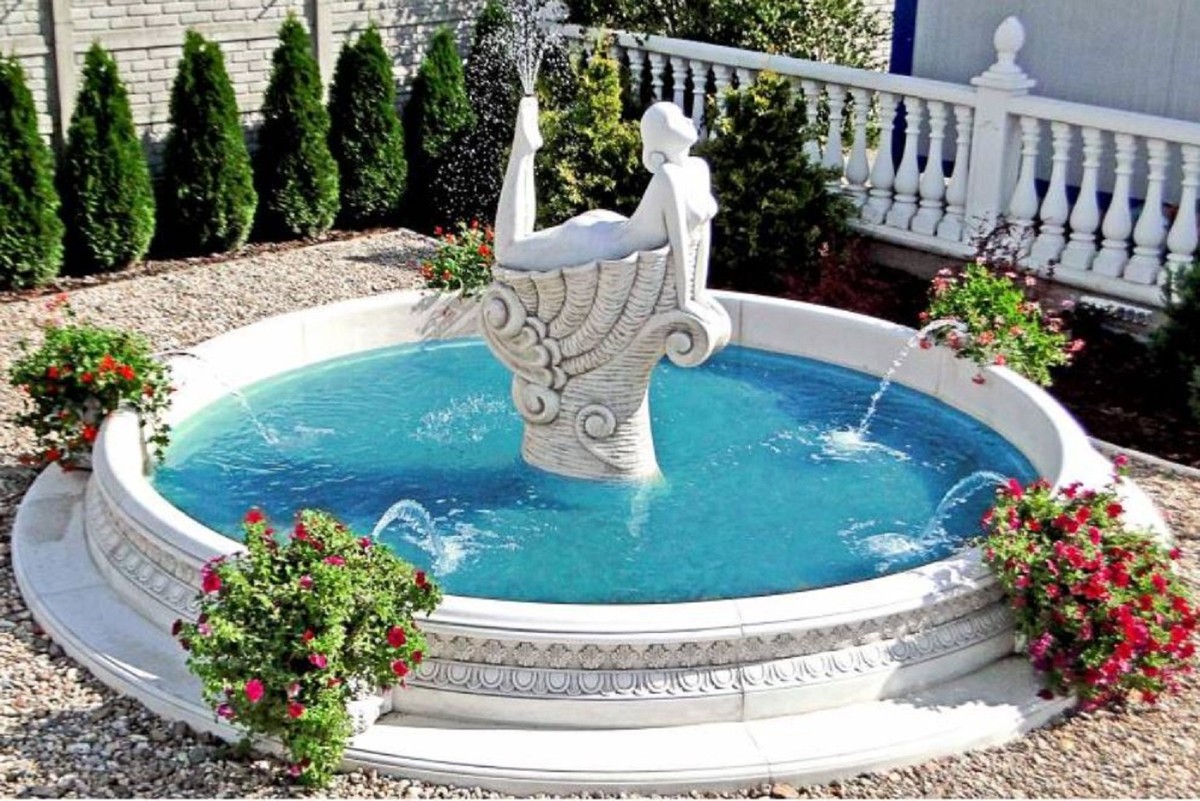
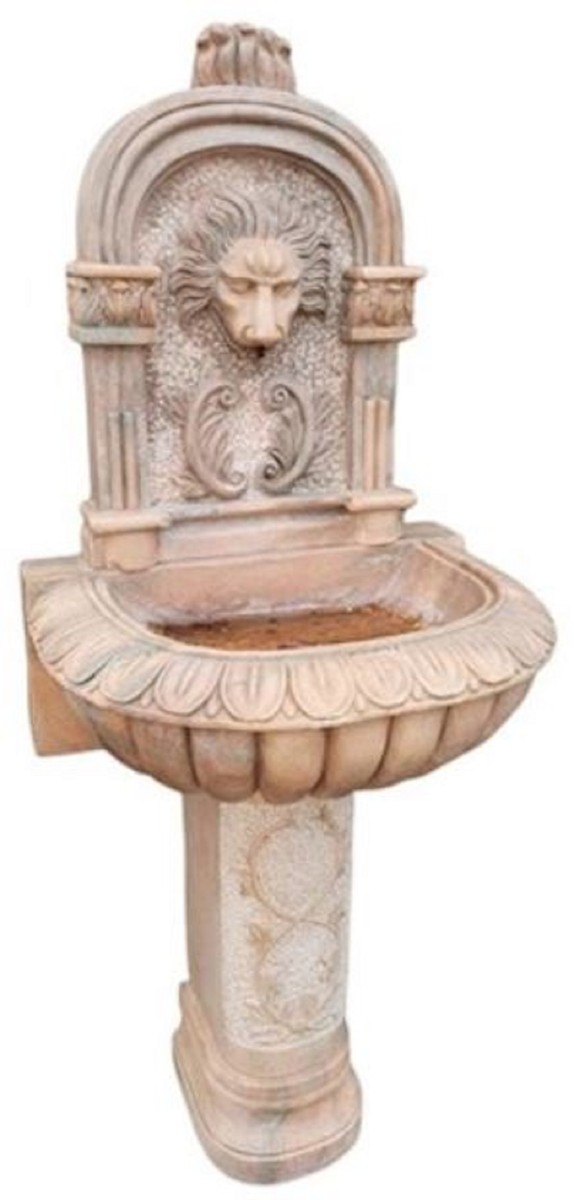
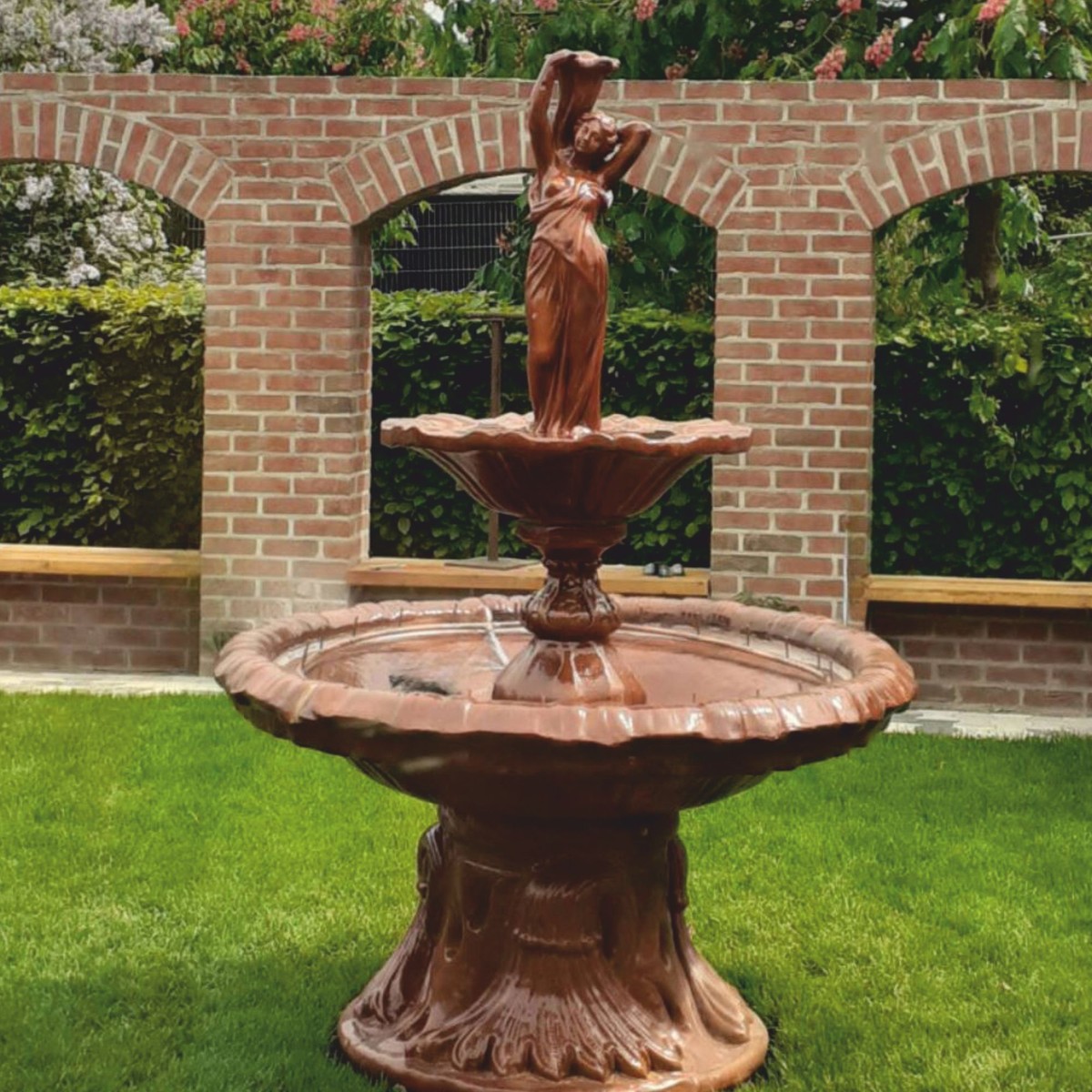
A wall fountain needs very little floor space. It rests against a wall or facade and suits courtyards, narrow terraces and entrances. Spouting figures are the most compact option: a figure holding a jug or shell pours water into a basin or pond. Designs without their own basin are listed under fountains without surrounds.
Materials: bronze, marble and stone
Bronze is the noblest fountain material. It withstands the weather extremely well and develops a patina that deepens its character over time. Bronze fountains with a sea nymph, frogs on a tree trunk or several tiers show fine detail that stone can rarely achieve. More cast work can be found among our bronze figures and sculptures.
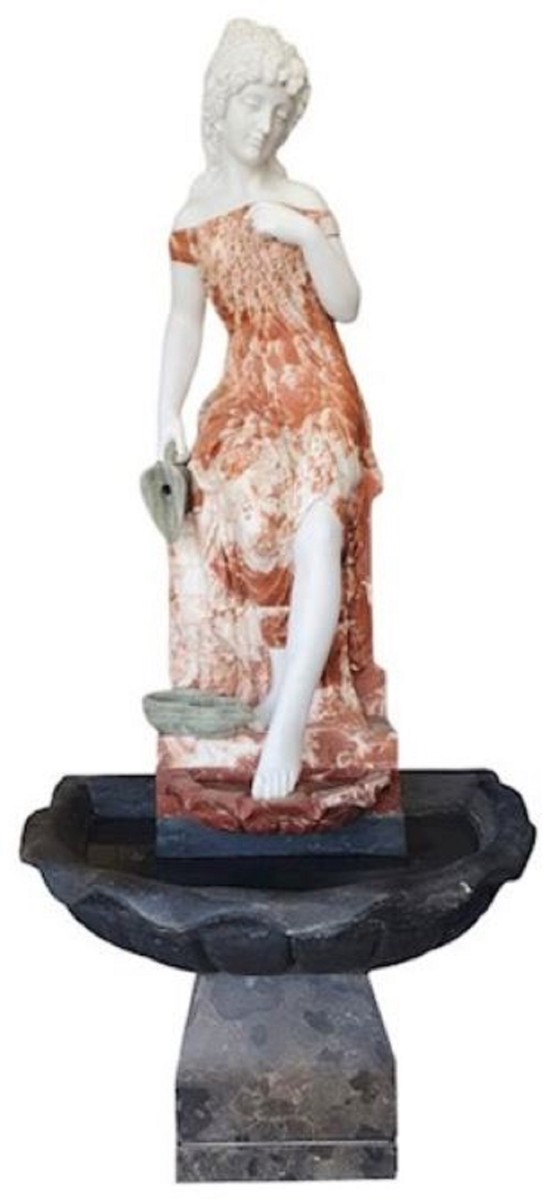
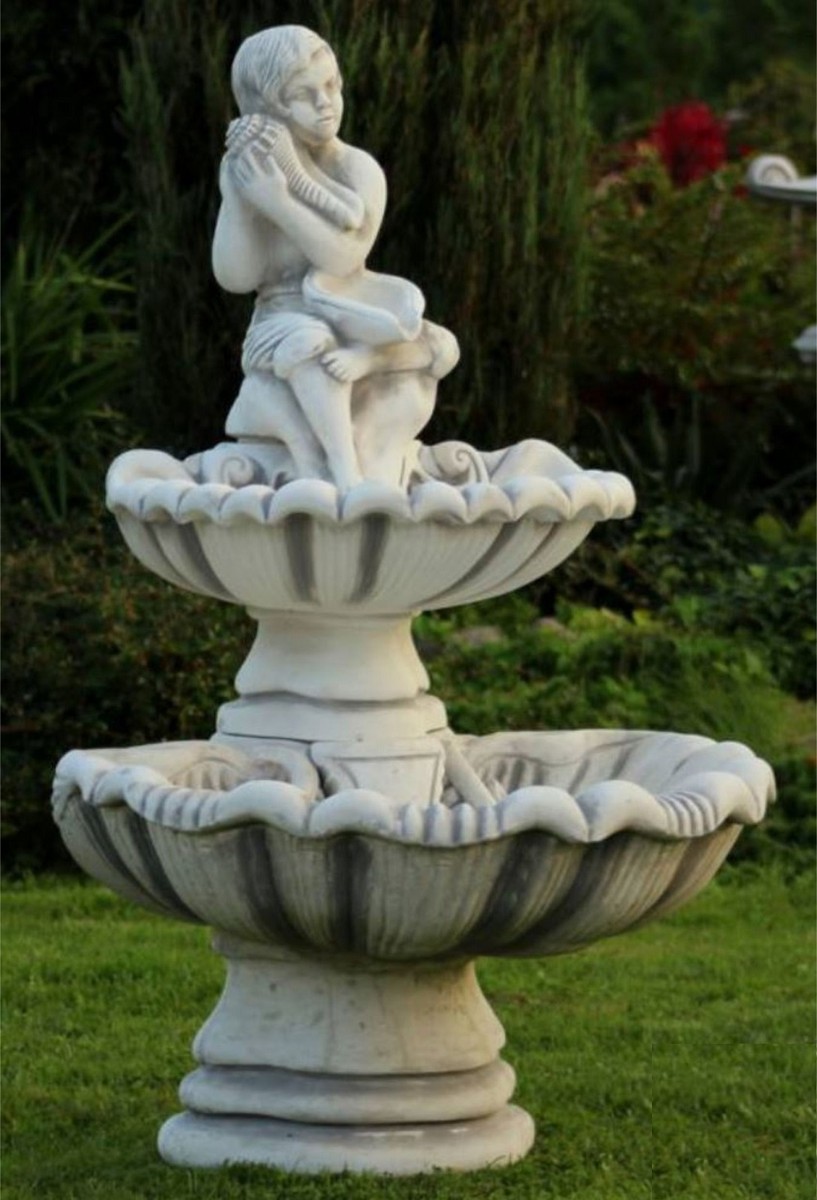
Marble looks cool and precise. Coloured varieties in pink, red or grey are especially attractive for wall fountains and figurative pieces. A stone fountain in cast stone, finished in grey, white or beige, allows large formats at a more moderate price. It absorbs some moisture and ages naturally, which suits trees and hedges. Moss and slight discolouration are part of the look. If you prefer a smooth, light surface for many years, marble or bronze is the better choice.
Planning: position, size and foundation
Plan the fountain from the main sight lines. It should be visible from the living room window, the hotel entrance or the favourite seat. A fountain 130 cm across needs roughly a metre of clear space around it. Very large installations, such as a figure set in a basin 500 cm wide, deserve a space of their own. Proportion matters too. A delicate fountain disappears in front of a tall facade, while a massive one overwhelms a small courtyard.
Weight is considerable. Large bronze and stone fountains weigh several hundred kilograms, and a filled basin adds much more. A concrete foundation laid below the frost line is therefore essential. It must be perfectly level, otherwise the water runs over one side of the bowls. On roof terraces, a structural engineer should confirm the load in advance.

Technology: pump, water circuit and power
Most garden fountains run on a closed circuit. A submersible pump in the basin lifts the water up through the column, and it flows back down into the basin. The pump output depends on the lift height and the water pattern you want. An adjustable pump lets you fine tune the flow. Keep it within easy reach so the filter can be cleaned without tools.
Power comes from an outdoor socket or a permanently installed cable. This work belongs in the hands of a qualified electrician. Lay empty conduits while the foundation is being poured. A fountain lit in the evening is especially striking when matching garden lamp posts and lanterns lead the way towards it.
Water pattern and sound
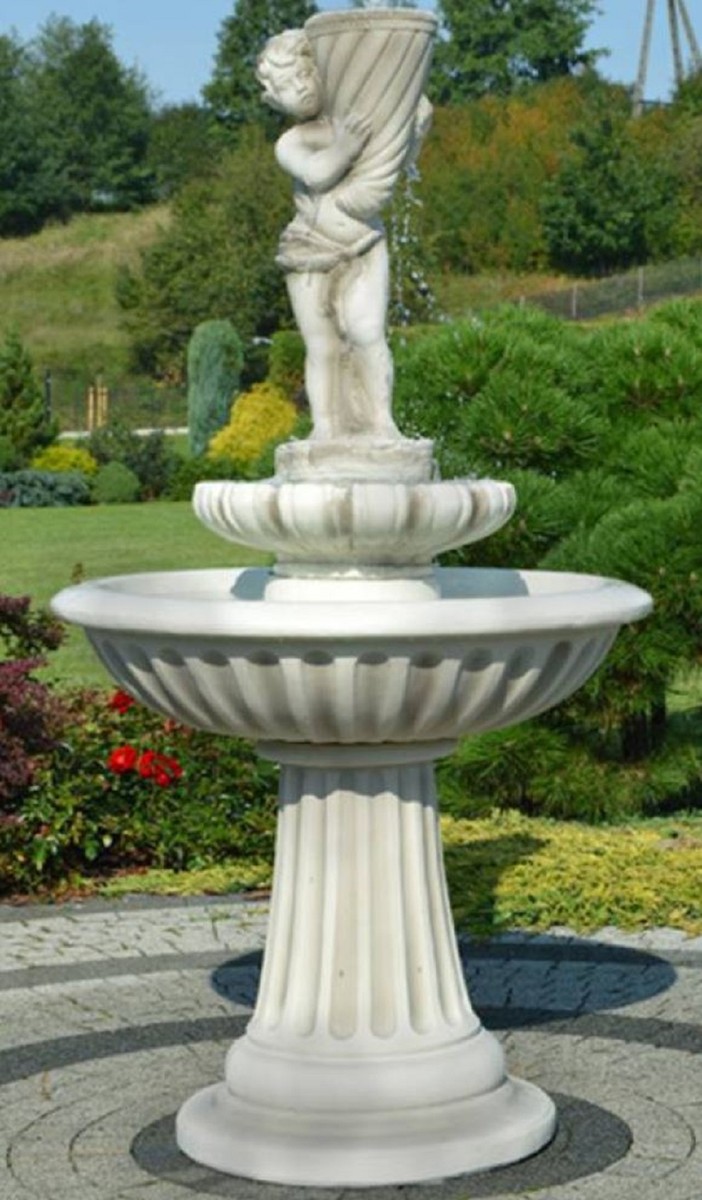
Every fountain sounds different. A tiered fountain produces an even ripple, because the water runs over the rims as a thin film. A ring of jets throws many fine streams and feels far livelier. Figures with a jug or cornucopia release a single stream that falls audibly into the basin.
Think about where you want to hear the water. Near a bedroom window a gentle pattern is more pleasant, while a hotel forecourt can take something stronger. Wind also plays a part: a tall jet drifts easily and wets paths and furniture. A sheltered position saves water and keeps the surroundings dry.
Frost, winter and water care
Frost is the greatest threat to any outdoor fountain. Freezing water expands and can crack stone and bowls. Before the first frost, drain the fountain completely, remove the pump and store it somewhere dry. A breathable cover protects cast stone and marble from standing moisture.
In summer, regular topping up is usually enough, since water evaporates. Remove leaves and algae with a net and a soft brush. Changing the water every few weeks keeps it clear. Avoid harsh cleaning agents, as they attack the patina and the surface. Lime marks come off with clear water and a little patience.
Garden fountains for hotels, villas and estates
At a hotel, a fountain welcomes guests at the driveway. Restaurants place wall fountains in courtyards to create a calm atmosphere. In villa gardens, a fountain marks the meeting of two paths or the end of an avenue. In public areas, a shallow basin is the safer choice for children. For strictly symmetrical layouts, take a look at our baroque fountains.
A fountain is strongest as part of a composition. Statues, urns and planters pick up its material and guide the eye through the garden. Suitable companions can be found among our garden statues in stone and bronze. Further pieces for house and garden appear in the overview of baroque and luxury furniture.
Matching pieces from our range



View all items in Fountains & Water Columns
Frequently asked questions
Which material lasts longest for a garden fountain?
Bronze is particularly durable and weather resistant. It develops a patina but loses no substance. Marble and cast stone also last for many years with proper winter care.
Does an outdoor fountain need a water connection?
No, most fountains run on a closed circuit. The basin is filled once and topped up as needed. All you need is power for the pump.
Who should connect the pump?
Fixed cables and outdoor sockets should be installed by a qualified electrician. That way, circuit protection and earthing are done correctly. Conduits are best planned together with the foundation.
How do I protect a fountain in winter?
Drain the basin and bowls completely before the first frost. Remove the pump and store it dry. A breathable cover keeps standing moisture away from the material.
What foundation does a large stone fountain need?
A level concrete foundation laid below the frost line is recommended. Large fountains often weigh several hundred kilograms once filled. On roofs, a structural engineer should check the load.
Is a wall fountain suitable for a small garden?
Yes, a wall fountain takes up very little floor space. It fits against walls, in courtyards and on terraces. In small spaces the sound of water is even more noticeable.
How do I keep the water clean?
Remove leaves regularly and change the water every few weeks. A partly shaded position slows algae growth noticeably. A soft brush and clear water are all you need for cleaning.
What price range do your garden fountains cover?
The models shown range from around 1,000 € for a spouting figure to over 14,000 € for a large bronze fountain. Material, size and detail make the difference. Delivery is made free to the kerbside.