Baroque vases: ornate vases in porcelain, ceramic and bronze
A baroque vase is far more than a vessel for flowers. With its rounded body, handles and rich decoration, it is an object that shapes a room even when empty. On a console table, a mantelpiece or its own pedestal, it creates a clear focal point.
Barockgrosshandel stocks baroque style vases by Casa Padrino for retailers, hotels, interior designers and private customers. The range includes porcelain and ceramic vases, hand-painted terracotta, bronze vases on marble bases and complete vase sets. Prices start at around €200 for a lidded vase and go up to more than €13,000 for large hand-painted pieces. Here you can read about the shapes and materials available and how to display baroque vases to best effect.
Shapes and characteristics of baroque vases
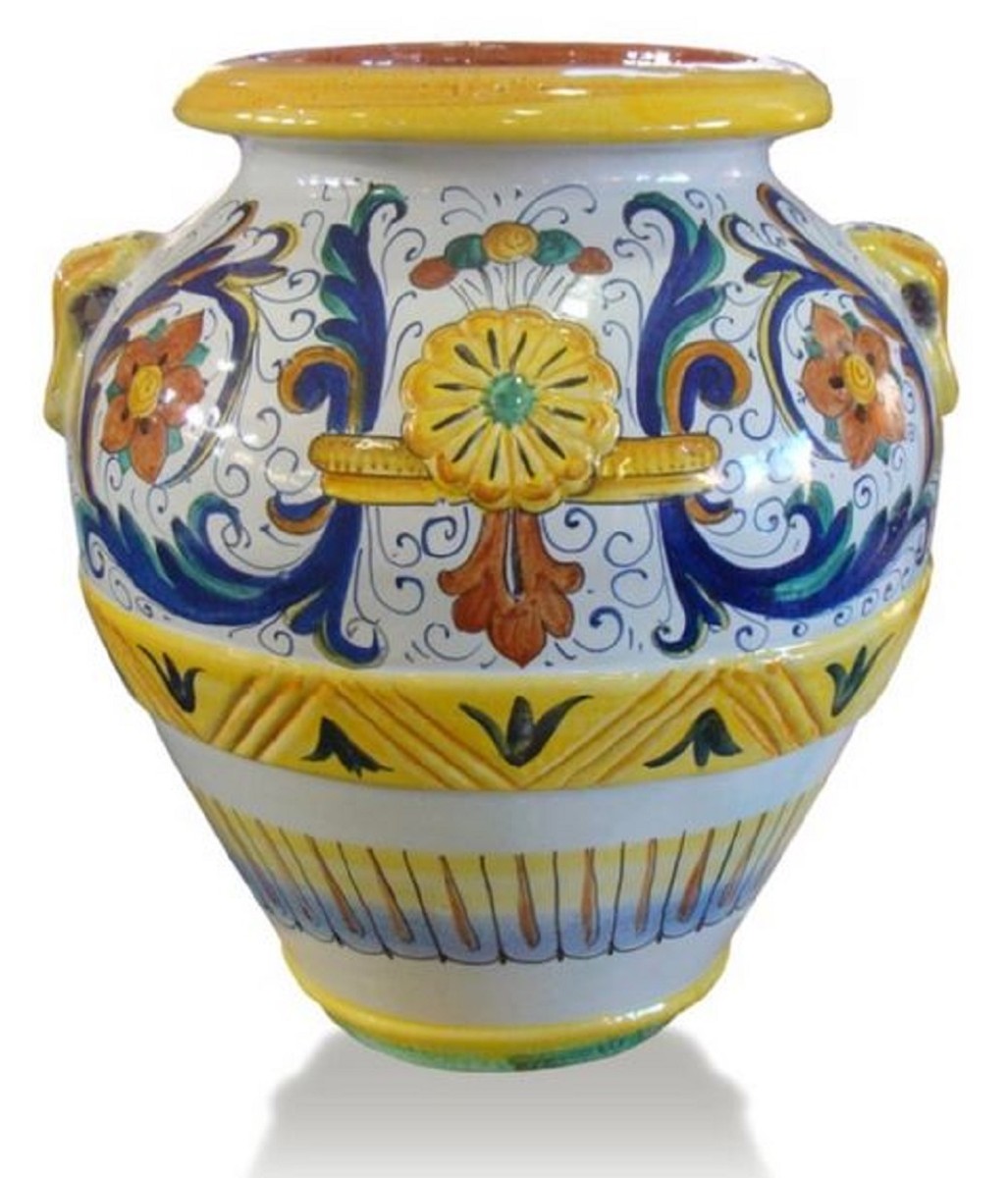
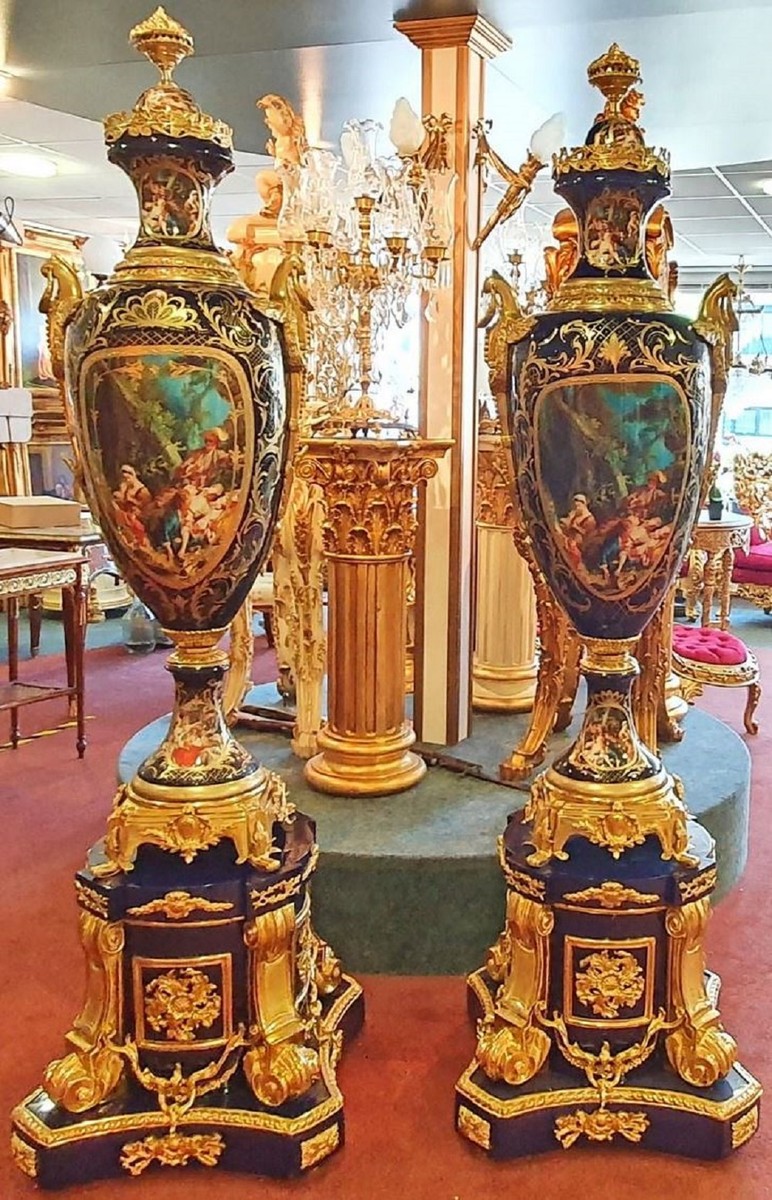
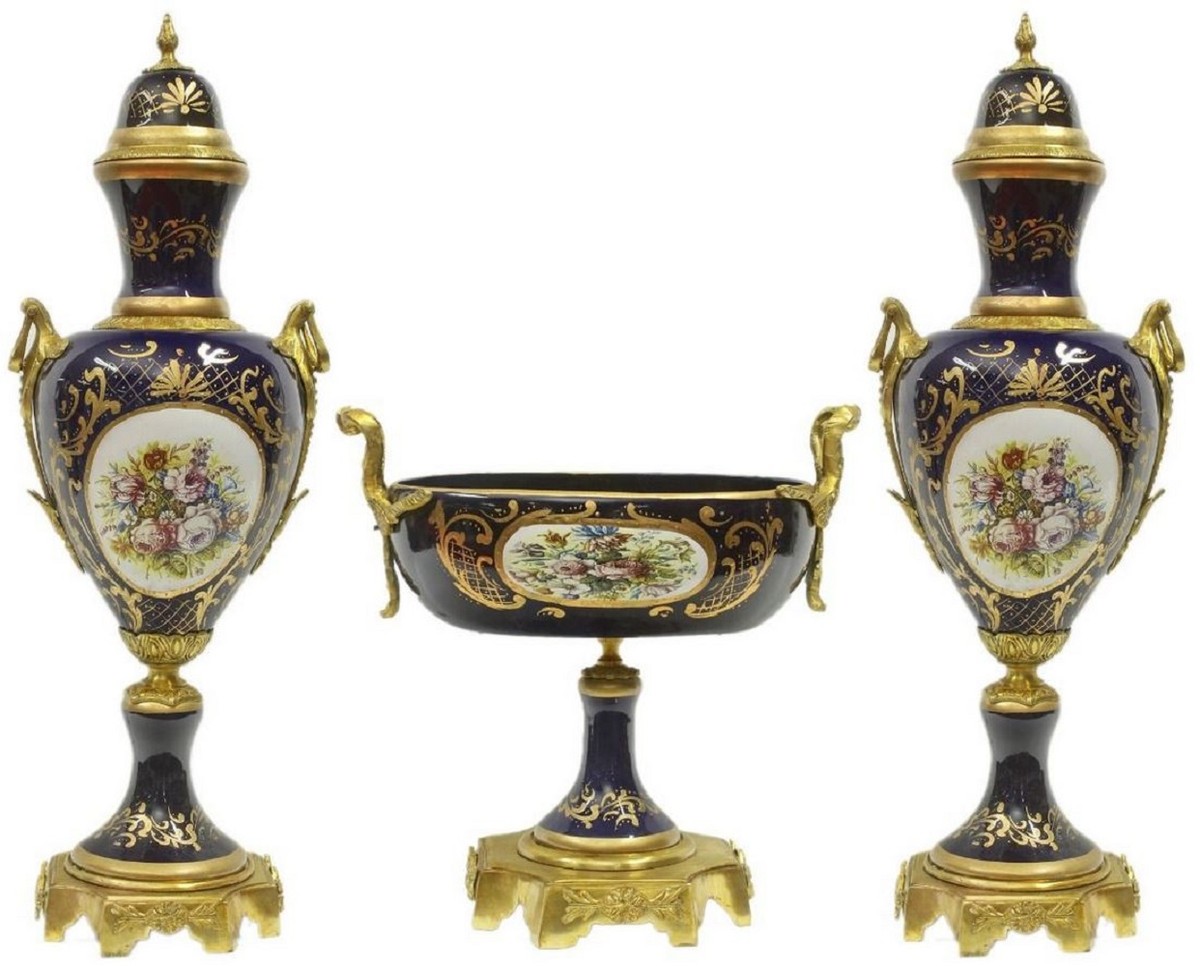
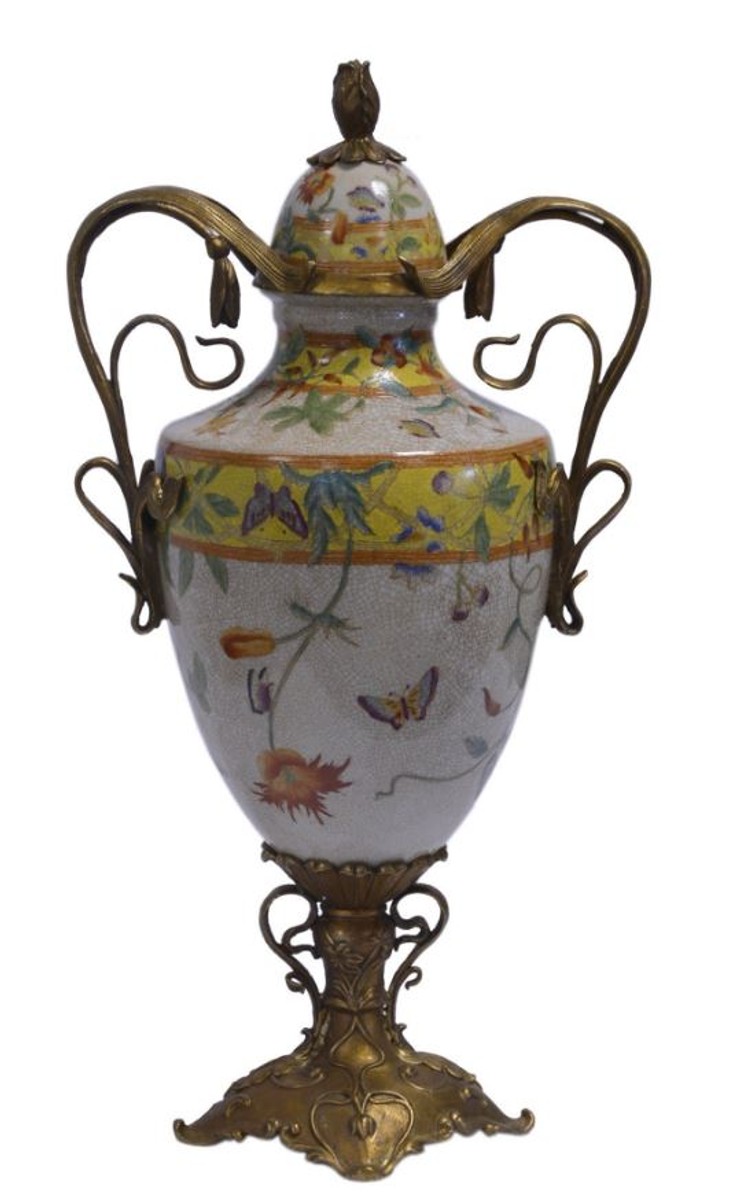
The typical baroque style vase has a rounded body on a narrow foot. Many designs have two side handles, and some have a lid with a finial. These lidded vases hark back to the grand ornamental vessels of baroque palaces and were often displayed in pairs. There are also slimmer baluster vases, urn shapes and amphorae.
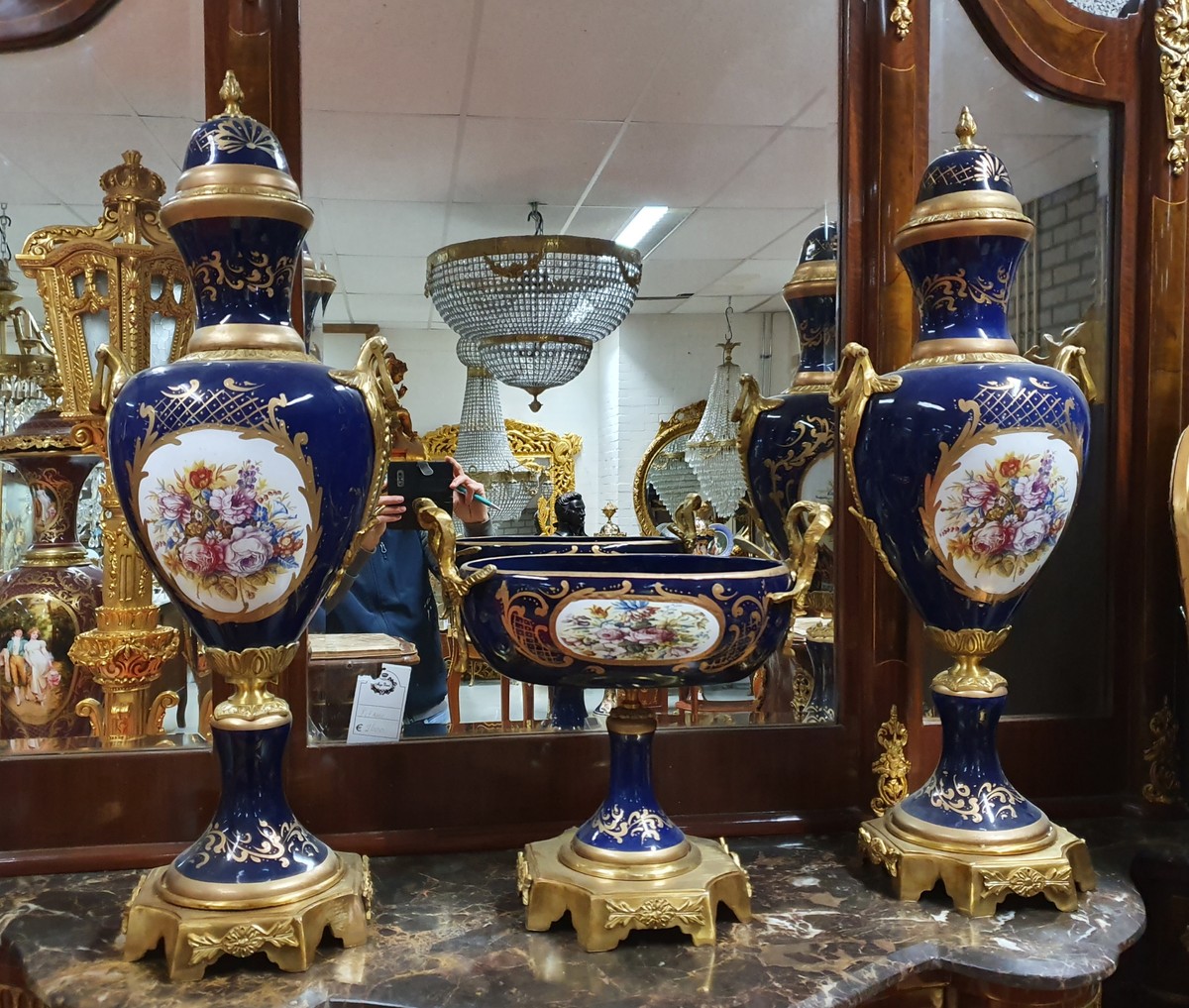
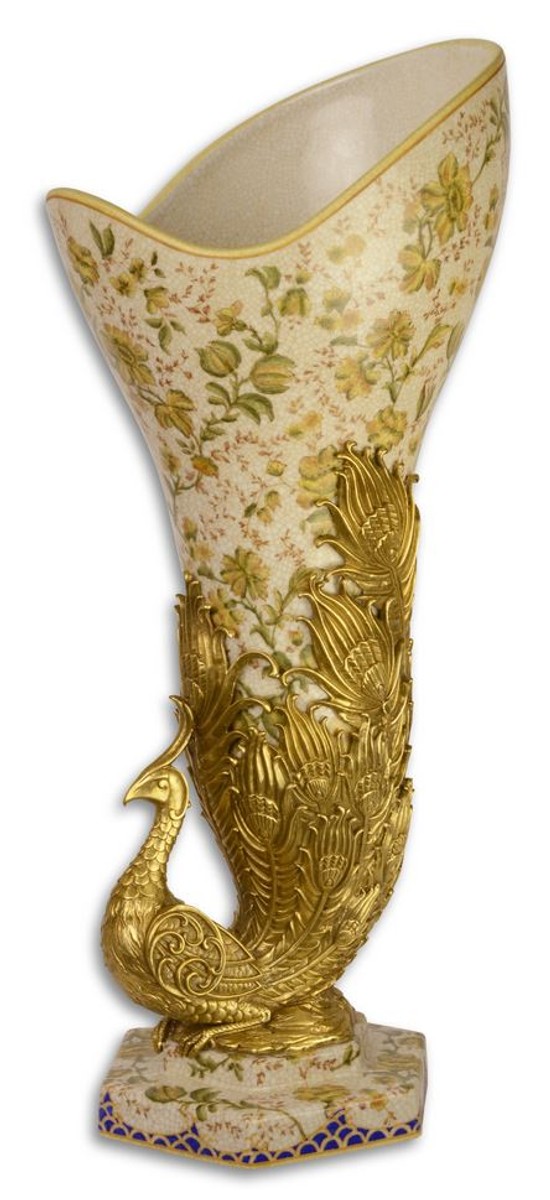
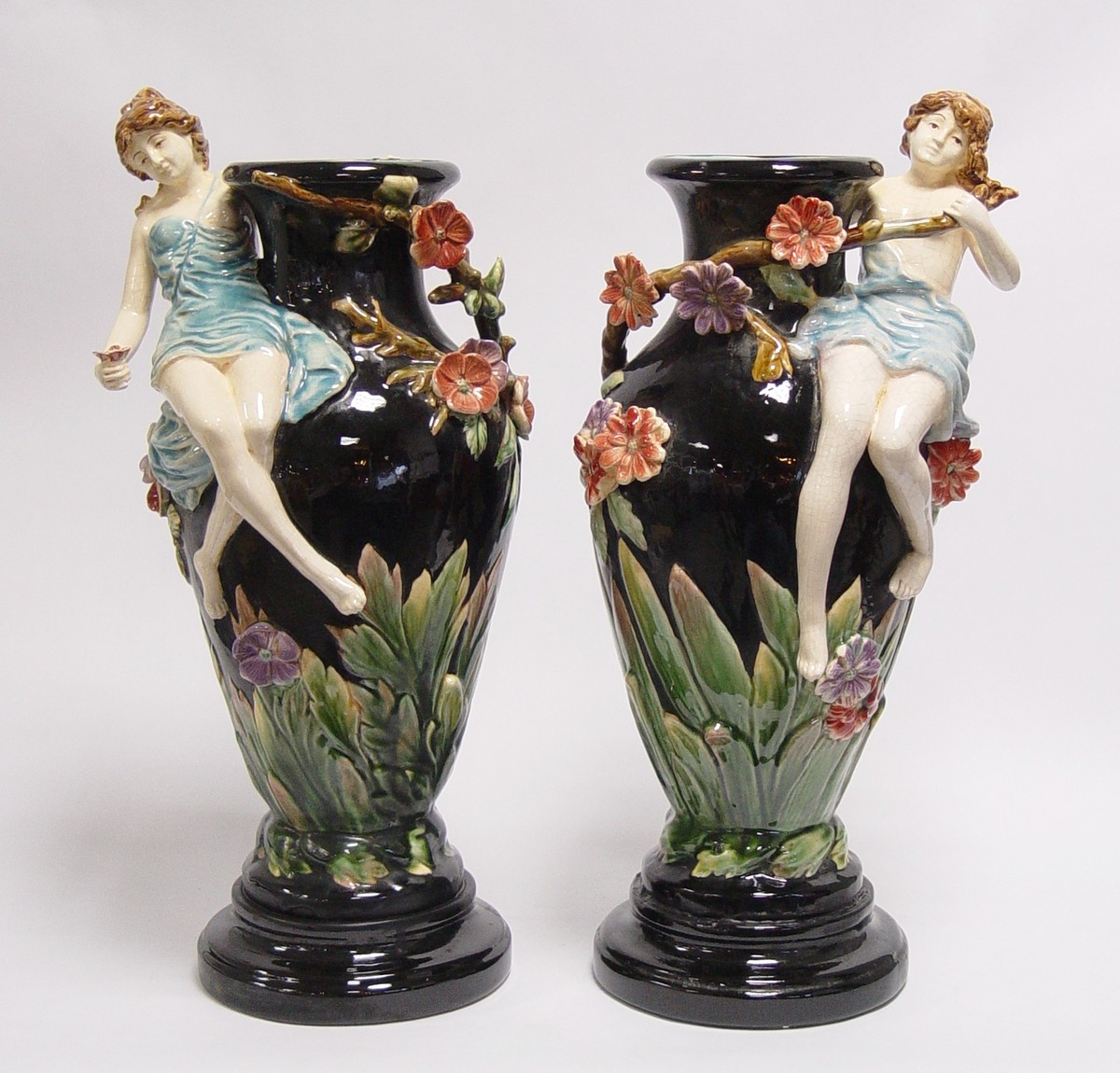
The surface is rarely plain. Floral painting, birds, figurative scenes or peacock motifs cover the body. Gilded rims, relief work and brass handles emphasise the contours. The dominant colour schemes are cobalt blue and gold, white with blue, cream with bronze and bold multicoloured designs.
Many motifs go back to the porcelain collections of baroque courts. Blue and white painting and rows of lidded vases once adorned entire porcelain cabinets. This idea of a collection is easy to adopt today, for instance with several vases from one colour family on a shelf.
Materials: porcelain, ceramic, terracotta, bronze and wood
Porcelain is the classic material for fine baroque vases. It allows thin walls, clear glazes and detailed painting. Ceramic is sturdier and suits large formats, such as vases on bases more than two metres tall. Hand-painted terracotta has a warmer, slightly more earthy feel as a material, while remaining entirely baroque in shape.
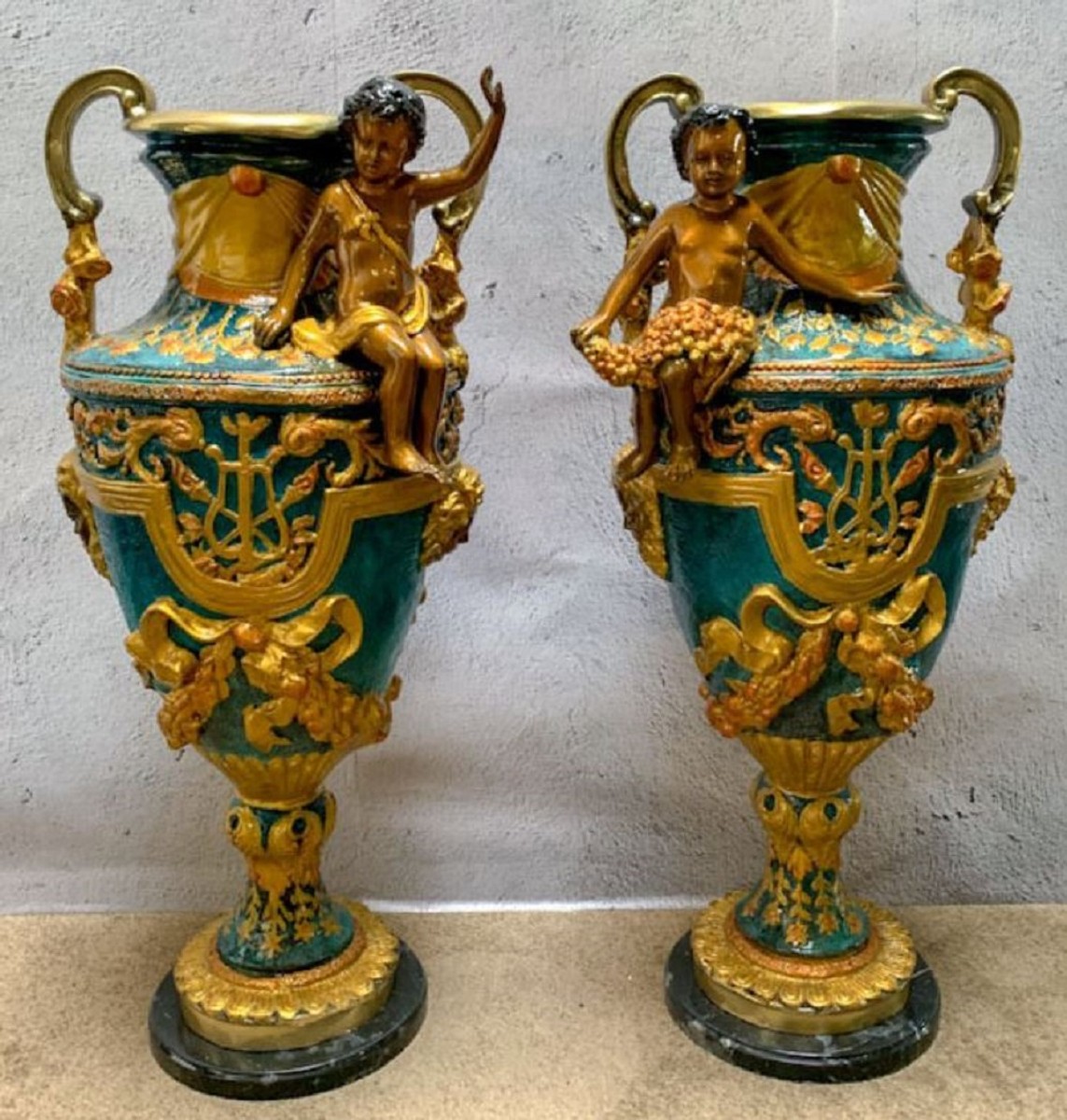
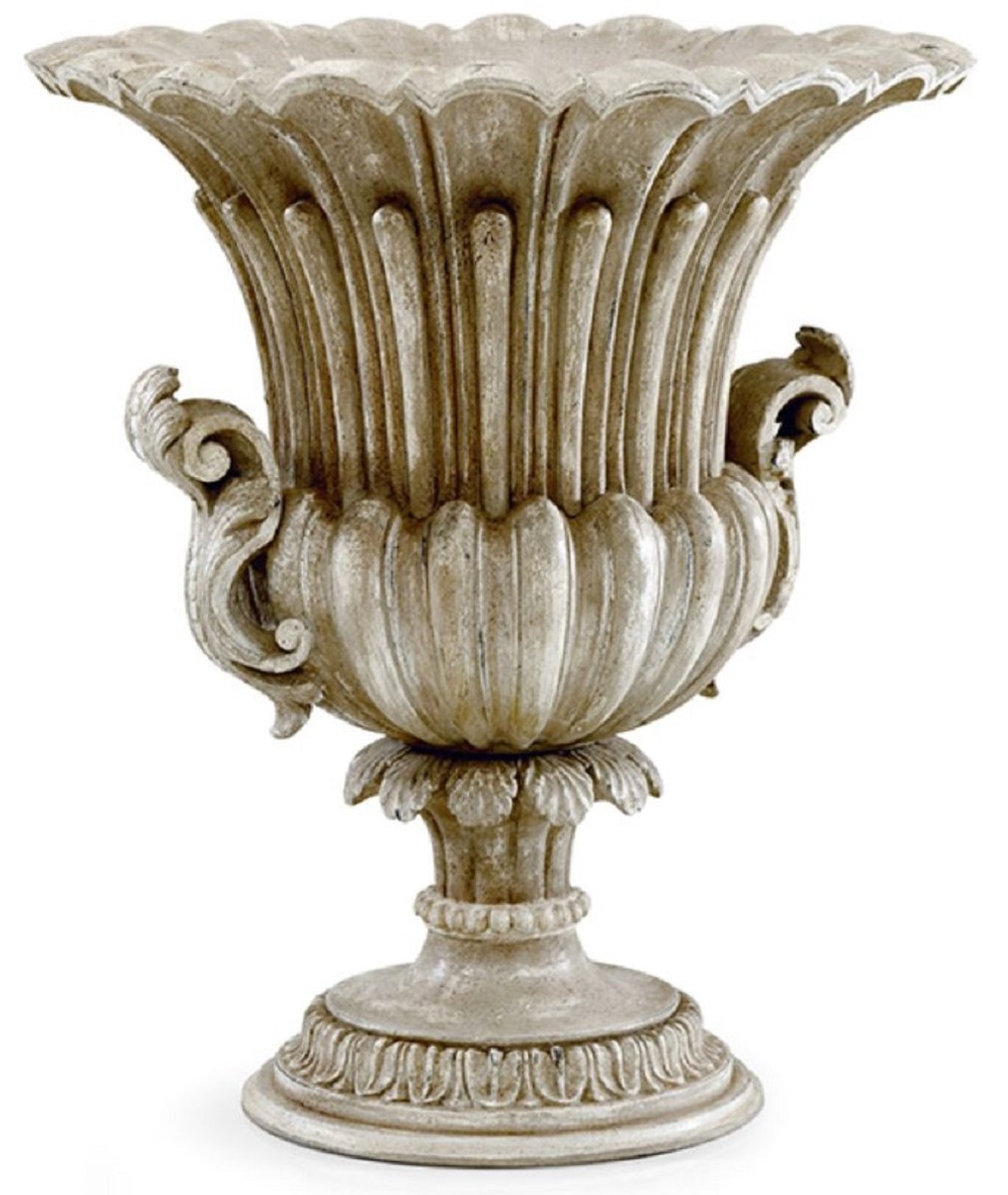
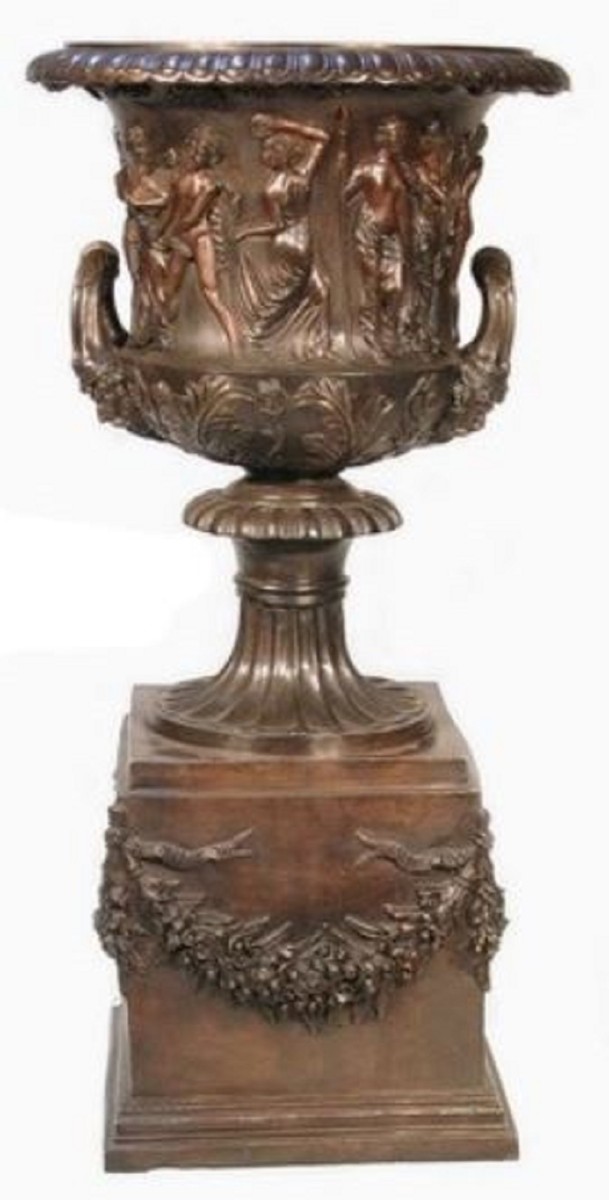
Bronze vases often stand on a marble base and look almost like sculptures. Large bronze vessels on pedestals also serve as planters in a conservatory or on a terrace. Carved solid wood vases with an antique finish are rarer. They are purely decorative and not intended to hold water.
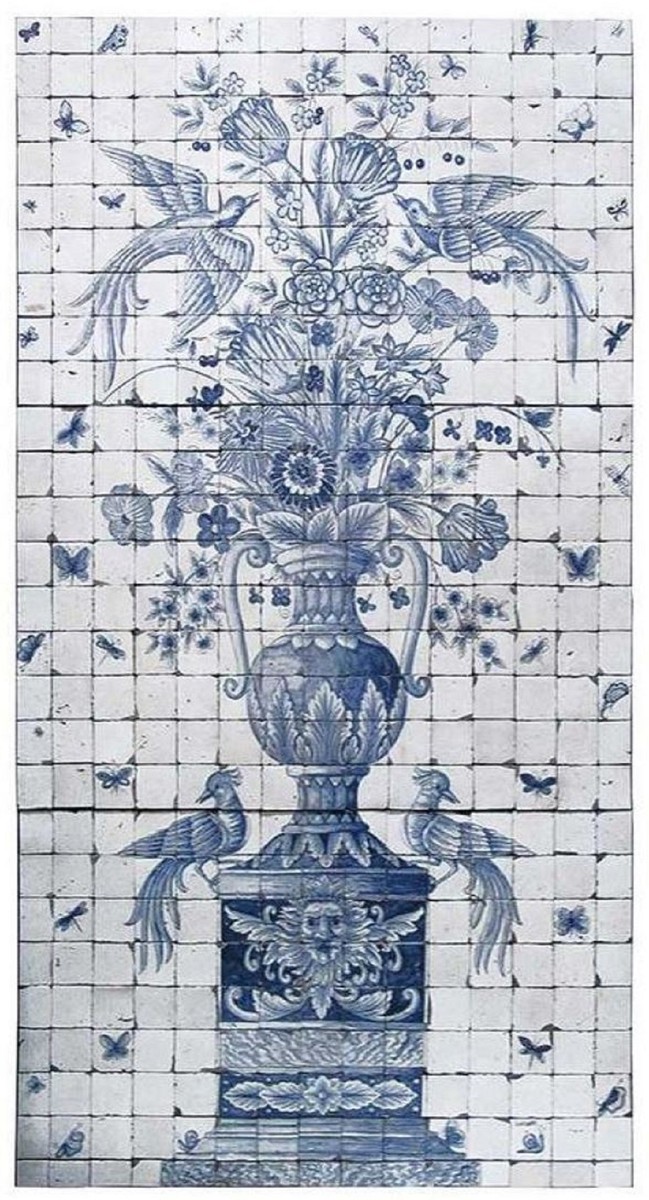
Mosaic wall pictures showing a vase with flowers and birds are a special case. They are made of hand-painted natural stone tiles and reach heights of more than 2.5 m. Pieces like these suit lobbies, bathrooms and terraces, where a real vessel would be too delicate.
Sizes, sets and vases on pedestals
Table vases 40 to 55 cm tall suit a console table, sideboard or dining table. Sets of two vases and a bowl form a symmetrical group, just as was customary in the baroque period. For a mantelpiece or sideboard, pairs of identical vases framing the piece on the left and right work well.
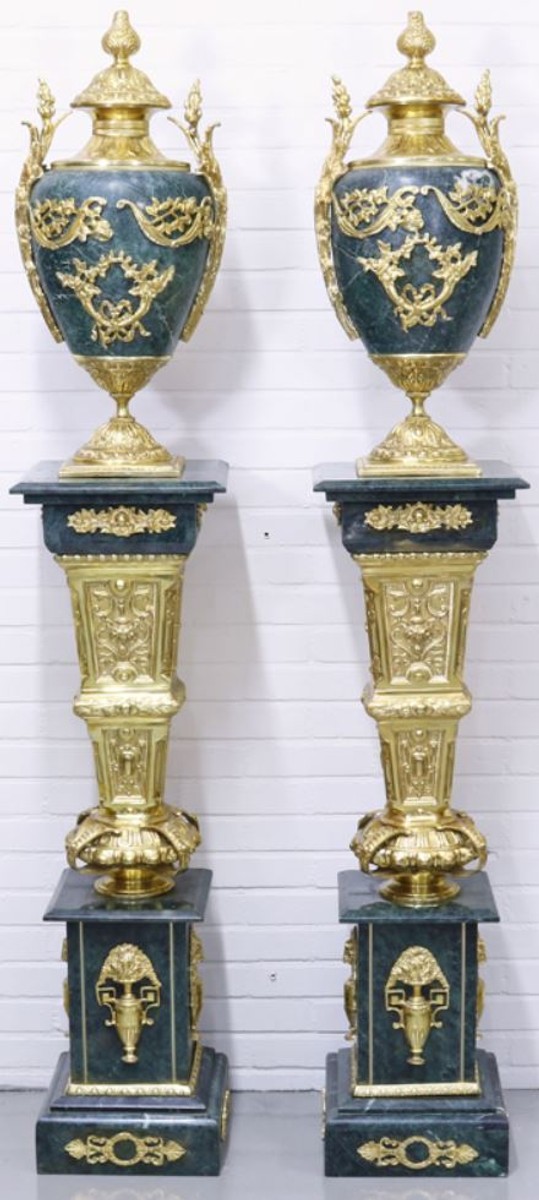
Floor vases and vases on pedestals act like pieces of furniture in their own right. A set with marble pedestals reaches around 180 cm, and ceramic vases with bases can be over 2 m tall. Plan a permanent spot for them with enough distance from walkways. You will also find suitable pedestals and plinths among the baroque columns.
Displaying baroque vases in a room
A baroque vase needs space around it. Place it on a surface that is not crowded with other objects. The classic arrangement is on baroque console tables beneath a mirror or painting. Two identical vases on the left and right create symmetry, while a single large vase provides the centrepiece.
Colour and metal should suit the room. Cobalt blue and gold go well with light walls and gilded furniture. White porcelain vases blend into almost any setting. If you would like to complete the table to match, you will find inspiration among the baroque porcelain and tableware and in the world of baroque decor.
Lighting has a strong influence on how a vase looks. A spotlight or table lamp alongside makes the glaze and gold shine. Suitable lamps can be found among the baroque table lamps. The painted decoration shows to best advantage against a calm wall in cream or grey.
Baroque vases for hotels, restaurants and event venues
In hotel lobbies, restaurants and banqueting halls, large baroque vases are a well-proven design element. Pairs on pedestals frame entrances and staircases, and vase sets adorn reception desks and buffets. Some designs are made specifically for hotel and restaurant use. What matters here is stability and a material that can withstand frequent cleaning.
For commercial projects, Barockgrosshandel puts together entire groups so that colours and shapes match across several rooms. Retailers and interior designers thus receive a coordinated selection. The baroque style vases category offers an overview of all designs. For the rest of the interior, take a look at the baroque furniture.
Bronze and robust ceramic are best suited to outdoor areas. Large bronze vessels on pedestals serve as planters there and keep their shape even in the rain. However, ceramic and terracotta should be brought indoors when there is a risk of frost.
Flowers and arrangements for baroque vases
Baroque means abundance. Lavish bouquets with roses, peonies, hydrangeas and trailing greenery suit the ornate shape. The bouquet should be about one and a half times the height of the vase. Lidded vases keep their lids on, as they are above all display pieces.
Not every baroque vase is meant to hold water. For wood, terracotta with an open base and some bronzes, use a glass or plastic liner. Dried and silk flowers are an alternative that needs no water at all.
Caring for porcelain, ceramic and bronze
Clean porcelain and ceramic with gold decoration by hand using lukewarm water and a soft cloth. The dishwasher attacks gilded rims and overglaze painting. Remove dust from relief work with a soft brush.
Wipe bronze and brass dry and treat them with a suitable metal polish when needed. Marble bases do not tolerate acids. Always place large vases on a level surface that can bear their weight.
Matching pieces from our range
Frequently asked questions
How do I recognise a baroque style vase?
By its rounded shape on a narrow foot, often with two handles or a lid. Rich painted decoration, gilded rims and relief work are typical. The dominant colours are cobalt blue, white and gold.
What are baroque vases made of?
Most are made of painted porcelain or ceramic. There are also hand-painted terracotta pieces, bronze vases on marble bases and carved solid wood vases. The material determines whether the vase can hold water.
Can I put flowers directly into a baroque vase?
With glazed porcelain and ceramic, usually yes. Wooden vases, some bronzes and open terracotta need a glass or plastic liner. Lidded vases are primarily display pieces.
What is the best way to display baroque vases?
Traditionally in pairs on the left and right of a console table, mantelpiece or sideboard. A single large vase on a pedestal creates a focal point in the room. Make sure there is free space around the vase.
Are there large baroque style floor vases?
Yes, for example vase sets with marble pedestals around 180 cm tall or ceramic vases on bases over 2 m. They act like pieces of furniture in their own right. Plan a permanent spot away from walkways.
How do I clean a painted porcelain vase?
Only by hand, with lukewarm water and a soft cloth. The dishwasher can damage gilded rims and painting. Loosen dust in relief work with a soft brush.
Do you supply baroque vases to hotels and retailers?
Yes, Barockgrosshandel supplies hotels, restaurants, event venues, interior designers and retailers as well as private customers. For commercial projects we put together coordinated groups of vases. Get in touch with your plans.
How much does a baroque vase cost?
Prices depend on size, material and the amount of handwork. A porcelain vase with a lid starts at around €200. Large hand-painted pieces, bronzes on marble bases or vases on pedestals go up to more than €13,000.