Large planters, garden planters and large plant pots for terrace and entrance
Large planters give structure to a terrace, an entrance or a courtyard. They frame doors, mark paths and lift plants to eye level. The bigger the vessel, the calmer it looks: one substantial planter often does the work of five small pots.
Barockgrosshandel supplies planters and flower pots to hotels, garden designers, interior designers, retailers and private clients. The range includes more than 230 vessels in terracotta, cast stone, brass, teak, bronze and ceramic, from around 600 € to over 13,000 €. You can browse them all in our flower pots and planters.
Shapes: planter, urn, bowl and pedestal
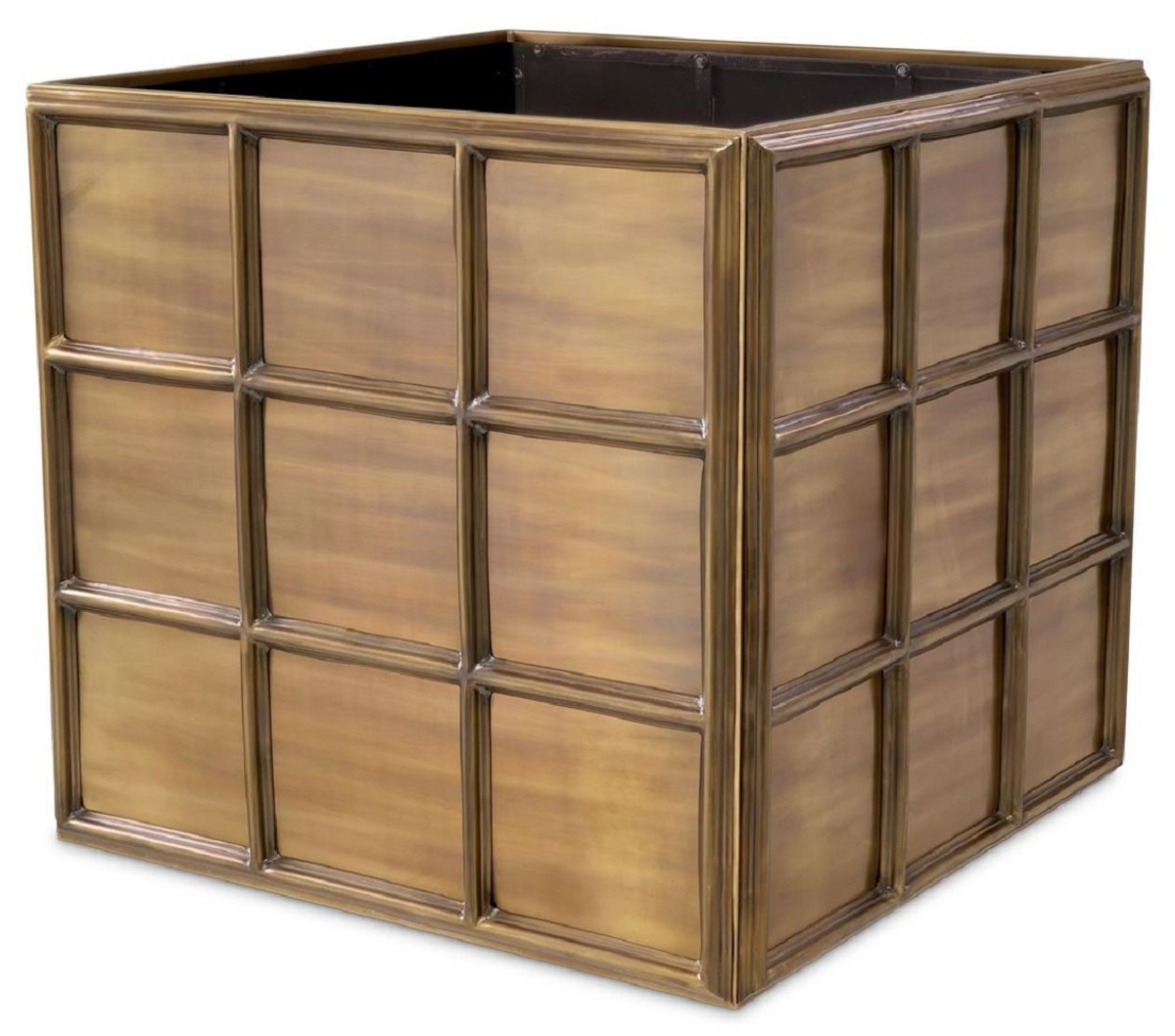
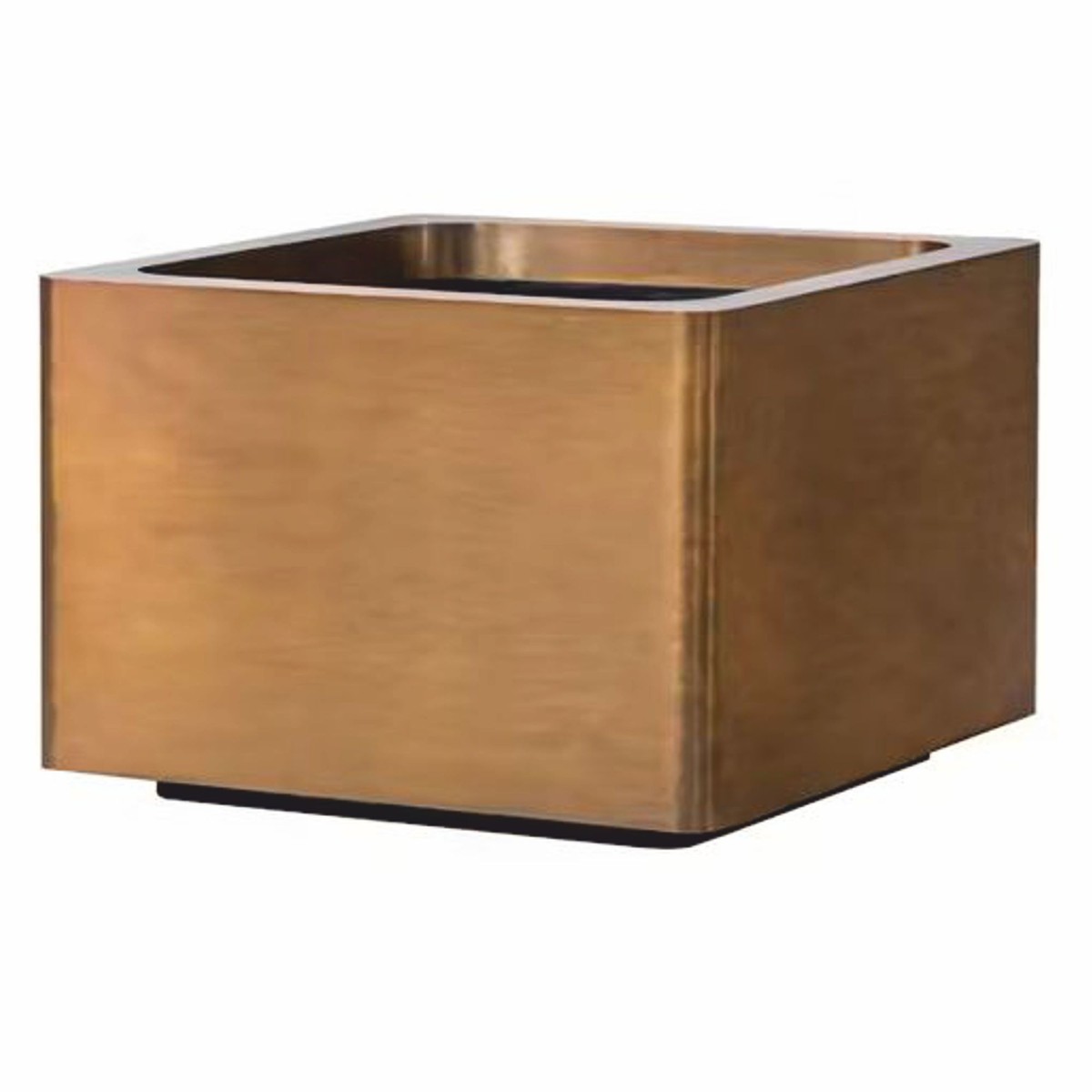
The round planter is the classic choice for trees and topiary. Square vessels suit straight lines, for example along a facade or a flight of steps. Set in a row, they form a green wall.
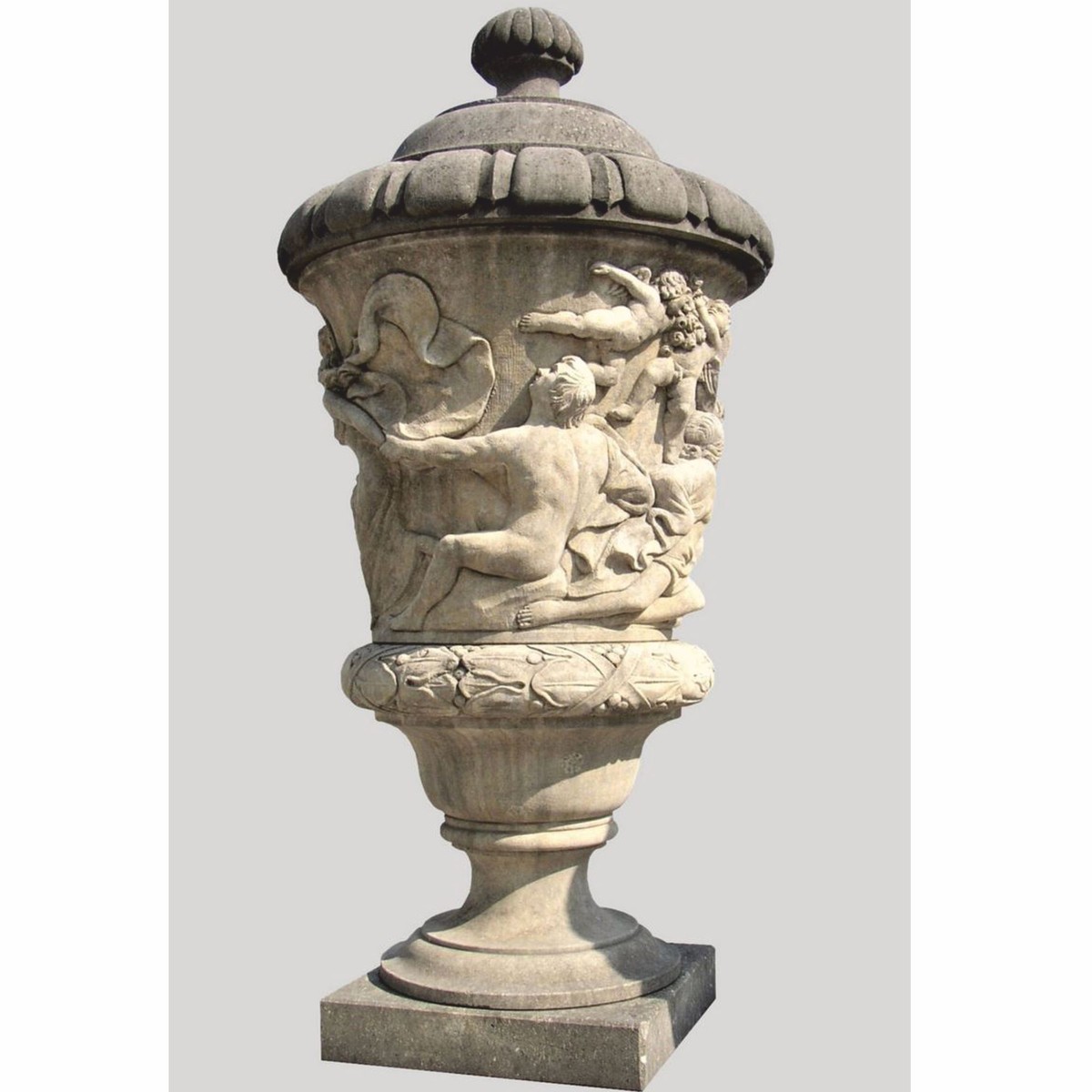
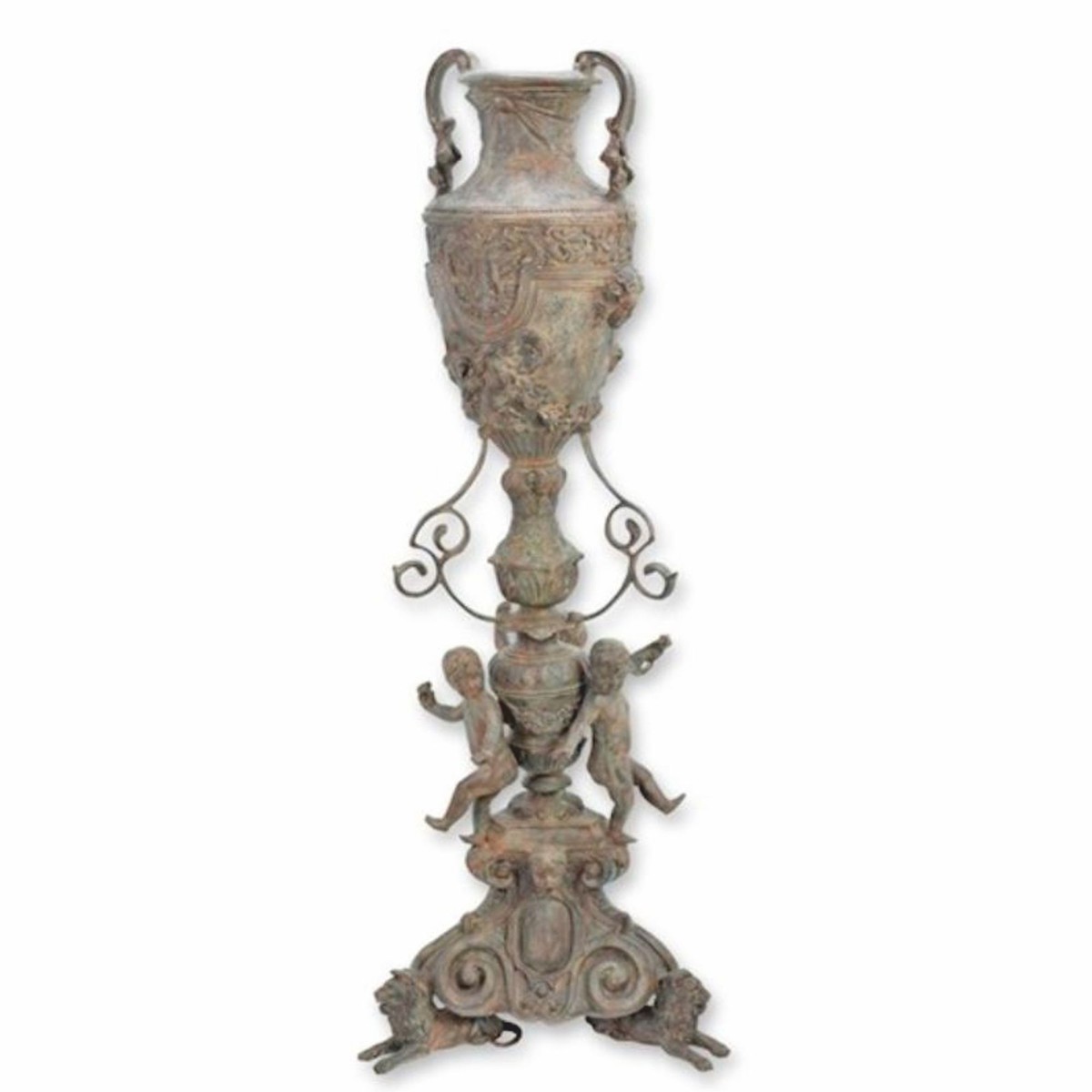
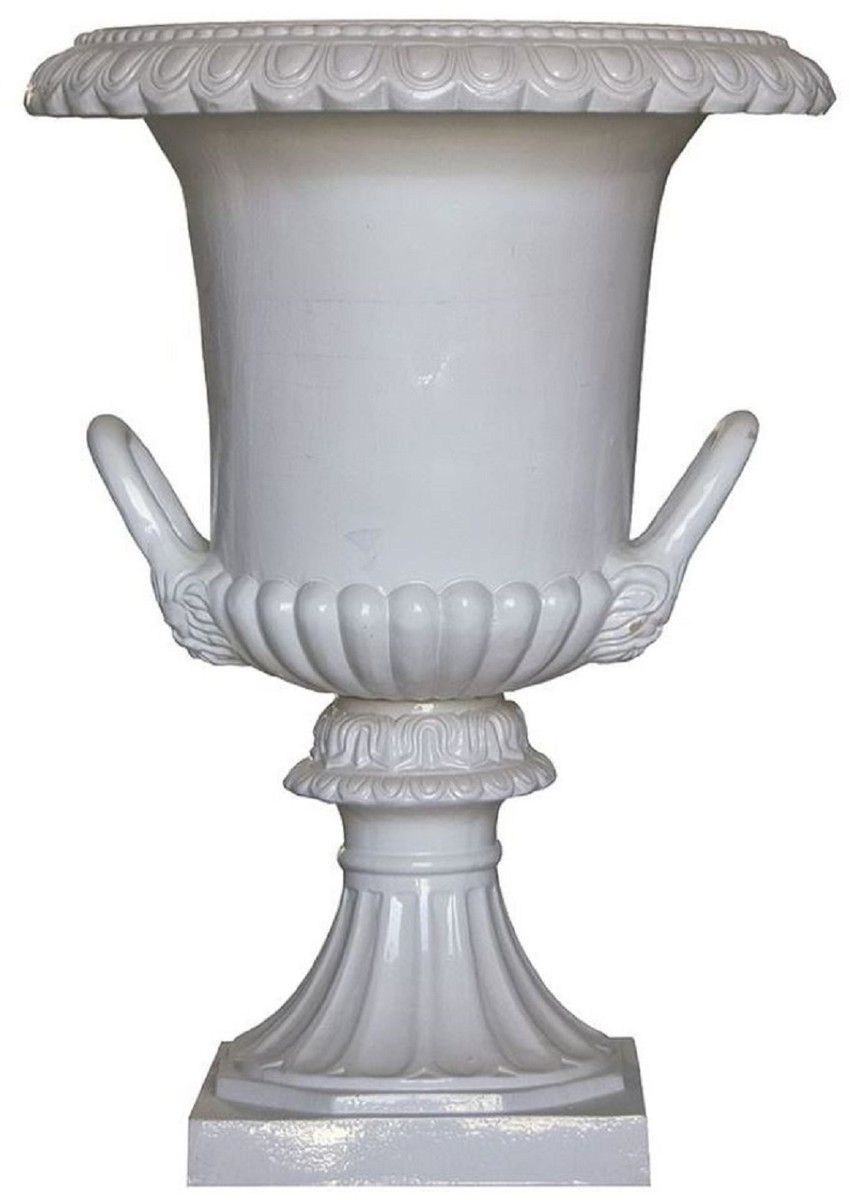
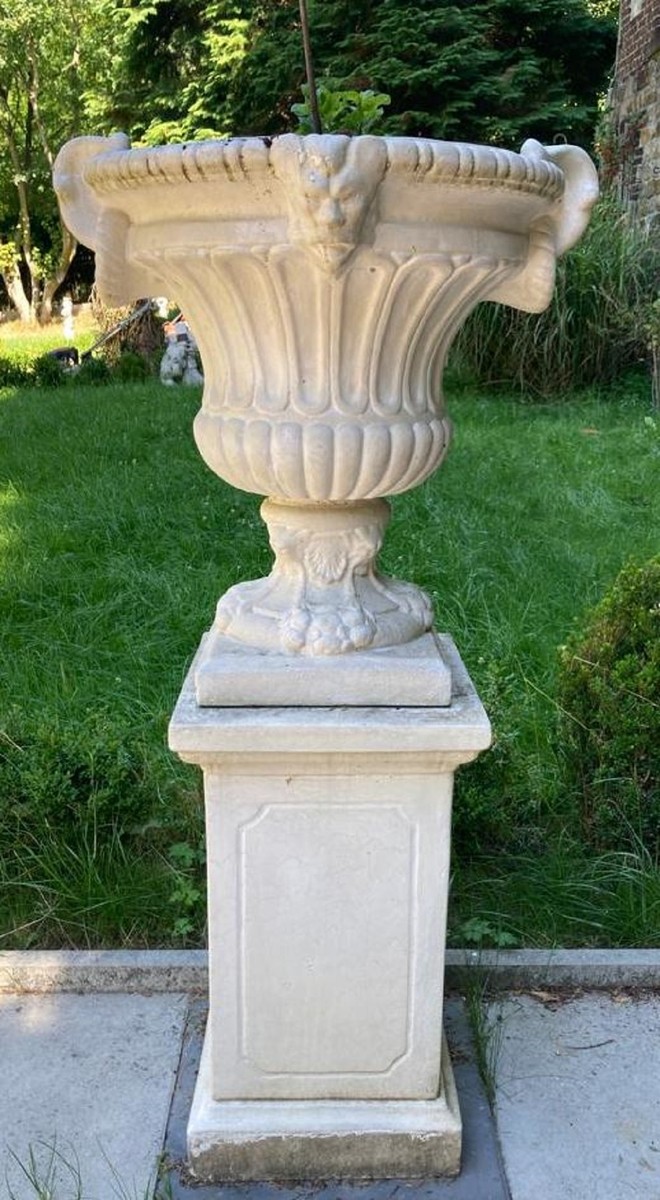
Large urns, with or without a lid, are more sculpture than pot. A stone urn 160 cm tall stands on its own and needs no planting. Urns on pedestals and pots on stands raise the plant up, which shows off trailing ivy or geraniums particularly well.
Vessels with reliefs, garlands and handles suit period gardens. If you are looking for more decorative pieces, see our baroque vases.
Outdoor materials: terracotta, stone, metal, wood
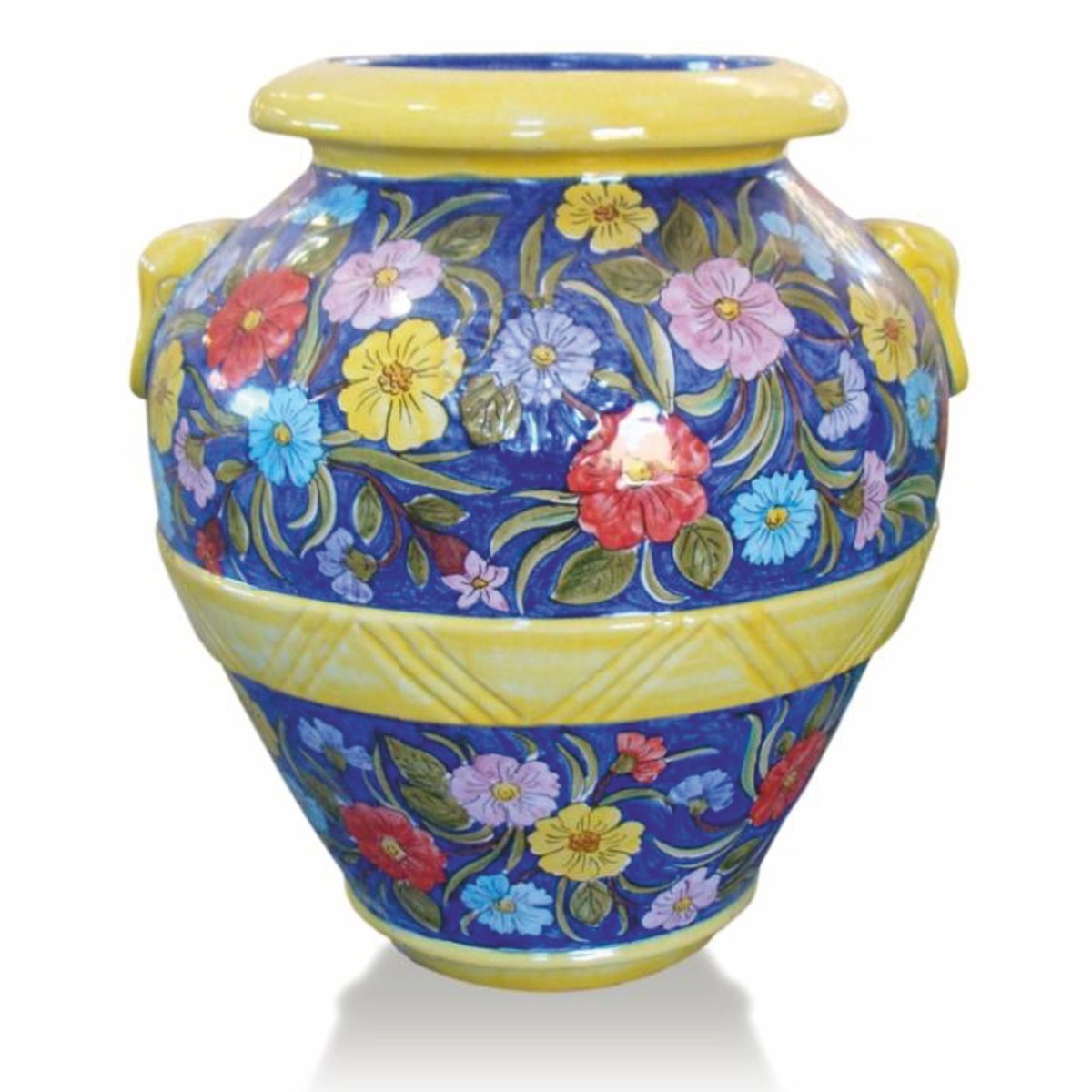
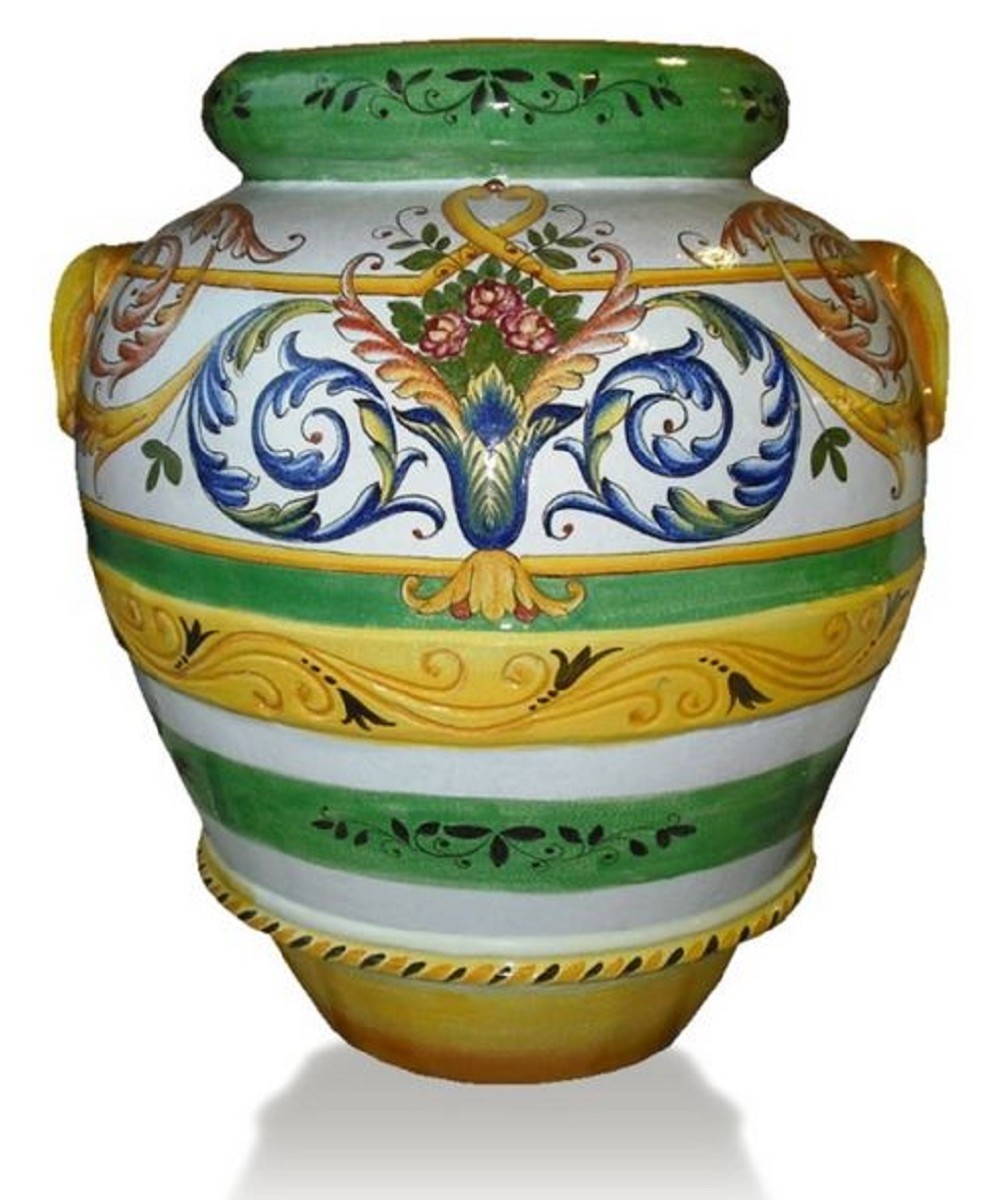
Terracotta is fired clay. It breathes, has a warm colour and can be painted by hand. Unglazed pieces absorb water, while glazed ceramic is denser and richer in colour. Hand painted terracotta urns in blue and yellow are true eye catchers.
Cast stone is moulded from stone powder and a binder. It looks like natural stone, holds its shape and takes fine relief. Over time it gains a patina that many garden owners value.
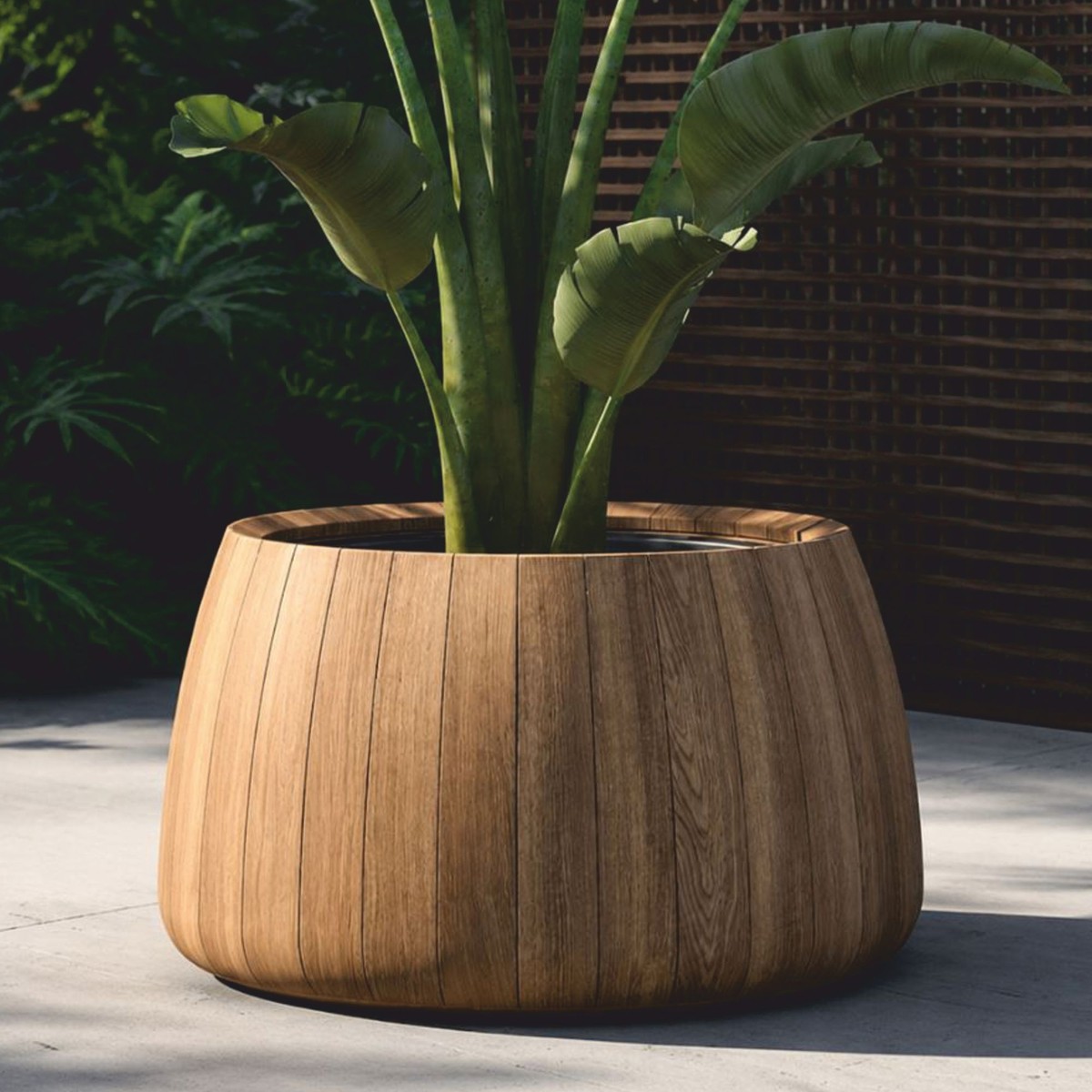
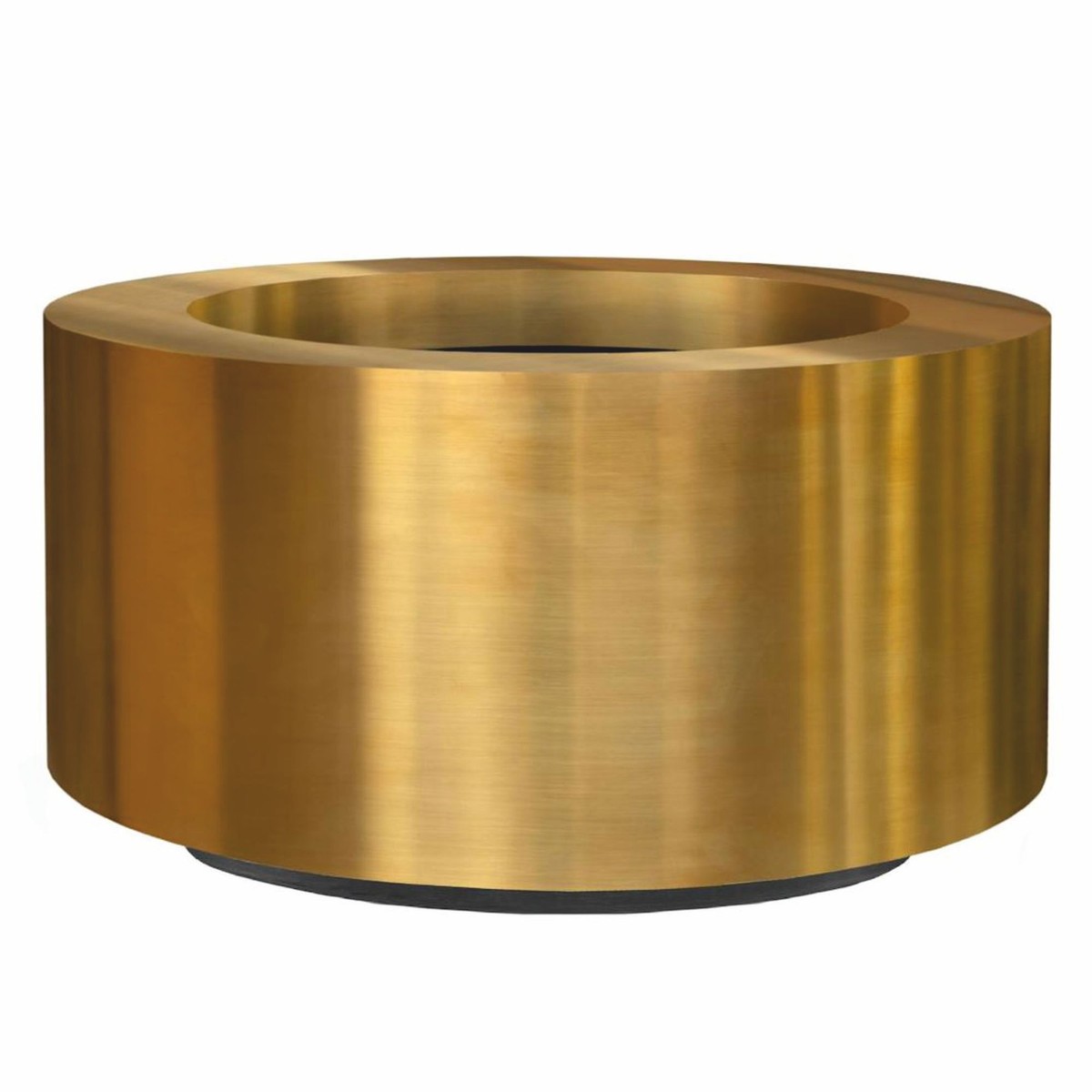
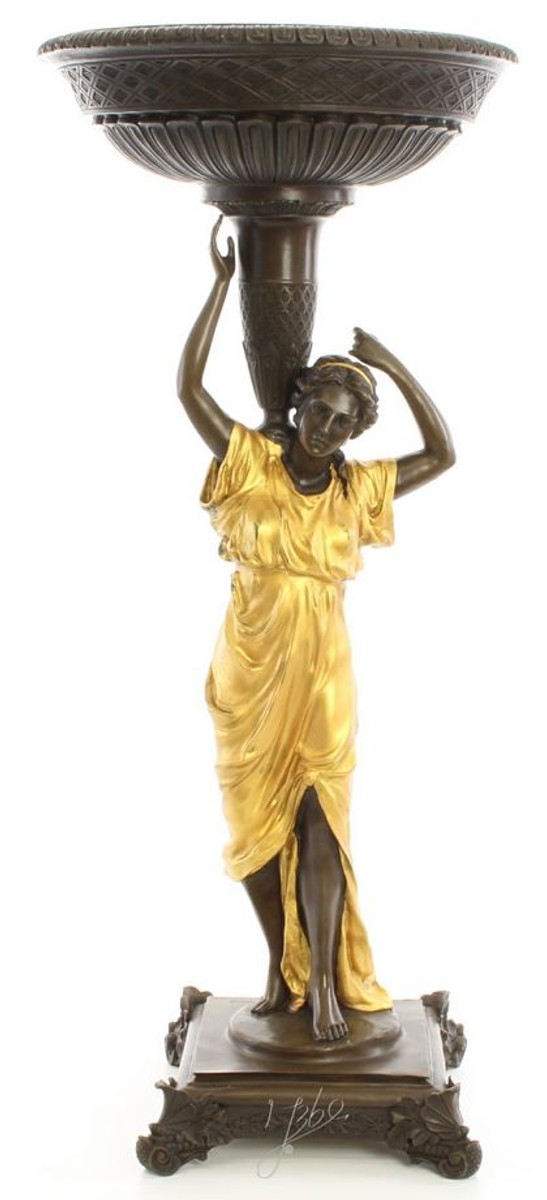
Brass and stainless steel bring a sheen to terraces and roof gardens. Weathered brass has a deliberately aged finish. Bronze is the heaviest and most enduring metal, ideal for vessels on stands. Teak is naturally oily and weatherproof, and turns silver grey outdoors unless oiled.
Frost resistance and winter
Frost is the main threat to any outdoor planter. Water that freezes in pores or soil expands and can crack clay or stone. What matters most is that water can always drain away.
Terracotta and ceramic should be kept dry in winter or moved to shelter, unless they are explicitly frost proof. Cast stone, bronze, brass and teak cope better with cold. Raise planters on small feet so they never stand in meltwater. A fleece wrap around the root ball protects the plant itself.
Drainage hole and planting
Every outdoor planter needs a drainage hole. Above it goes a drainage layer of clay pebbles or gravel, 5 to 15 cm depending on height. A fleece separates it from the soil so that fines do not clog the outlet.
For metal vessels and very tall urns, a plastic liner is a good idea. It protects the surface, saves soil and can be lifted out for repotting. Decorative urns without a hole serve as a cachepot for an inner pot.
Which plants suit them? Olive trees, bay and box balls are classics for large planters. Citrus needs a bright, frost free spot in winter. Grasses, lavender and rosemary cope with sun and wind on roof terraces. Trailing ivy or petunias soften the rims of tall urns. The larger the vessel, the more even the moisture and the less often you need to water.
Weight, size and position
Large plant pots are heavy even before soil goes in. A vessel 90 cm across holds several hundred litres of compost, which can easily weigh several hundred kilograms when wet. On balconies, roof terraces and podium decks, check the load capacity first.
A lighter mix with plenty of clay pebbles reduces weight. Put the planter in its final place before filling it. For a hotel entrance, two matching vessels either side of the door look more formal than many small ones.
As a rule of thumb, a planter should be at least a third as tall as the plant it holds. A two metre olive tree therefore needs a vessel of a good 70 cm in height.
Designing terrace, garden and entrance
Garden planters work best together with other pieces. Beside a seating group of wrought iron garden furniture, two large planters with box or bay frame the space. A garden fountain forms the centre, with planters lining the paths.
Garden lanterns between the vessels create an evening mood. Sculpture adds further accents: an urn on a pedestal and a piece from our garden statues together form a classic axis.
Hotels, restaurants and boutiques use large outdoor planters as a calling card at the door. For more indoor and outdoor ideas, explore our baroque and luxury furniture.
Caring for planters
Clean stone and terracotta with water and a soft brush, never with a pressure washer. Wipe brass and bronze with a damp cloth, and a coat of wax preserves the shine. Teak can be oiled or left to weather. Each autumn, check that the drainage hole is clear. Lift plastic liners out every few years to check the roots. If the root ball is very compact, repot or replace the top layer of soil so the plant stays healthy.
Matching pieces from our range

View all items in Flowerpots & Planters
Frequently asked questions
Which planters are frost proof?
Cast stone, bronze, brass, stainless steel and teak generally cope well with frost. Terracotta and ceramic are more sensitive when water gets into the body. For every material, a clear drainage hole and feet under the pot are essential.
Does a large planter need a drainage hole?
Yes, for outdoor planting a drainage hole is essential. Without it, water collects, roots rot and frost damage follows in winter. Use vessels without a hole as a cachepot.
How heavy is a large planter filled with soil?
A planter 90 cm across holds several hundred litres of soil and can easily weigh several hundred kilograms when filled. Check the load capacity on balconies and roof terraces. Lightweight compost and a liner reduce the weight.
Which material suits a hotel entrance?
Cast stone, bronze and brass suit busy entrances because they are robust and stable. Placed in pairs they look formal. Teak works well with modern facades.
Can the large urns stand without a plant?
Yes. Large stone urns with lids and hand painted terracotta urns are designed as sculpture and look complete when empty. Place them out of the rain or make sure water can drain.
How big should a planter for a tree be?
The vessel should reach at least a third of the plant's height and leave about 10 cm around the root ball. For small trees, planters from 60 to 70 cm across make sense.
How are the planters delivered?
We deliver to the kerbside. Because large vessels are heavy, plan enough helpers or lifting equipment to move them into position.