Garden Statues and Garden Sculptures for Gardens, Parks and Terraces
A garden statue gives an outdoor space direction and scale. A single figure at the end of a vista anchors an entire lawn. A matching pair frames a flight of steps, and a tall stainless steel sculpture sets a clear accent in front of a modern façade. Barockgrosshandel supplies garden sculptures for private gardens as well as hotels, restaurants, wine estates and parks.
Our range covers figurative statues in marble and travertine, cast stone and ceramic pieces, and large sculptures in polished stainless steel and weathered steel. Many pieces stand well above head height. If you are looking for large garden statues, you will find heights from around 1.30 m to more than 3.50 m. Prices for the examples shown run from about €750 to just under €30,000.

Materials for garden sculptures compared
Marble is the classic material for figurative garden statues. It holds fine facial features, flowing drapery and delicate garlands, and it ages with a calm, even patina. Travertine looks warmer and more matte. Its open pores give it a natural, slightly antique character.
Cast stone is poured into moulds. It allows large figures with plinths at a moderate price and closely resembles weathered natural stone. Our stone and cast stone sculptures show the full spectrum, from simple column figures to richly decorated female statues.
Stainless steel and weathered steel represent the contemporary side. Polished steel reflects sky and planting, while rusted steel develops a warm, reddish brown surface. Fibreglass and resin are light and can be finished in any colour. Bronze also plays a major role outdoors, and we cover it on a dedicated page about bronze statues and sculptures.
Subjects: people, angels and abstract forms
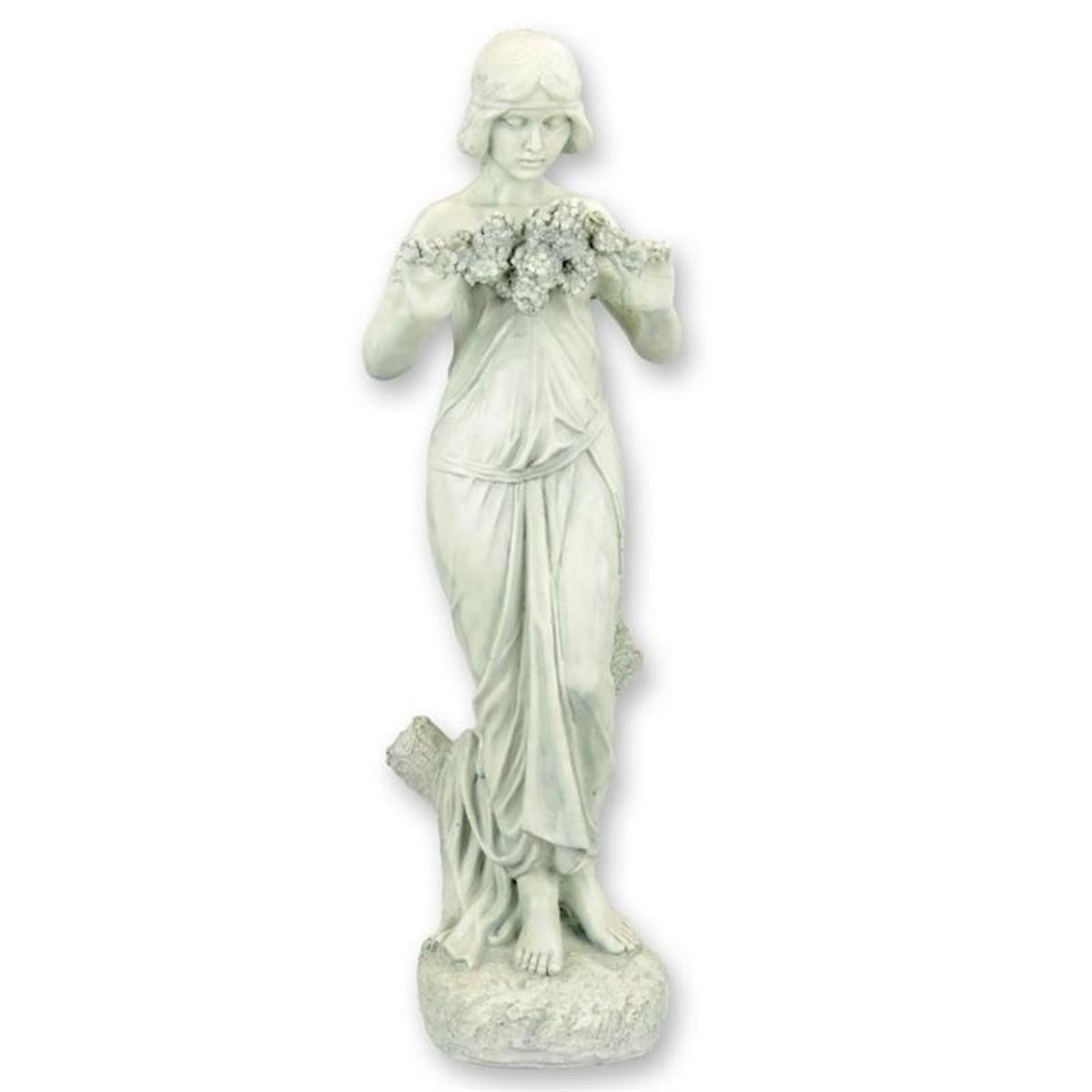
Figurative subjects make up most of the range. Ladies with flower baskets, girls with garlands, angels and mythological figures come from the tradition of palace and park gardens. In the Art Nouveau style the bodies become slimmer and the robes more fluid. You will find a selection among our human figures for garden and terrace.
Abstract and stylised sculptures suit clean architecture. A tall steel form with a rust finish, sunflowers in stainless steel or two figures on a column read like works of art and look different from every angle. Animals are a large field of their own. Lions, horses and eagles are presented on our page about animal statues and sculptures.
Large garden statues: impact, scale and sightlines
A figure always looks smaller outdoors than indoors. Sky, trees and buildings take away its sense of scale. As a rule of thumb, a garden statue seen from 15 to 20 metres away should be at least 1.60 m tall including its plinth. For large lawns and parkland, sculptures from 2.50 m upwards are the better choice.
Plan the piece from the main viewpoint. A statue at the end of a path, against a dark hedge or in a niche of yew stands out clearly. Pale stone needs a green or dark backdrop, whereas polished steel works well even against a light wall.
Pairs and sets suit symmetrical layouts. Two identical statues on either side of a staircase, or a set of four at the corners of a pool, create a sense of order. Combined with garden fountains and water features, they form a calm centre around which the whole garden is arranged.

Stability, plinths and foundations
Large garden sculptures are heavy. A marble figure of 1.60 m can easily weigh several hundred kilograms with its plinth, and stainless steel sculptures over 3 m are substantial despite their hollow construction. They need a level, load bearing base.
A strip foundation or a concrete slab laid below the frost line has proven reliable. In Central Europe this means a depth of around 80 cm. Tall, slender figures and light fibreglass sculptures should also be anchored to the foundation with threaded rods or brackets. This keeps them secure in storms and in public areas.
The plinth is part of the design. It lifts the figure above the planting, protects its base from splashing water and brings it closer to eye level. Many of our statues come with a matching plinth.
Frost, weather and care
Natural stone absorbs water. If it freezes in the pores, it can cause flaking or hairline cracks. Marble is dense and robust, while travertine and cast stone are more open. A sealant noticeably reduces water absorption and should be renewed every one to two years. In exposed locations, use a breathable winter cover rather than plastic sheeting.
Stainless steel needs little attention. A damp cloth and an occasional steel cleaner keep the surface bright. Weathered steel protects itself with its patina but releases rusty water in the first months, so do not place it directly on pale paving. Fibreglass sculptures should be covered or stored in snowy winters.
Remove moss and algae with a soft brush and clear water. Pressure washers, acids and chlorine damage stone and finishes.
Garden statues for hotels, restaurants and projects
In hotel gardens, wine estates and outside restaurants, garden statues create places where guests pause and take photographs. A group of figures in a courtyard, an angel in a rose garden or a steel sculpture beside the drive defines the look of a property for years. Durability, stability and a consistent style matter most in such projects.
As a wholesaler we supply retailers, hotels, landscape architects and interior designers as well as private customers. Delivery is kerbside. For an overview of further styles, visit our page on baroque and luxury furniture, and see the complete selection in our garden sculpture category.
Matching pieces from our range




Frequently asked questions
Which material is best for garden statues?
For classic statues, marble and travertine are the first choice. They are durable and look refined. Cast stone offers a similar appearance at a lower price, while stainless steel and weathered steel suit contemporary gardens.
How tall should a garden sculpture be?
Figures look smaller outdoors than expected. For a private garden, 1.30 to 1.80 m including the plinth is a good guide. On large lawns and in parks, choose 2.50 m or more.
Are marble garden statues frost resistant?
Marble is dense and generally copes well with frost, provided no water gets into cracks. A sealant and a raised position without standing water help. In very harsh locations a breathable winter cover is advisable.
Does a large garden statue need a foundation?
Yes. Heavy figures need a level, load bearing base, ideally a concrete slab laid below the frost line. Tall or light sculptures should also be anchored.
How do I clean stone garden statues?
Use a soft brush and clear water. Avoid pressure washers, acids and chlorine. Applying a sealant every one to two years reduces water absorption.
Will weathered steel stain the ground?
During the first months, rain washes off rust particles that can mark pale surfaces. Place the sculpture on gravel, grass or a dark slab. Once the patina has formed, the effect decreases markedly.
Do you supply garden sculptures to hotels and retailers?
Yes. Barockgrosshandel supplies retailers, hotels, designers and private customers. Large sculptures are delivered kerbside.